Regional Wisdom
Western India — Chaas, Ajwain and the Monsoon Kitchen
Gujarat and Maharashtra built a pantry around heat, humidity and digestion: buttermilk at lunch, carom seed in the dough, and a kitchen that changes with the rain.
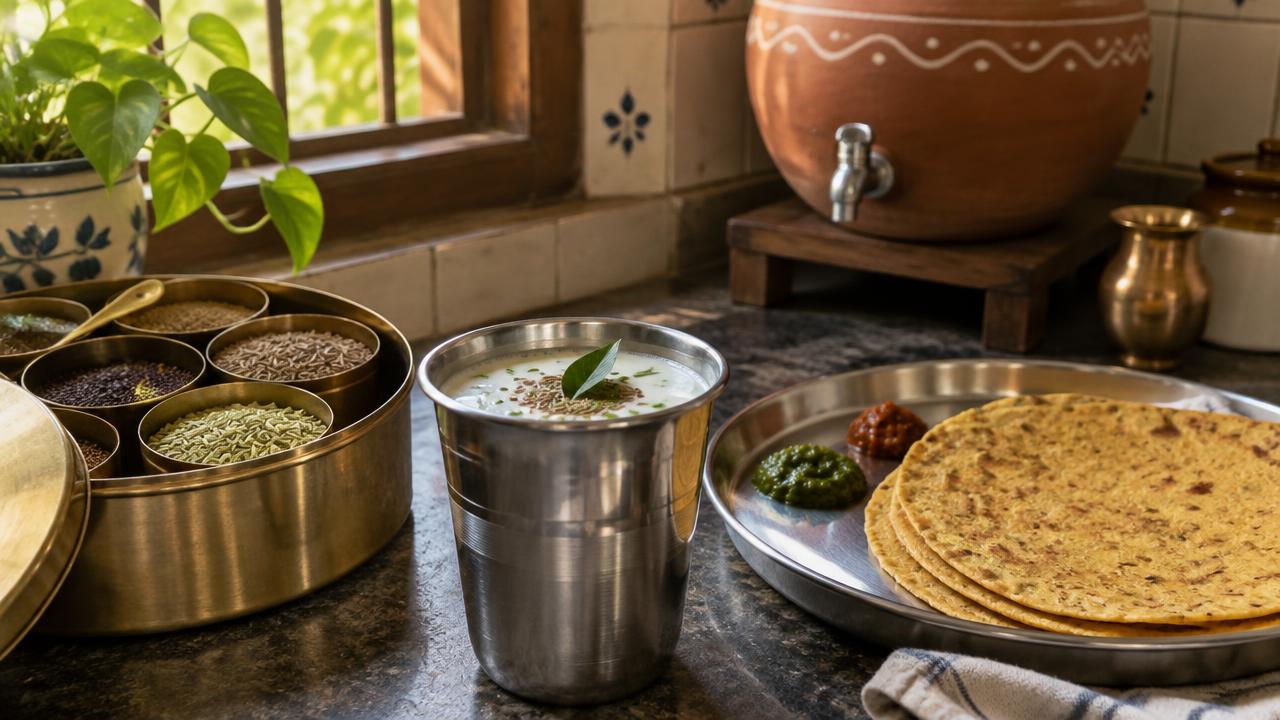
Western India — Gujarat, Maharashtra, Saurashtra, Konkan and the dry Marathwada interior — cooks for heat first and humidity second. The result is a household food culture unusually focused on digestion: light, sour, salted and seed-spiced, with buttermilk at the centre of it.
Chaas is the signature. Curd thinned with water and worked with roasted cumin, a little salt, green chilli, ginger and curry leaf, it is served with the midday meal through the hot months rather than sipped as a drink on its own. Maharashtrian kadhi, Gujarati kadhi and the plain glass of chaas after a heavy thali are all the same instinct: finish a meal with something cool, sour and light rather than something rich.
The pantry logic is seed-led. Ajwain goes into the dough of theplas and puris and into the tin that gets opened after a heavy meal. Cumin, fennel and coriander seed are everywhere; mukhwas — a fennel, sesame and coriander-seed mix eaten after lunch — is a household habit rather than a remedy. Asafoetida is used with pulses in almost every Gujarati kitchen. Kokum and tamarind give sourness along the Konkan coast, and peanut, sesame and groundnut oil carry the cooking.
Monsoon changes the kitchen visibly. Leafy greens and heavy fried food are reduced, hot and freshly cooked replaces stored and cold, and the lighter grains take over — millet in the Deccan, rice along the coast. Summer brings aam panna, variyali sherbet, sugarcane and buttermilk; winter brings undhiyu, bajra rotla with white butter and jaggery, adadiya, methi pak and gond ladoos made at home.
The household routines match the year: papad and pickles put out in the first heat, grain sunned and stored before the rains, oil massages in the cold months, and a running assumption that lunch should be the largest meal. None of this is a treatment plan; it is a regional way of eating that took the climate seriously.
More from Regional Wisdom
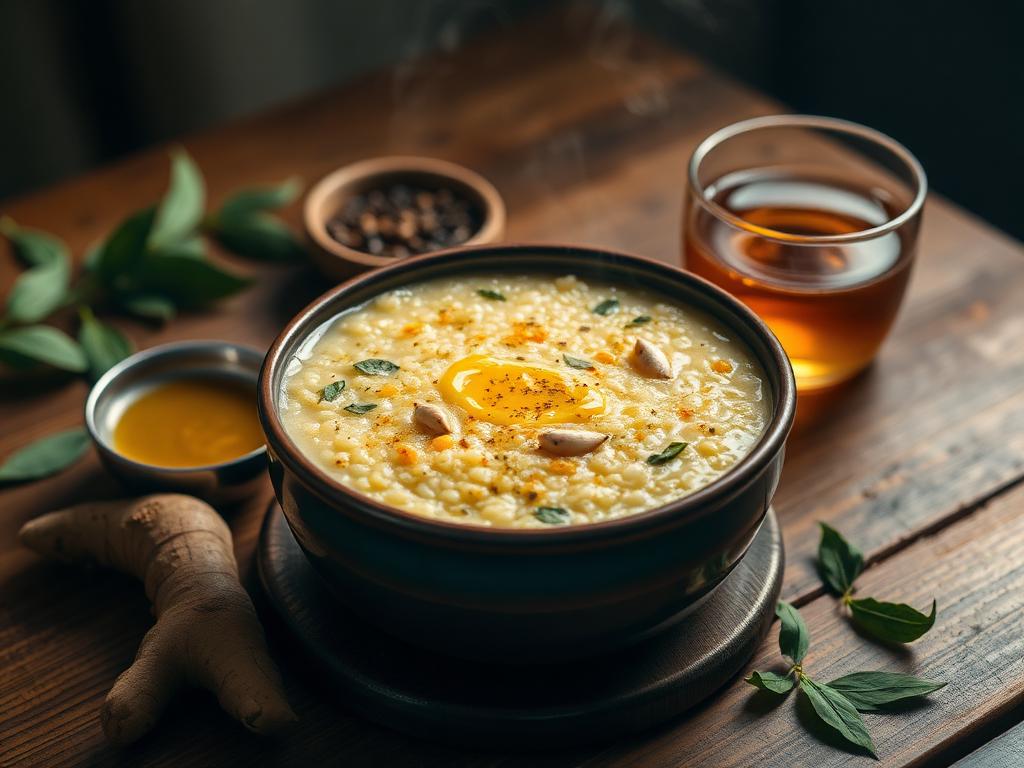
Kerala, Ayurveda and the Monsoon Calendar
Why Kerala became the home of classical panchakarma — and why the monsoon shapes its household calendar.
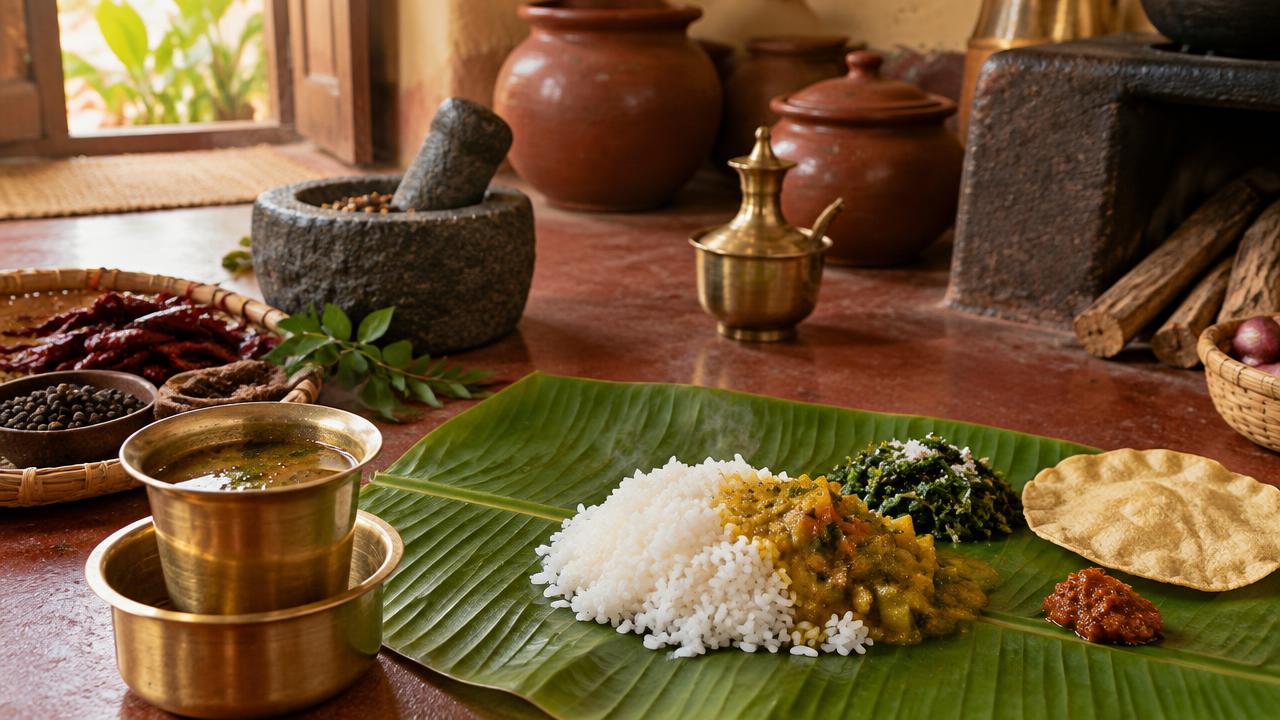
Tamil Nadu and the Siddha Tradition
Rasam at the start of lunch, sesame oil before a bath, and a healing tradition with its own Tamil lineage of siddhars.
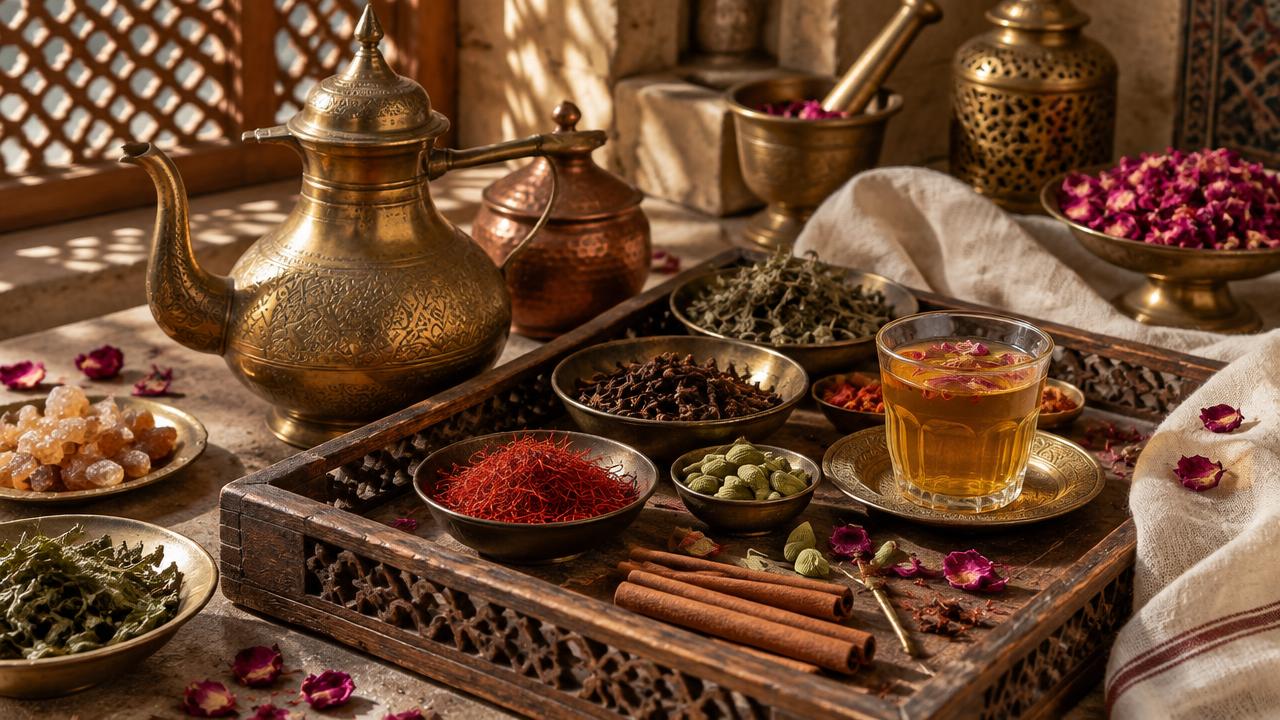
North India and the Unani Tradition
Greco-Arabic medicine that settled into North Indian cities — and the rose, saffron and mint that stayed in the kitchen.
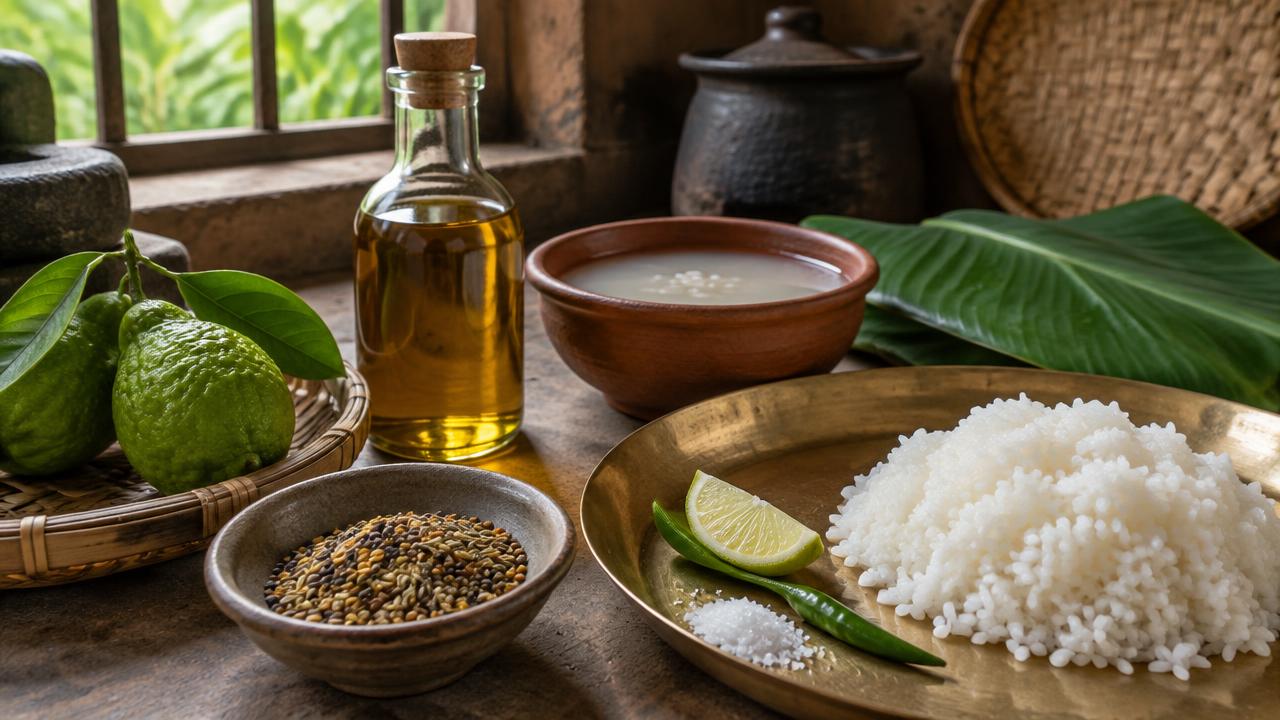
Bengal and the East — Rice, Fish and Fermentation
Panch phoron, mustard oil, gondhoraj lime and panta bhat — an eastern kitchen built around humidity, rivers and rice.
Continue exploring
Related on The Wisdom Jar
Ingredient
Ajwain (Carom Seeds)
Pungent, thyme-like seeds famed for instant digestive relief.
Read moreRemedy
Ginger-Tulsi Decoction for Cough & Cold
A simple kitchen kadha that soothes scratchy throats and clears mild congestion.
Read moreDaily Wellness
Monsoon Immunity Care
Warming kadhas, ginger tea, ghee — protect the gut during the rains.
Read moreIngredient
Turmeric
A warm, golden rhizome treasured for centuries as a kitchen healer for inflammation, immunity, and skin glow.
Read moreRemedy
Golden Milk for Winter Immunity
A warm, soothing nightly drink of turmeric, milk, and pepper to support immunity and rest.
Read moreDaily Wellness
Warm Water on Waking (Ushapan)
A simple, ancient cue that wakes digestion and gently flushes the system.
Read more