Regional Wisdom
North India and the Unani Tradition
Greco-Arabic medicine that settled into North Indian cities — and the rose, saffron and mint that stayed in the kitchen.
Unani has a different ancestry from India's older indigenous systems. Its roots are Greco-Arabic — Hippocratic and Galenic ideas carried through Persian and Arabic scholarship — and it arrived in the subcontinent with scholars and physicians from Central and West Asia. Over centuries it settled into North Indian cities: Delhi, Lucknow, Hyderabad, Aligarh, with hakims practising in family lineages and, later, formal colleges.
It kept its own framework of temperaments, its own pharmacy and its own training. It is not Ayurveda in another vocabulary, and the two coexisted as separate professions even where they shared a bazaar and many of the same plants.
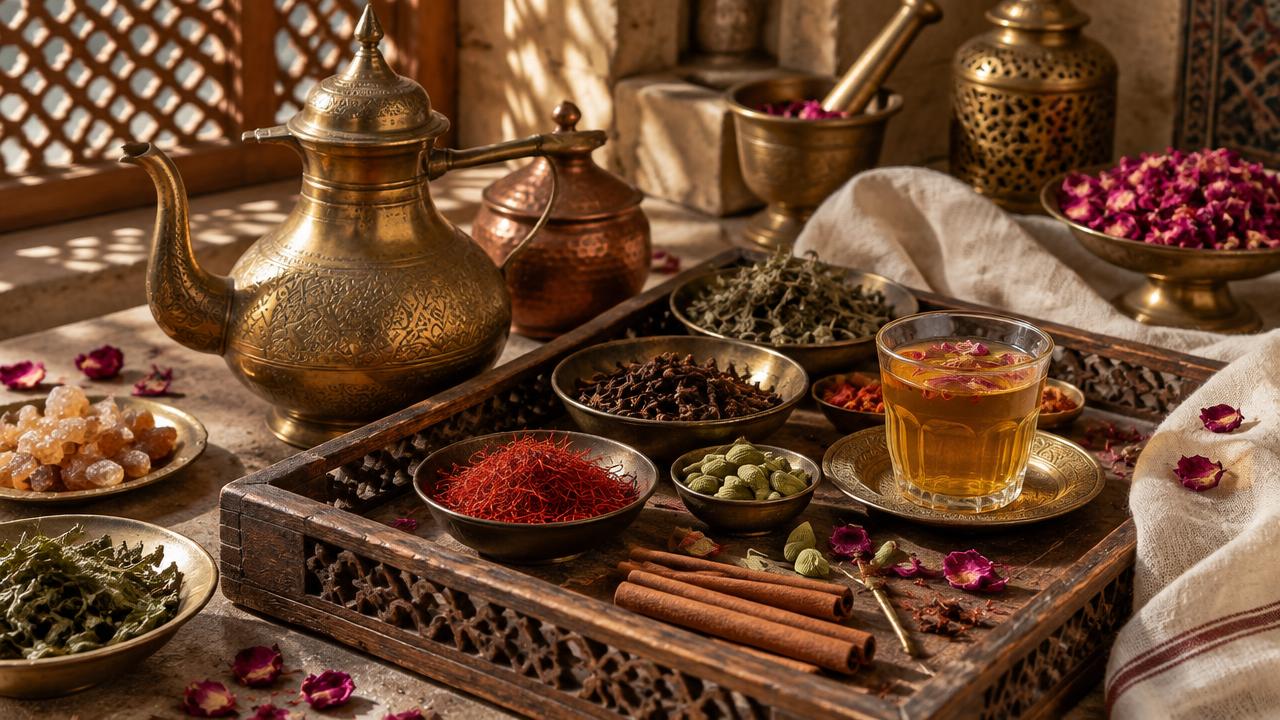
The kitchen traces are everywhere in the north. Rose — as gulkand, rose water, rose petals in summer drinks — belongs to this culture. So do saffron, cardamom, screwpine, sandalwood and cooling sherbets made in the pre-refrigeration heat. Kashmiri kahwa, with saffron and almond, is a winter household drink. Joshanda, a warming herbal infusion, is a familiar name in a North Indian cold spell.
Seasonal habits followed the extremes of the northern plains: heavy, warming, ghee-rich cooking through a real winter; light, sweet, cooling, water-rich foods through a dry and punishing summer. Sattu, bel sherbet, khus and vetiver-scented water are summer entries; til, gur, gond and methi are winter ones.
Unani's compound medicines — khameeras, majuns, arqs and the rest — are formal pharmaceutical preparations. They belong with a qualified Unani practitioner who assesses the person first, not with a home shelf. The household inheritance is the food, the drink and the seasonal rhythm.
More from Regional Wisdom
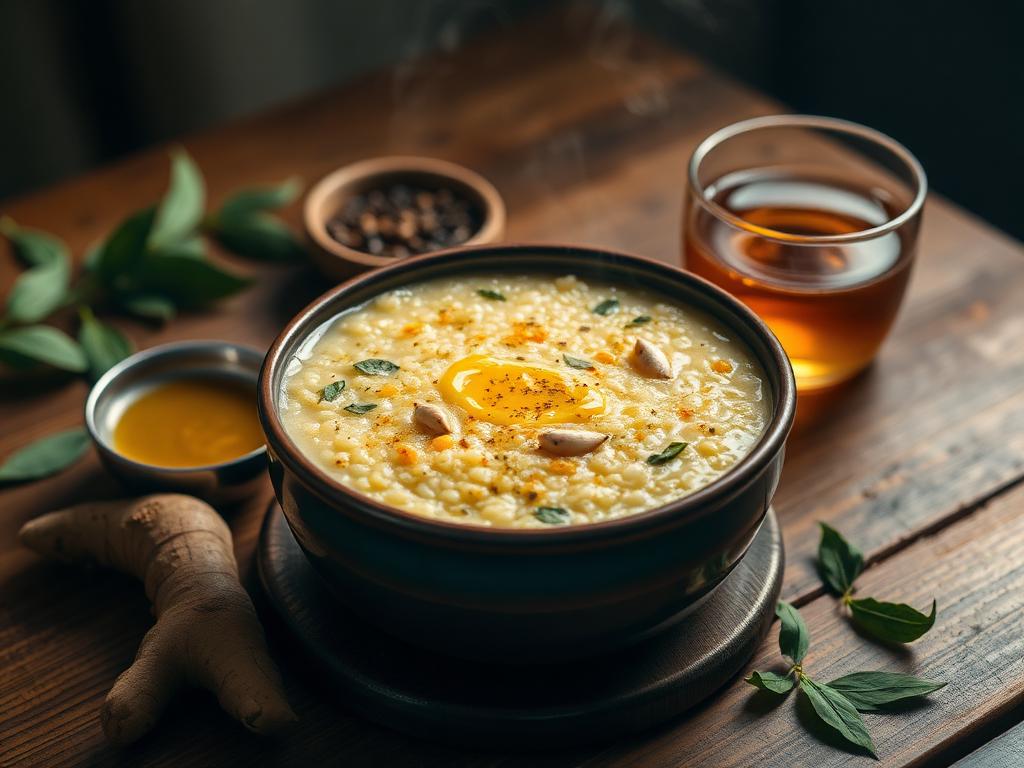
Kerala, Ayurveda and the Monsoon Calendar
Why Kerala became the home of classical panchakarma — and why the monsoon shapes its household calendar.
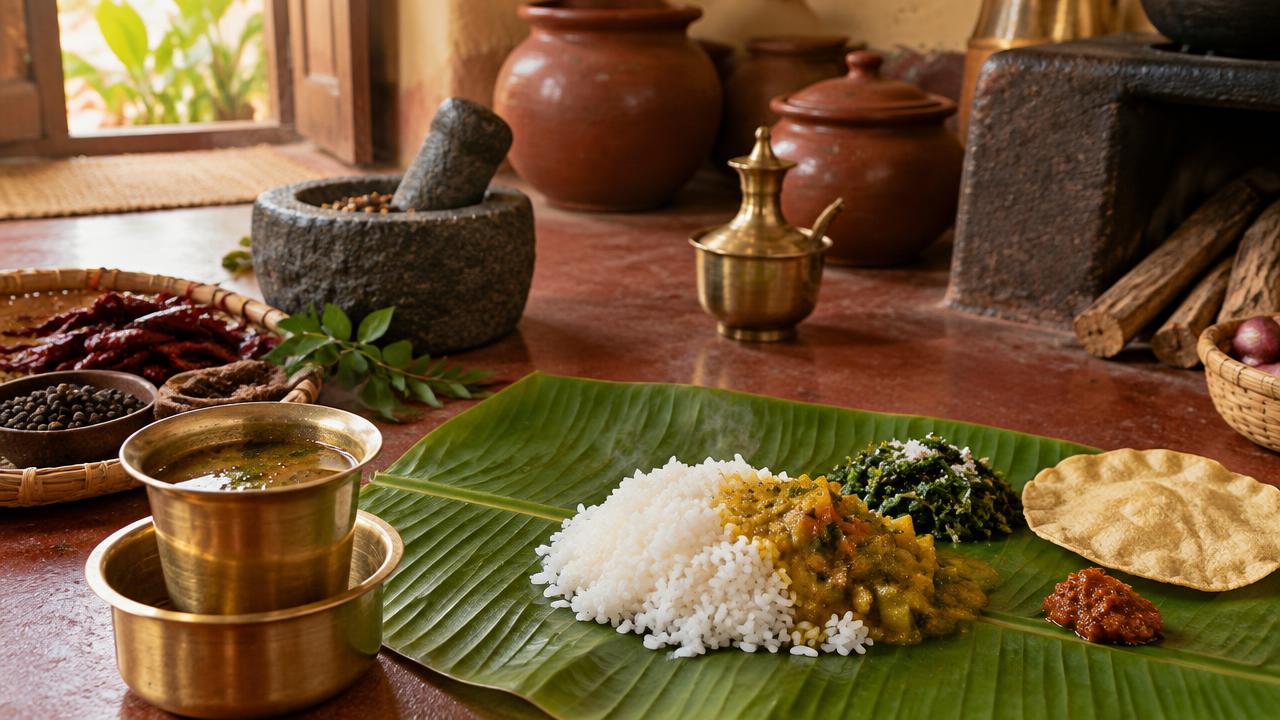
Tamil Nadu and the Siddha Tradition
Rasam at the start of lunch, sesame oil before a bath, and a healing tradition with its own Tamil lineage of siddhars.
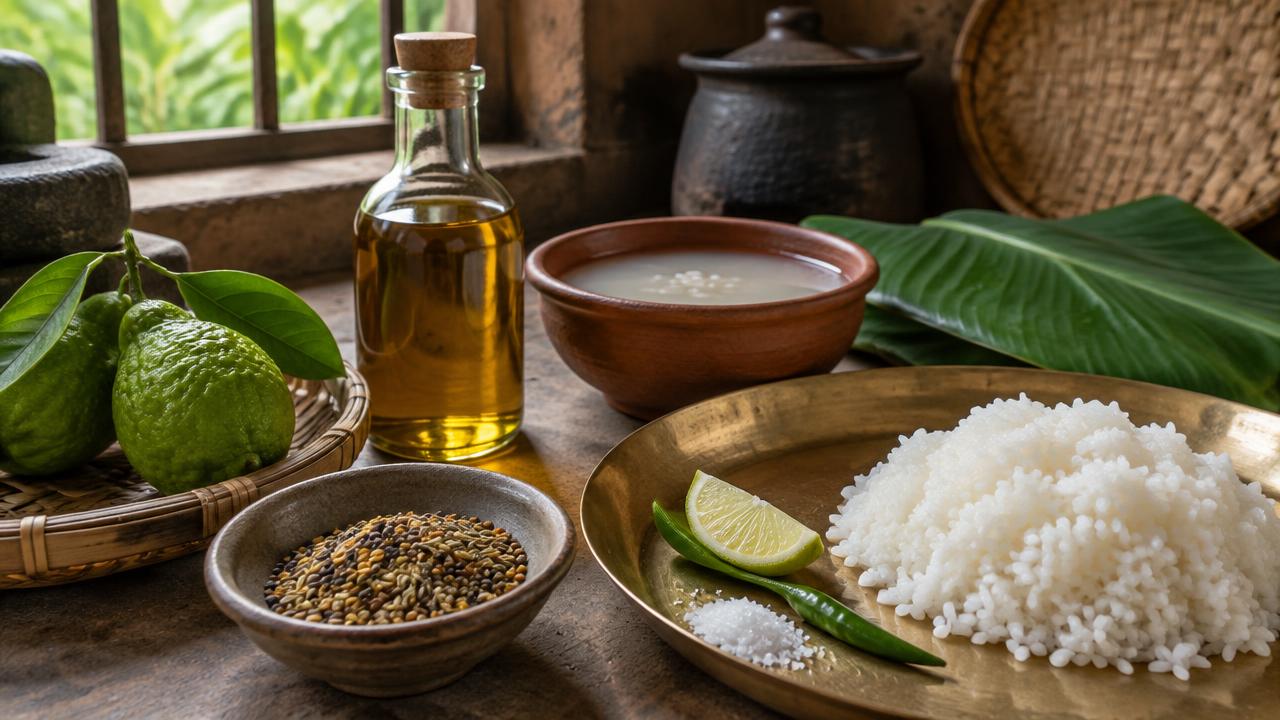
Bengal and the East — Rice, Fish and Fermentation
Panch phoron, mustard oil, gondhoraj lime and panta bhat — an eastern kitchen built around humidity, rivers and rice.
Folk and Household Traditions
The unwritten layer beneath every named system — what mothers, grandmothers and village healers actually did.
Continue exploring
Related on The Wisdom Jar
Ingredient
Saffron
Precious golden thread that uplifts mood and nourishes skin.
Read moreIngredient
Turmeric
A warm, golden rhizome treasured for centuries as a kitchen healer for inflammation, immunity, and skin glow.
Read moreRemedy
Golden Milk for Winter Immunity
A warm, soothing nightly drink of turmeric, milk, and pepper to support immunity and rest.
Read moreRemedy
Ginger-Tulsi Decoction for Cough & Cold
A simple kitchen kadha that soothes scratchy throats and clears mild congestion.
Read moreDaily Wellness
Warm Water on Waking (Ushapan)
A simple, ancient cue that wakes digestion and gently flushes the system.
Read moreDaily Wellness
Tongue Scraping
Remove the overnight coating in 30 seconds — taste, breath and digestion improve.
Read more