Regional Wisdom
Folk and Household Traditions
The unwritten layer beneath every named system — what mothers, grandmothers and village healers actually did.
Beneath the classical systems runs a much larger, mostly unwritten layer: what households actually did. No manuscript, no college, no formal diagnosis — just practices passed between women, neighbours, dais and village healers, adjusted for what grew nearby and what the weather demanded.
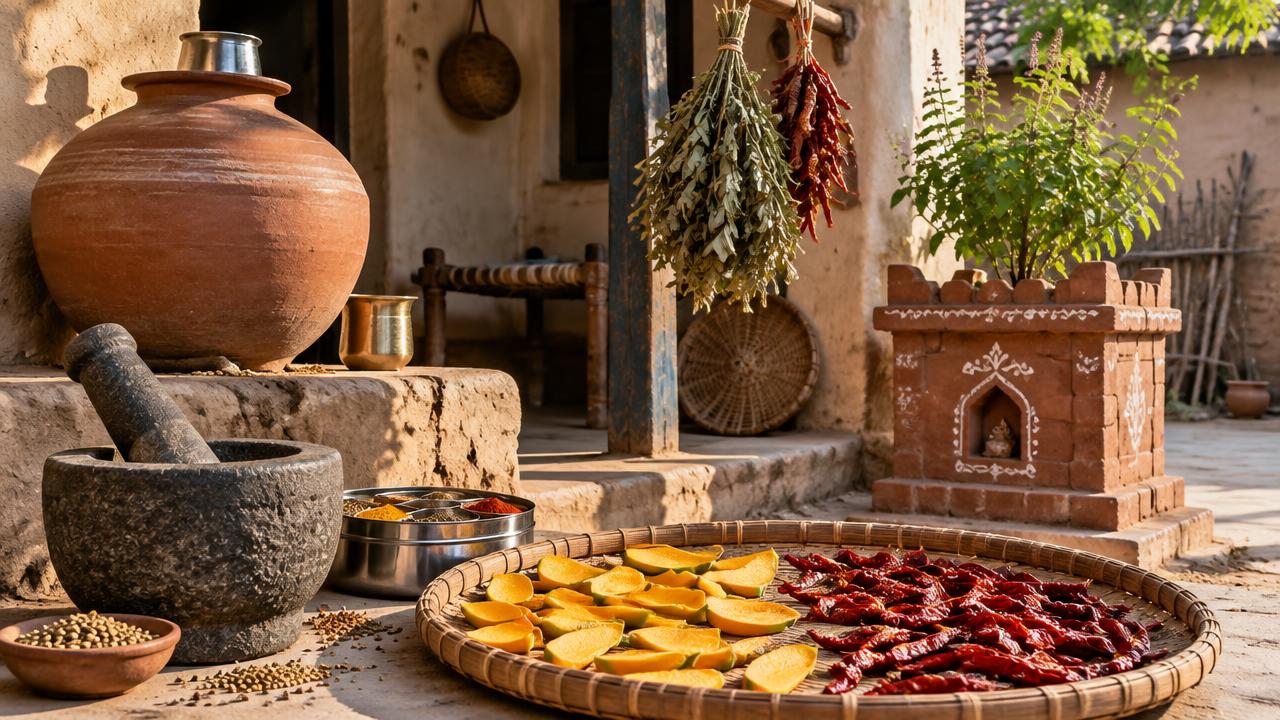
It shows up in the objects. The clay matka that cools water without a fridge. The stone sil-batta or ammikkal that grinds a wet masala differently from a blade. The steel dabba of seven spices that is also, quietly, the first shelf a family reaches for. The tulsi planted in the courtyard and watered each morning, a plant that is both sacred and useful.
It shows up in the calendar. Mango slices, chillies and papad drying on the terrace in the first heat. Pickles turned in the sun. Grain checked before the monsoon. Sesame and jaggery appearing as the days shorten. Nobody calls this seasonal medicine; it simply is how a house moves through the year.
And it shows up in the small instructions: dry your hair before you sleep, don't drink cold water on an empty stomach, eat curd at noon and not at night, soak the methi tonight, warm oil for a baby's massage, ajwain water for a heavy meal. These vary by region, family and caste-community kitchen, and they contradict each other as often as they agree. That variability is honest — folk practice is local by nature.
Folk traditions also fed the named systems rather than descending from them. Many plants written into classical texts arrived from village use. Treat this layer as cultural inheritance and everyday household habit: worth recording, worth respecting, and separate from anything that requires diagnosis or professional care.
More from Regional Wisdom
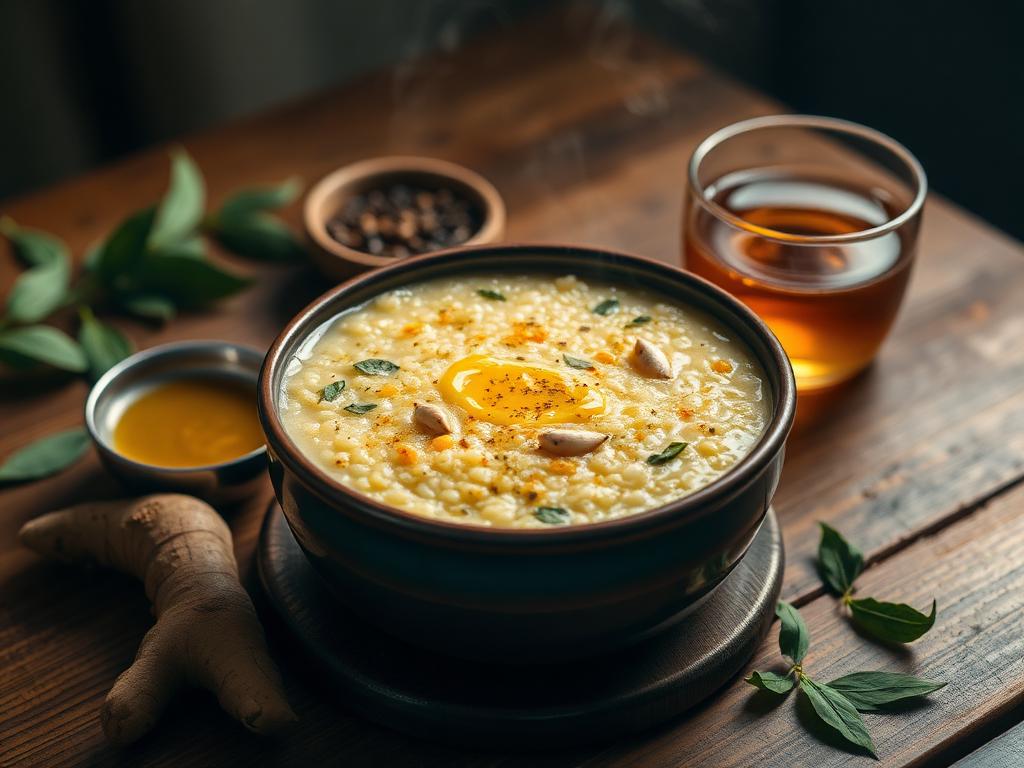
Kerala, Ayurveda and the Monsoon Calendar
Why Kerala became the home of classical panchakarma — and why the monsoon shapes its household calendar.
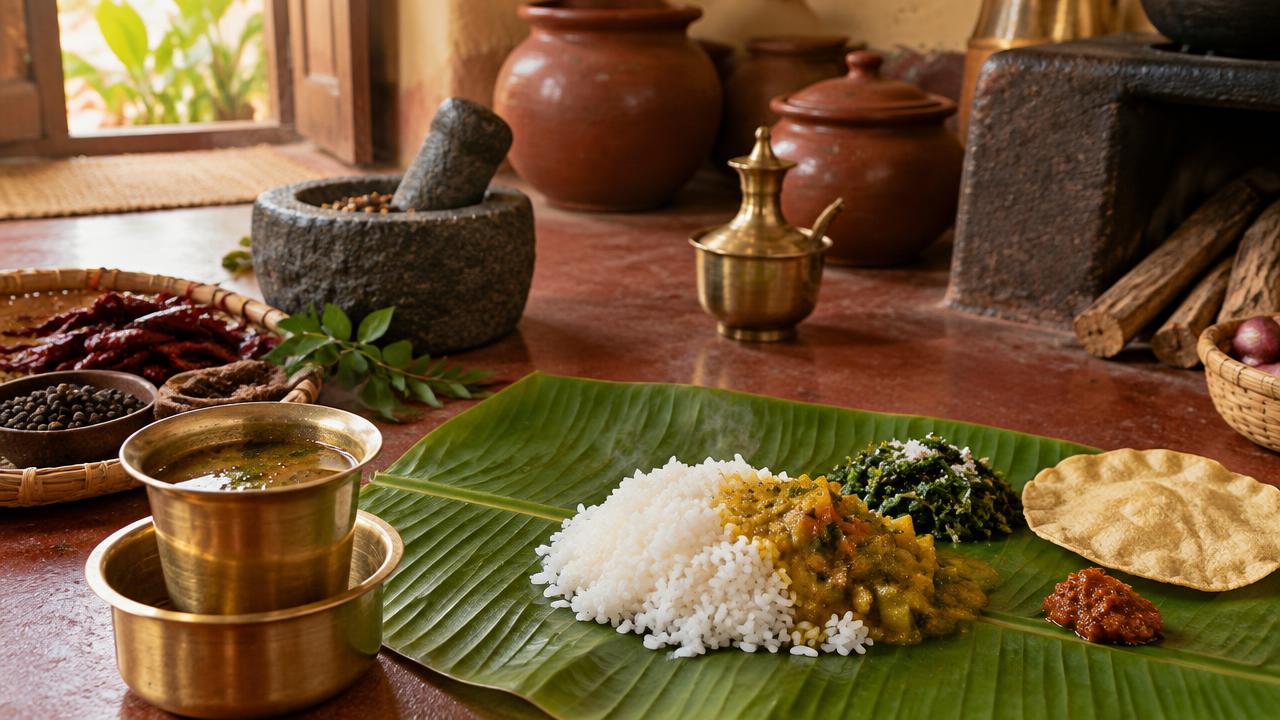
Tamil Nadu and the Siddha Tradition
Rasam at the start of lunch, sesame oil before a bath, and a healing tradition with its own Tamil lineage of siddhars.
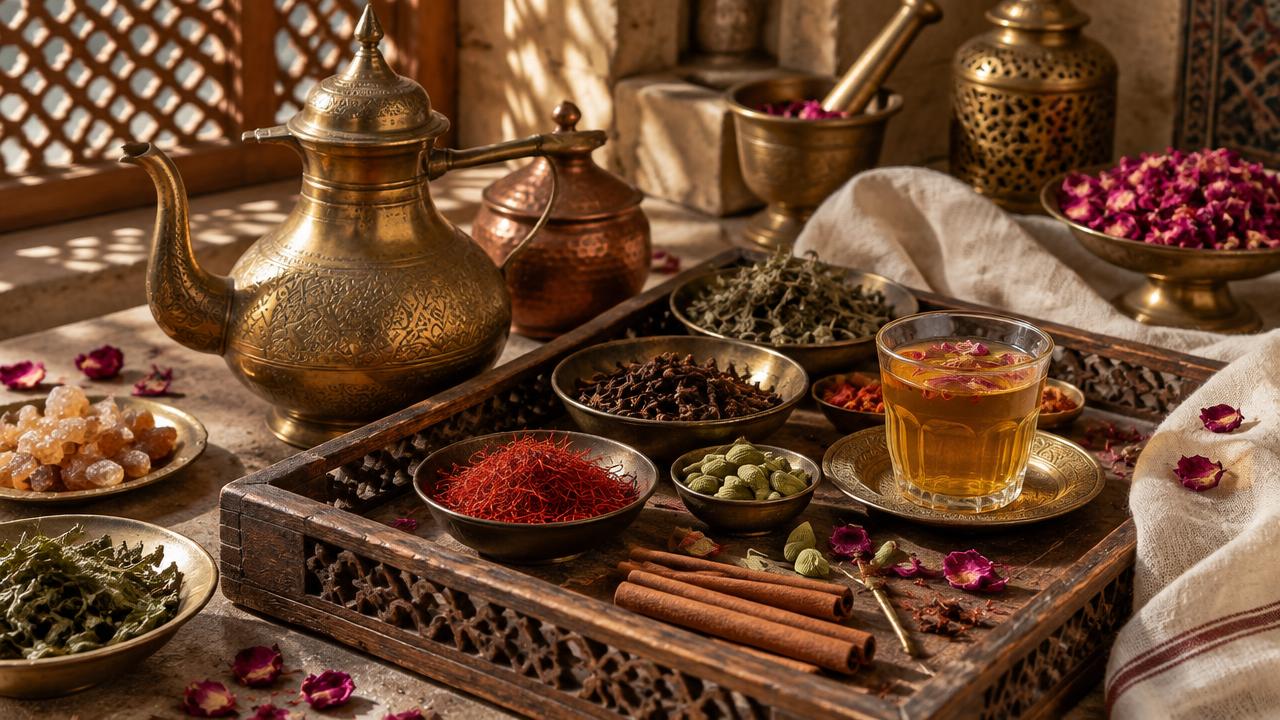
North India and the Unani Tradition
Greco-Arabic medicine that settled into North Indian cities — and the rose, saffron and mint that stayed in the kitchen.
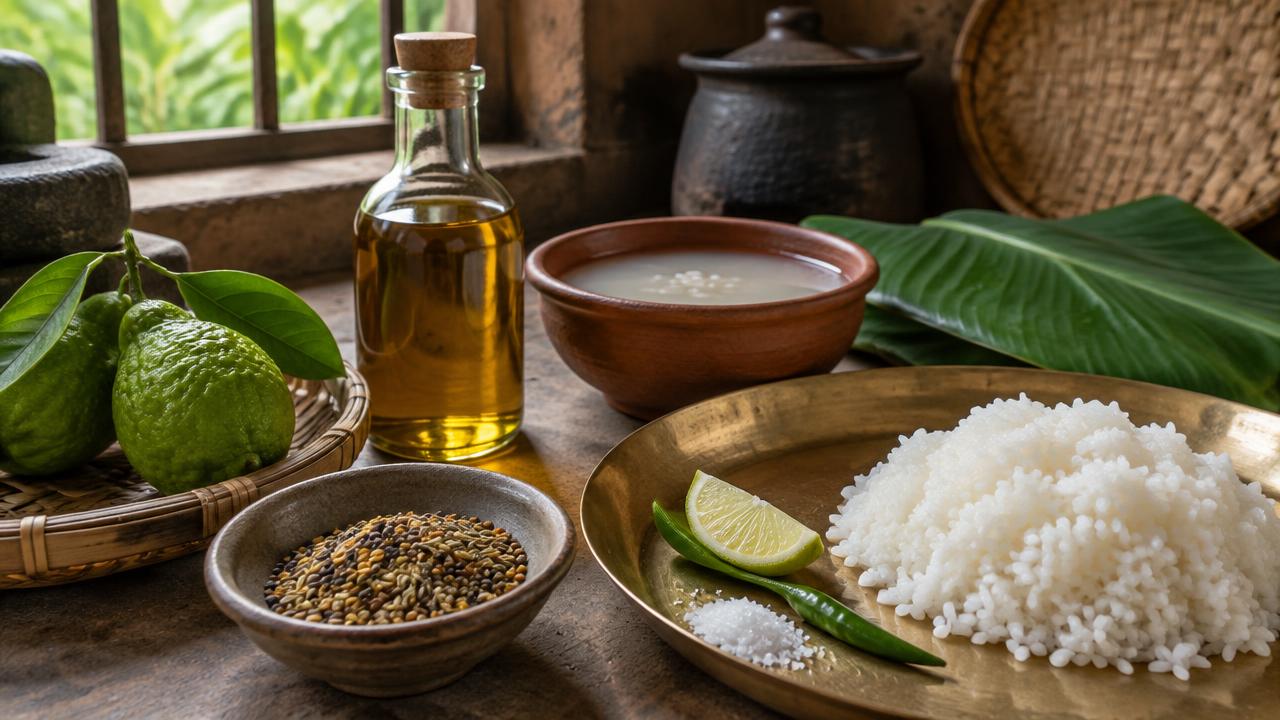
Bengal and the East — Rice, Fish and Fermentation
Panch phoron, mustard oil, gondhoraj lime and panta bhat — an eastern kitchen built around humidity, rivers and rice.
Continue exploring
Related on The Wisdom Jar
Remedy
Rose & Cucumber Cooling Splash
A summer face-and-body splash to calm heat-stressed skin.
Read moreDaily Wellness
Summer Cooling Practices
Fennel water, rose, coconut, sheetali breath — pitta-pacifying daily care.
Read moreDaily Wellness
Monsoon Immunity Care
Warming kadhas, ginger tea, ghee — protect the gut during the rains.
Read moreWellness Topic
Seasonal Allergies
Sneezing, itchy eyes, runny nose at certain times.
Read moreWellness Topic
Motion Sickness
Nausea/dizziness during travel.
Read moreIngredient
Turmeric
A warm, golden rhizome treasured for centuries as a kitchen healer for inflammation, immunity, and skin glow.
Read more