Regional Wisdom
Himalayan Traditions and Sowa-Rigpa
Barley, butter tea and long winters — how households live at altitude, and where the Tibetan medical tradition begins and ends.
Sowa-Rigpa — literally the science of healing — is the medical tradition of the Tibetan cultural world, practised across Ladakh, Spiti, Lahaul, Sikkim, Arunachal Pradesh and the Himalayan belt. It has its own Tibetan-language texts, most famously the Four Tantras, its own training through monastic and family lineages, and its own amchi practitioners. It is not a Himalayan version of Ayurveda; the two traditions met and exchanged plants and ideas over centuries, but they remain separate systems with separate languages, texts and professional training.
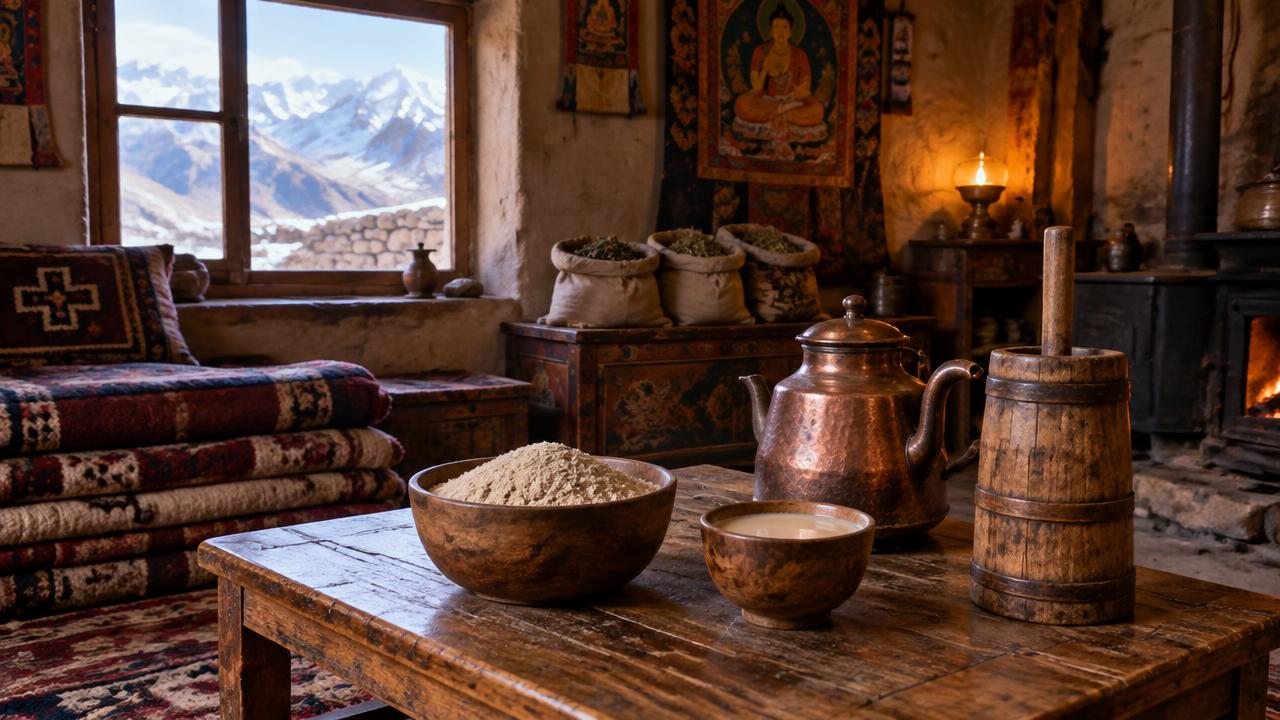
High-altitude life shapes the household layer far more than any text does. Thin, dry, cold air, a short growing season, long winters and heavy physical work produced a kitchen built on dense, warming, energy-rich food. Barley is the staple: roasted and ground into tsampa, it keeps well, needs little fuel and travels. Butter tea — churned with salt and butter — answers cold and dryness at the same time and is drunk through the day rather than as a treat.
The seasonal rhythm is severe and explicit. Summer and early autumn are for harvesting, drying and storing: apricots dried on rooftops, greens preserved, barley and buckwheat brought in. Winter is for stored food, fermented and dried items, soups and stews, thukpa and skyu, and keeping the body warm from the inside. Ginger, garlic, black pepper, caraway and Himalayan seabuckthorn appear in kitchens across the belt as ordinary food rather than as prescriptions.
The formal side of Sowa-Rigpa is different in kind. Its compounded pills and mineral-based preparations are made and dispensed by trained amchis, who assess the person — including by pulse and urine examination — before deciding anything. High-altitude substances that outsiders often romanticise, shilajit among them, belong in that practitioner setting, not on a home shelf.
More from Regional Wisdom
Kerala, Ayurveda and the Monsoon Calendar
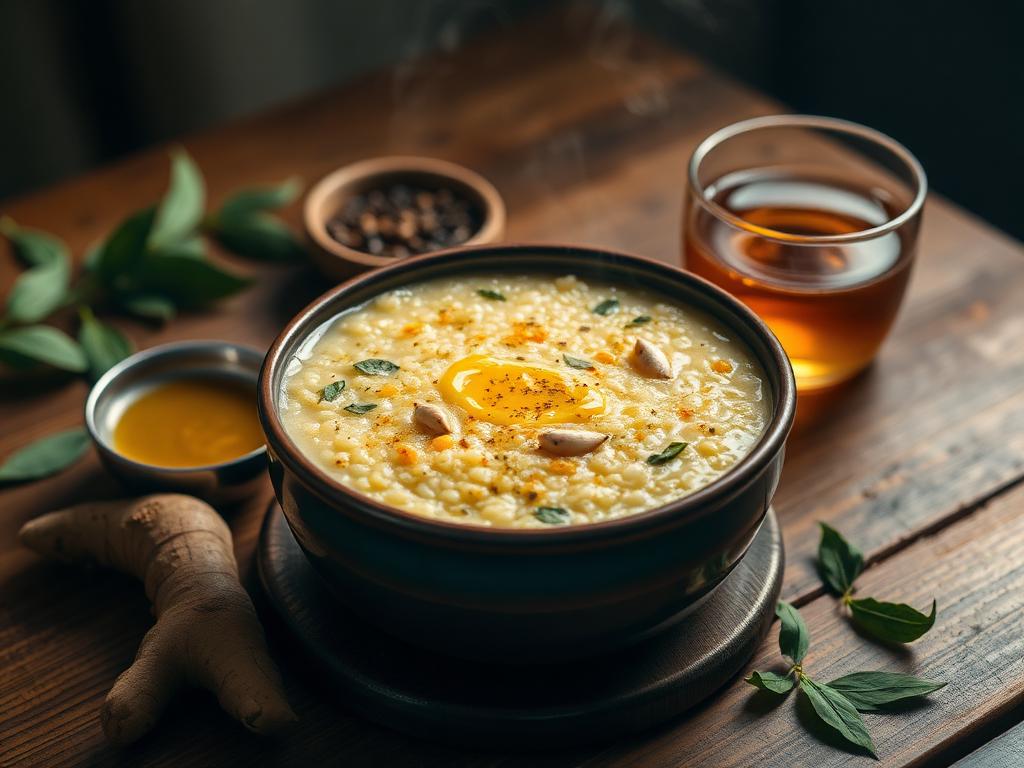
Why Kerala became the home of classical panchakarma — and why the monsoon shapes its household calendar.
Tamil Nadu and the Siddha Tradition
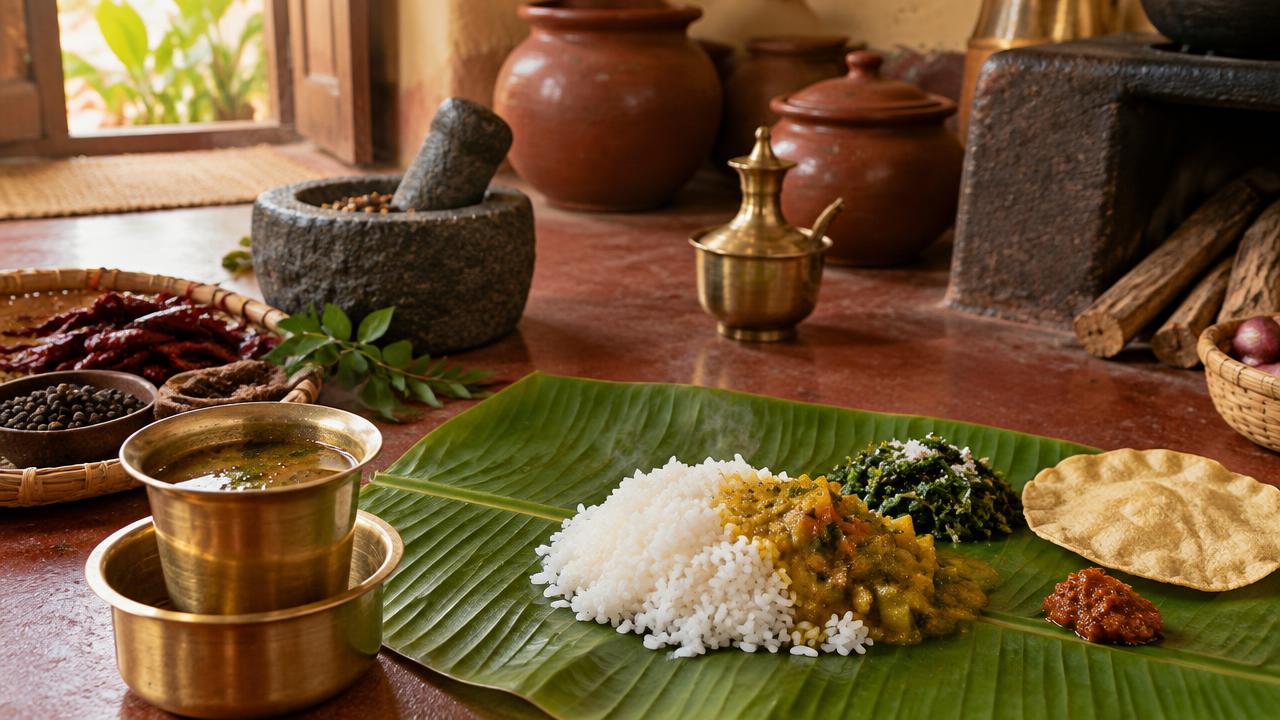
Rasam at the start of lunch, sesame oil before a bath, and a healing tradition with its own Tamil lineage of siddhars.
North India and the Unani Tradition
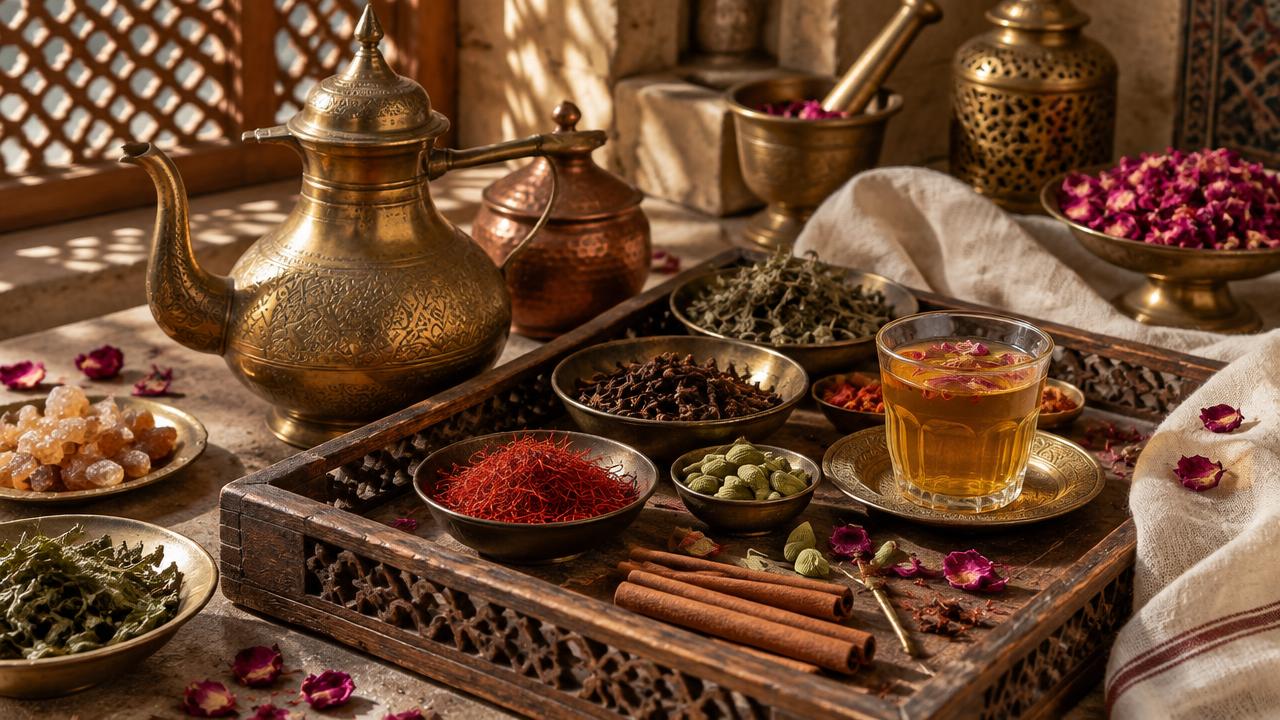
Greco-Arabic medicine that settled into North Indian cities — and the rose, saffron and mint that stayed in the kitchen.
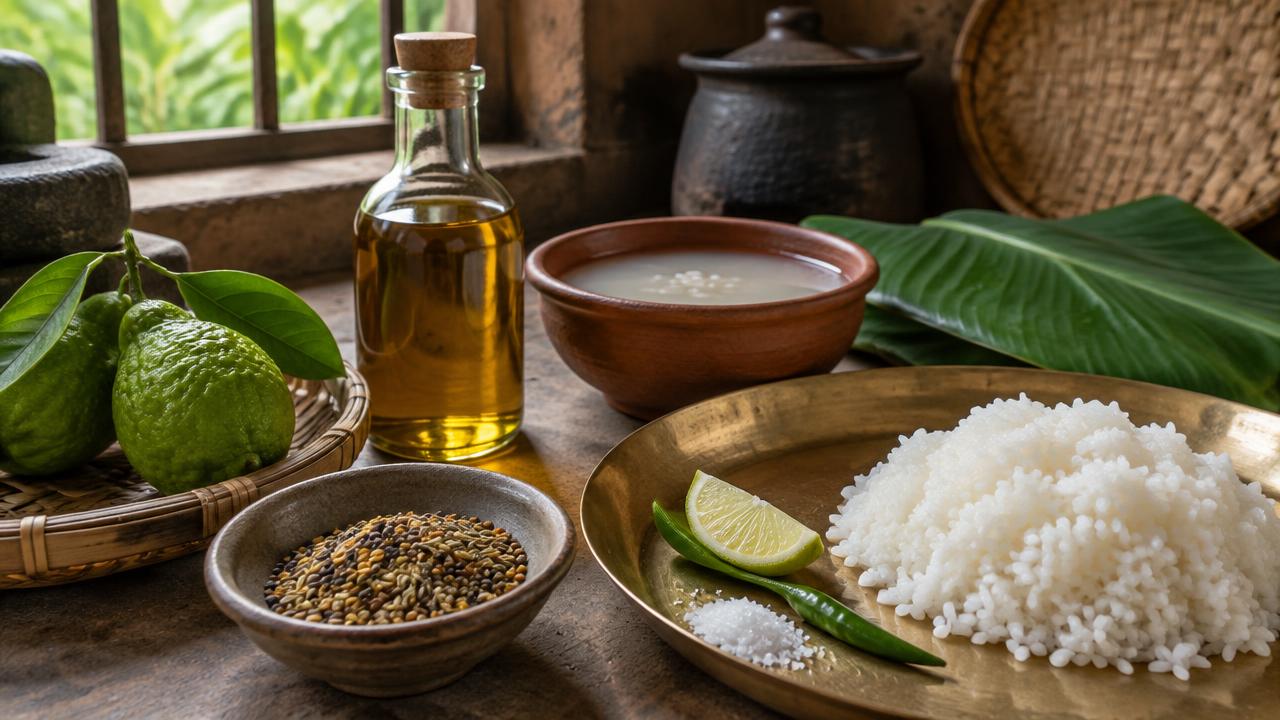
Bengal and the East — Rice, Fish and Fermentation
Panch phoron, mustard oil, gondhoraj lime and panta bhat — an eastern kitchen built around humidity, rivers and rice.
Continue exploring
Related on The Wisdom Jar
Remedy
Golden Milk for Winter Immunity
A warm, soothing nightly drink of turmeric, milk, and pepper to support immunity and rest.
Read moreRemedy
Warm Sesame Oil Self-Massage
An Ayurvedic-inspired morning routine to ease joint stiffness and ground the nervous system.
Read moreDaily Wellness
Winter Warming Care
Oil massage, ghee, sesame, warming spices — feed the inner fire.
Read moreIngredient
Turmeric
A warm, golden rhizome treasured for centuries as a kitchen healer for inflammation, immunity, and skin glow.
Read moreIngredient
Ginger
A pungent, warming root used worldwide for nausea, digestion, and respiratory comfort.
Read moreDaily Wellness
Warm Water on Waking (Ushapan)
A simple, ancient cue that wakes digestion and gently flushes the system.
Read more