
The Wisdom Jar
Glossary
Sanskrit and Hindi terms in plain English, plus multilingual ingredient names.
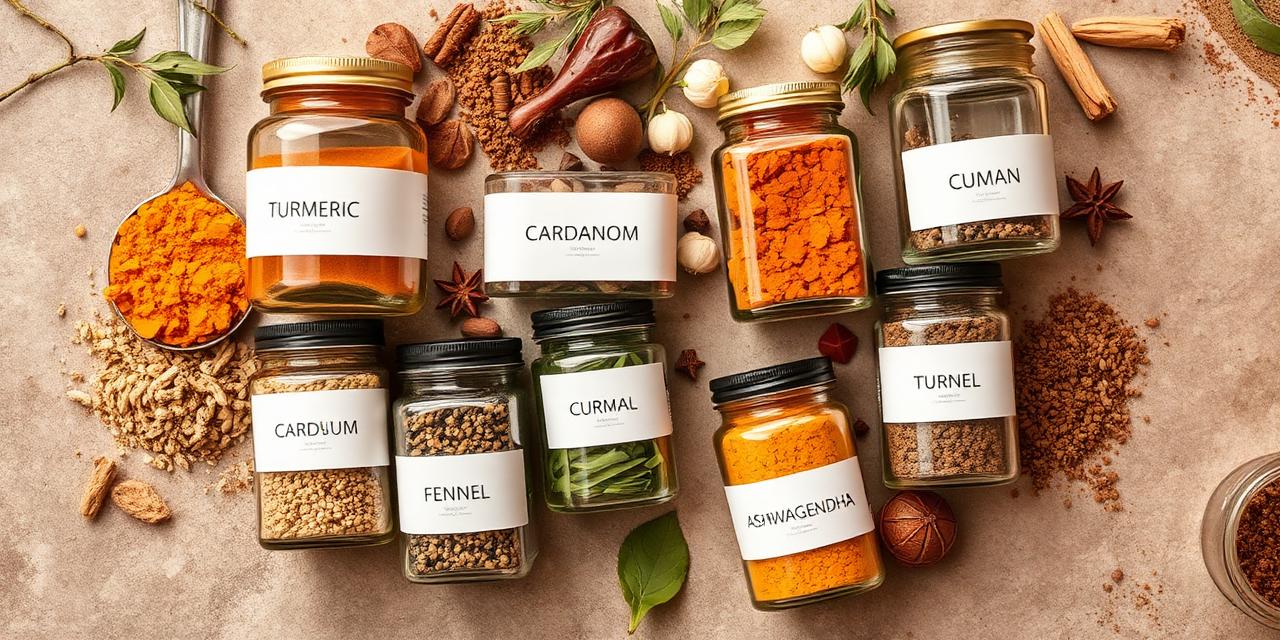
A plain-English companion to the Sanskrit and Hindi terms you'll meet across The Wisdom Jar — from doshas and digestion to the spices in your kitchen jar.
Ayurvedic foundations
- Ayurveda/aa-yur-VAY-da/
- The 'science of life' — a 5,000-year-old Indian system of medicine built around diet, daily routine, herbs, and balance of the doshas.
- Dosha/DOH-shuh/
- One of three biological energies — Vata, Pitta, Kapha — that govern every body and mind. Health is the balance between them.
- Vata/VAA-tuh/
- The air-and-space dosha. Governs movement, breath, nerves. Aggravated by cold, dry, irregular routines.
- Pitta/PIT-tuh/
- The fire-and-water dosha. Governs digestion, metabolism, intelligence. Aggravated by heat, spice, skipped meals.
- Kapha/KUH-fuh/
- The earth-and-water dosha. Governs structure, immunity, lubrication. Aggravated by cold, heavy, oily foods and inactivity.
- Agni/UG-nee/
- Digestive fire — the body's ability to break down food, thoughts and impressions. Strong agni is the cornerstone of Ayurvedic health.
- Ama/AA-mah/
- Undigested residue from weak agni. Believed to be the root of most disease in Ayurveda.
- Prakriti/PRUH-kri-tee/
- Your constitutional type at birth — the unique mix of doshas you are born with.
- Vikriti/VI-kri-tee/
- Your current state of imbalance, as opposed to your prakriti. What Ayurveda actually treats.
- Ojas/OH-jus/
- The subtle essence of vitality, immunity and glow. Built by good digestion, rest, and unhurried meals.
Practices & rituals
- Abhyanga/ub-HYAN-gah/
- Daily warm-oil self-massage. Calms vata, nourishes skin, mobilises joints.
- Dinacharya/DIN-uh-char-yuh/
- Daily routine — waking, oiling, eating, sleeping at consistent times in tune with the sun.
- Ritucharya/RI-too-char-yuh/
- Seasonal routine — adjusting food, sleep and self-care to the changing season.
- Panchakarma/PUN-cha-KAR-ma/
- A five-step Ayurvedic detoxification programme. Done under a vaidya, not at home.
- Nasya/NAS-yah/
- Putting medicated oil drops into the nostrils to clear the head and sinuses.
- Jala neti/JUH-la NAY-tee/
- Nasal rinsing with warm saline water using a small pot — a yogic hygiene practice.
- Pranayama/pra-na-YA-ma/
- Conscious breath-work practices that steady the nervous system.
- Champi/CHUM-pee/
- Warm-oil head massage, traditionally done weekly to nourish hair and calm the mind.
Preparations & forms
- Kadha / Kashaya/kah-DAH / kuh-SHAH-yuh/
- A simmered herbal decoction — herbs boiled until the water reduces by half or more.
- Churna/CHOOR-nuh/
- A dry, finely ground herbal powder, usually taken with warm water, honey or ghee.
- Lehyam / Avaleha/LAY-hyum/
- A jam-like herbal paste — Chyawanprash is the most famous example.
- Ghrita/GHRI-tuh/
- Medicated ghee — herbs cooked into clarified butter as the carrier.
- Taila/TYE-luh/
- Medicated oil — sesame, coconut or mustard oil infused with herbs.
- Asava / Arishta/AH-sah-vah / a-RISH-ta/
- Naturally fermented herbal tonics, mildly alcoholic.
- Lepa/LAY-pah/
- A paste applied externally to the skin — for blemishes, swelling or pain.
- Anupana/ah-noo-PAH-nuh/
- The 'vehicle' a herb is taken with — warm water, milk, honey or ghee — to carry it deep into the tissues.
Common kitchen herbs (Sanskrit / Hindi → English)
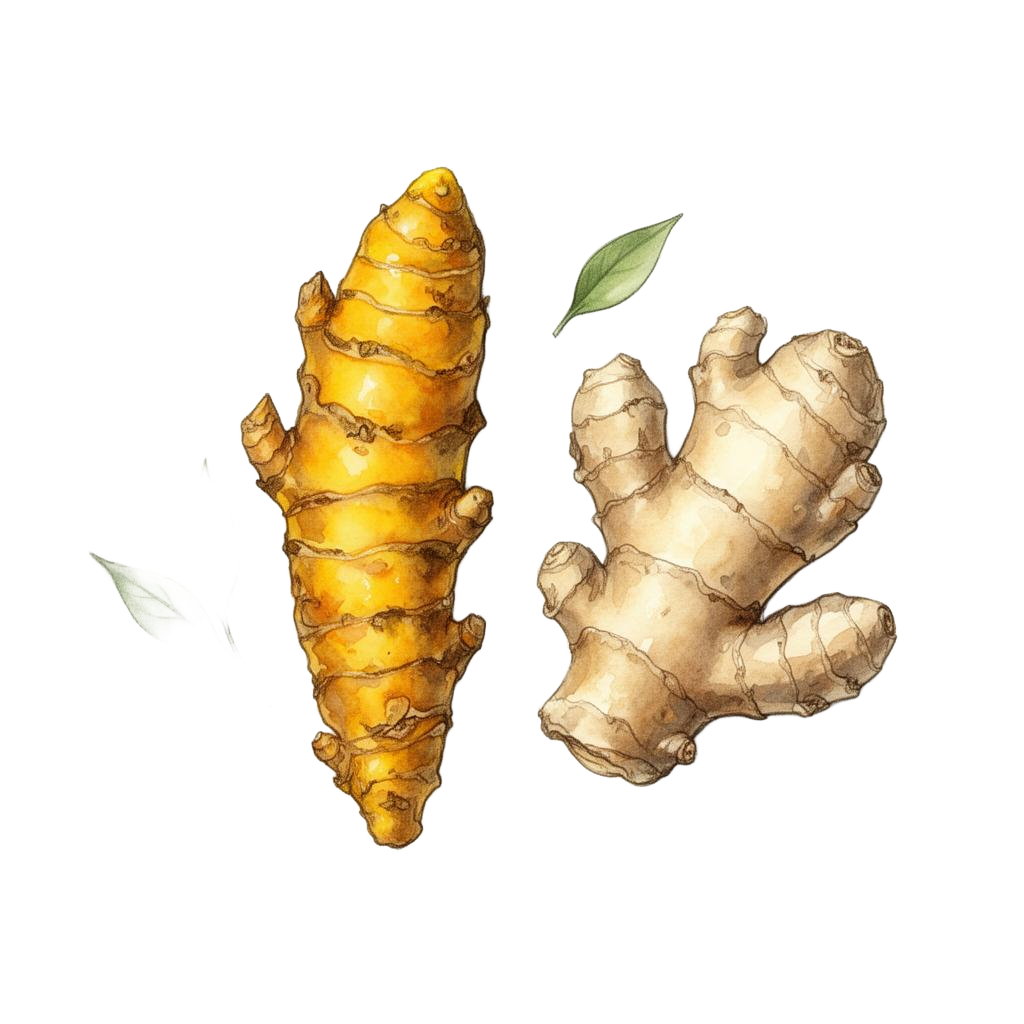
- Haldi
- Turmeric (Curcuma longa).
- Adrak / Sunthi
- Fresh ginger / dried ginger powder.
- Methi
- Fenugreek seeds and leaves.
- Jeera
- Cumin seeds.
- Saunf
- Fennel seeds.
- Dhania
- Coriander — fresh leaves or seeds.
- Ajwain
- Carom seeds — strong digestive aid.
- Hing
- Asafoetida — pungent resin used for gas and bloating.
- Tulsi
- Holy basil — sacred plant used for cough, immunity and stress.
- Neem
- Azadirachta indica — bitter leaves used for skin and blood.
- Amla
- Indian gooseberry — highest natural source of vitamin C in Ayurveda.
- Ashwagandha
- Withania somnifera — adaptogen used for strength, sleep and stress.
- Brahmi
- Bacopa monnieri — herb traditionally used to support memory and calm.
- Shatavari
- Asparagus racemosus — women's tonic in Ayurveda.
- Triphala
- A blend of three fruits — amla, haritaki, bibhitaki — used for gentle bowel and eye care.
- Giloy / Guduchi
- Tinospora cordifolia — immunity and fever herb.
- Pippali
- Long pepper — kindles digestion and supports the lungs.
- Elaichi
- Cardamom — green or black, freshens breath and aids digestion.
- Dalchini
- Cinnamon bark.
- Laung
- Cloves.
- Kali mirch
- Black pepper — helps absorb turmeric and other herbs.
- Gur / Jaggery
- Unrefined cane sugar, the traditional sweetener in Ayurveda.
Tastes, qualities and clinical terms
- Rasa
- Taste — sweet, sour, salty, pungent, bitter, astringent. Each balances different doshas.
- Virya
- The heating or cooling potency of a substance.
- Vipaka
- The post-digestive effect of a food or herb on the body.
- Prabhava
- A herb's unique, unexplainable action — beyond rasa, virya or vipaka.
- Sattva / Rajas / Tamas
- Three qualities of the mind — clarity, activity, inertia. Food and routine influence which one dominates.
- Snehana
- Oleation — internal or external oiling, often before a detox.
- Swedana
- Therapeutic sweating, usually after snehana, to mobilise toxins.
- Rasayana
- Rejuvenation therapy — practices and herbs that nourish tissues and extend healthy life.
- Vaidya
- A qualified Ayurvedic physician.
- Carminative
- A substance that relieves gas and bloating — fennel and ajwain, for example.
- Adaptogen
- A herb that helps the body adapt to stress — ashwagandha, tulsi, brahmi.