Regional Wisdom
The Northeast — Fermentation, Bamboo and Wild Greens
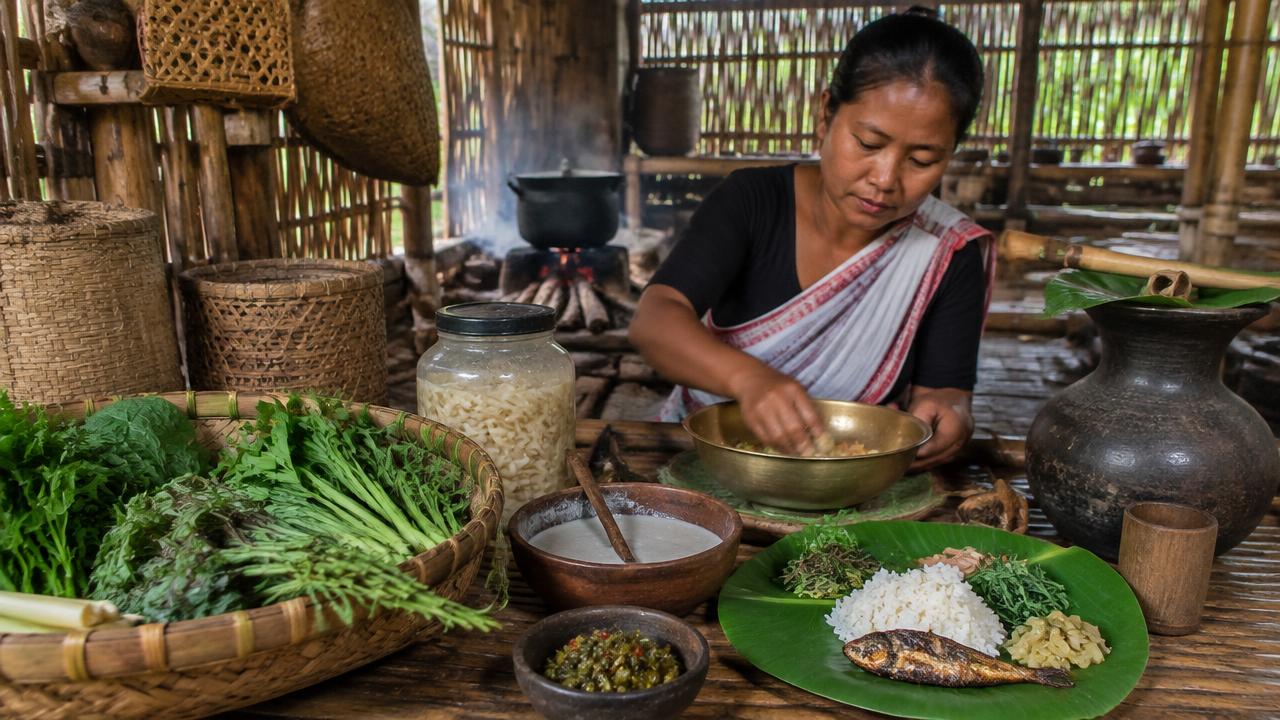
Assam, Nagaland, Manipur and Sikkim built a food culture on fermentation, foraged greens and very little added fat.
India's northeast is not one food culture but many, spread across Assam, Manipur, Nagaland, Mizoram, Meghalaya, Tripura, Arunachal Pradesh and Sikkim, with dozens of communities and languages. What they share is a kitchen shaped by high rainfall, dense forest, bamboo, rivers and a strong preference for boiling, steaming and fermenting over frying.
Fermentation is the defining craft. Assam has khar, made by filtering water through the ash of sun-dried banana peel and used as an alkaline element at the start of a meal. Manipur has hawaijar, fermented soybean, and ngari, fermented fish, which anchors the flavour of eromba and singju. Nagaland has axone and fermented bamboo shoot. Sikkim has gundruk and sinki, fermented leafy greens and radish, and kinema soybean. Each of these is a preservation technology developed long before refrigeration, and each is eaten as food.
The cooking method itself is distinctive: very little oil, a lot of boiling and steaming, food cooked inside bamboo, meat and fish smoked over the hearth. Wild and foraged greens are central — bamboo shoot, banana flower, colocasia, fiddlehead ferns, tree tomato, Sichuan-type pepper, wild garlic and a large local vocabulary of herbs that never reached the national market.
The seasonal logic follows the rain. The long wet months favour smoked, dried and fermented stores and simple boiled meals; the drier months bring fresh greens and the year's preserving work. Rice, and rice beer in many communities, run through the whole calendar as everyday food and as part of social and ritual life.
These are food traditions and household practices rather than a codified medical system, and they are best read that way — an enormous, underdocumented regional cuisine whose logic is preservation, freshness and what the forest actually provides.
More from Regional Wisdom
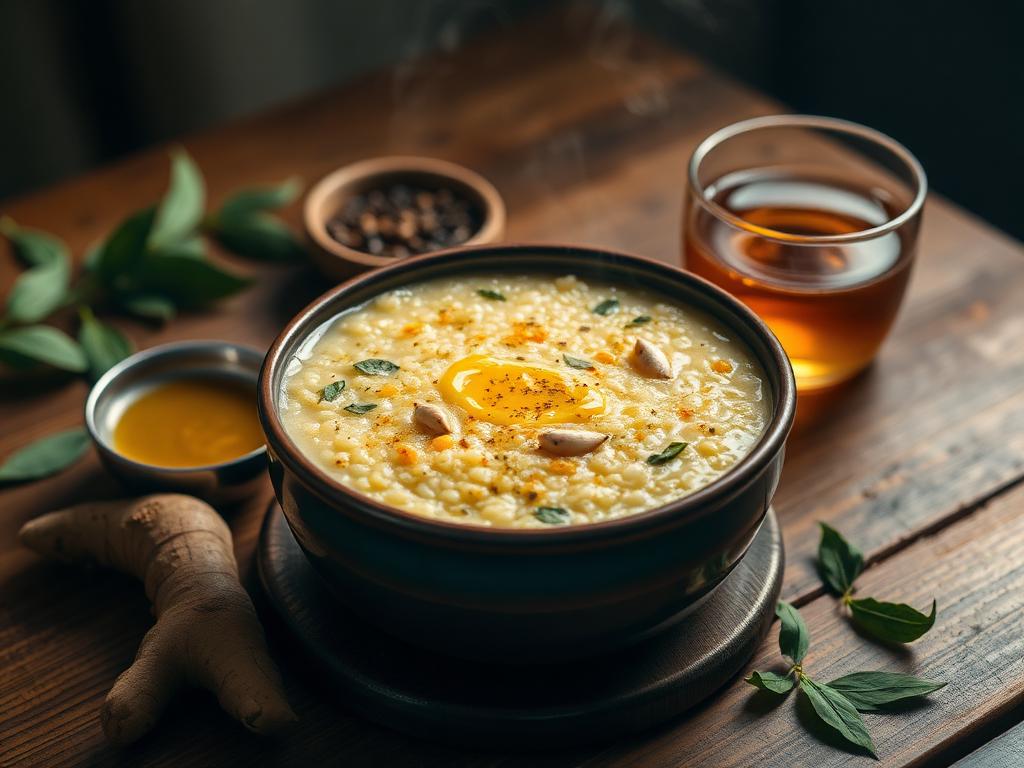
Kerala, Ayurveda and the Monsoon Calendar
Why Kerala became the home of classical panchakarma — and why the monsoon shapes its household calendar.
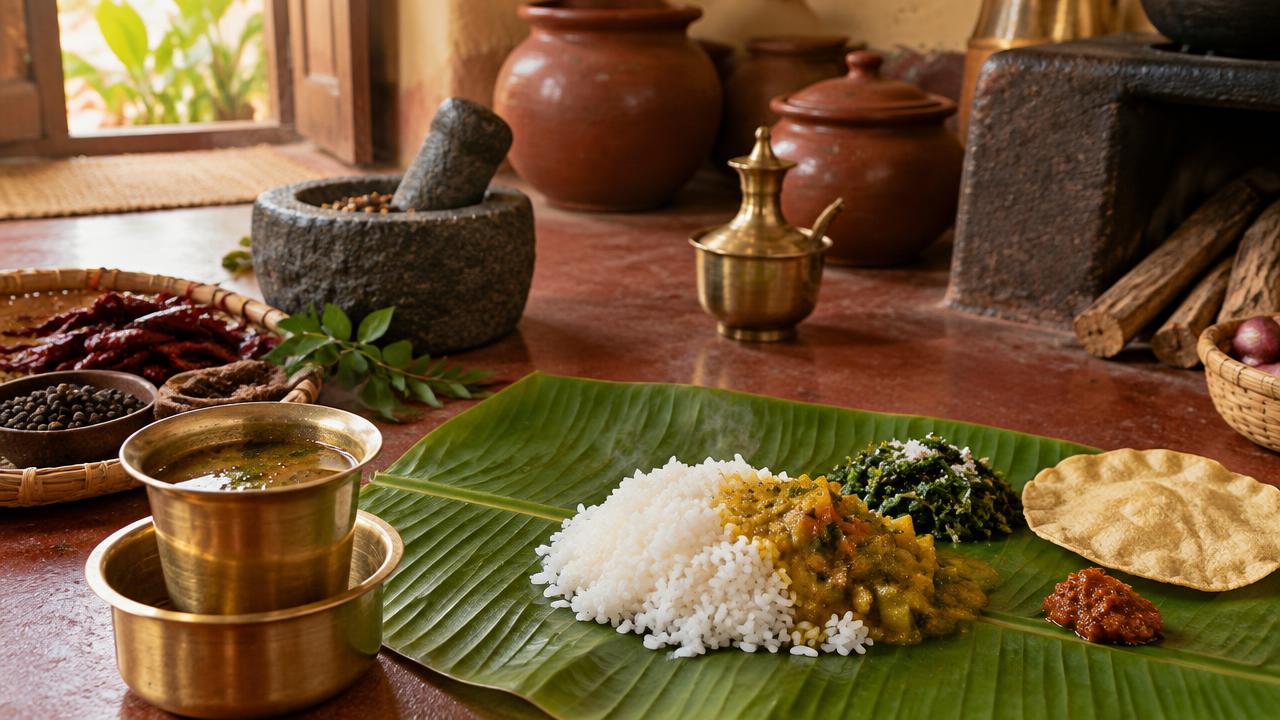
Tamil Nadu and the Siddha Tradition
Rasam at the start of lunch, sesame oil before a bath, and a healing tradition with its own Tamil lineage of siddhars.
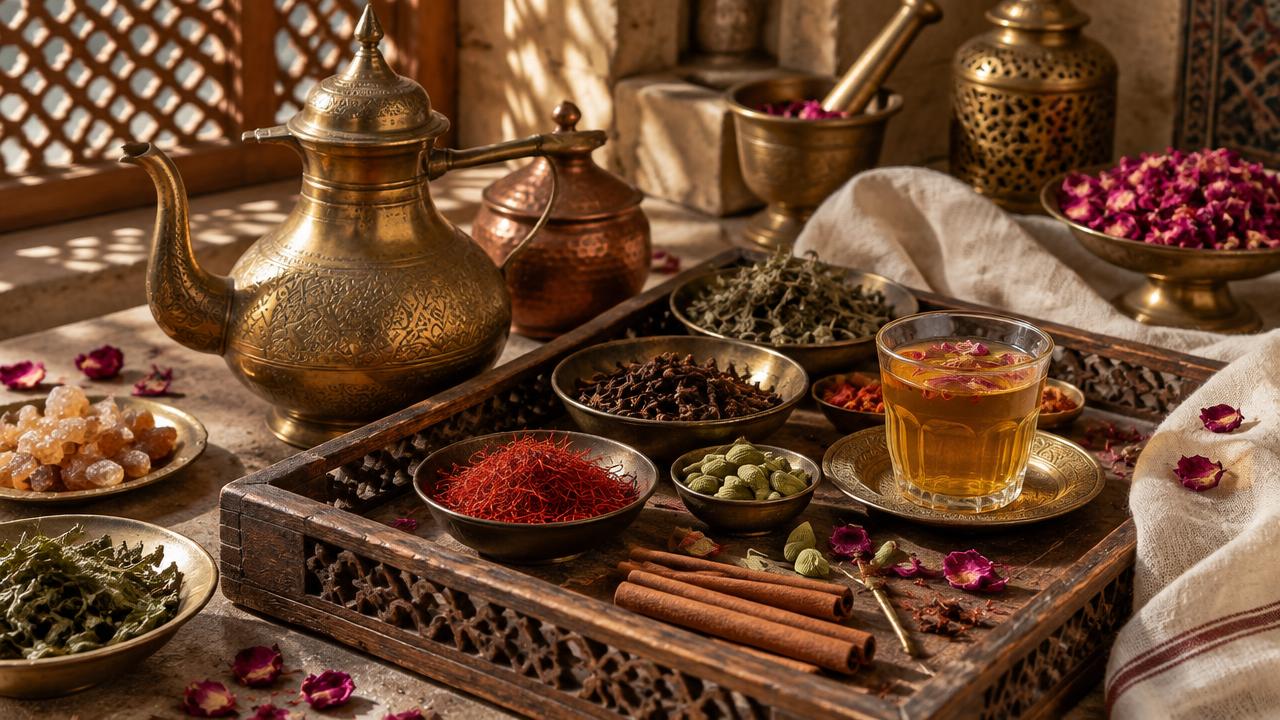
North India and the Unani Tradition
Greco-Arabic medicine that settled into North Indian cities — and the rose, saffron and mint that stayed in the kitchen.
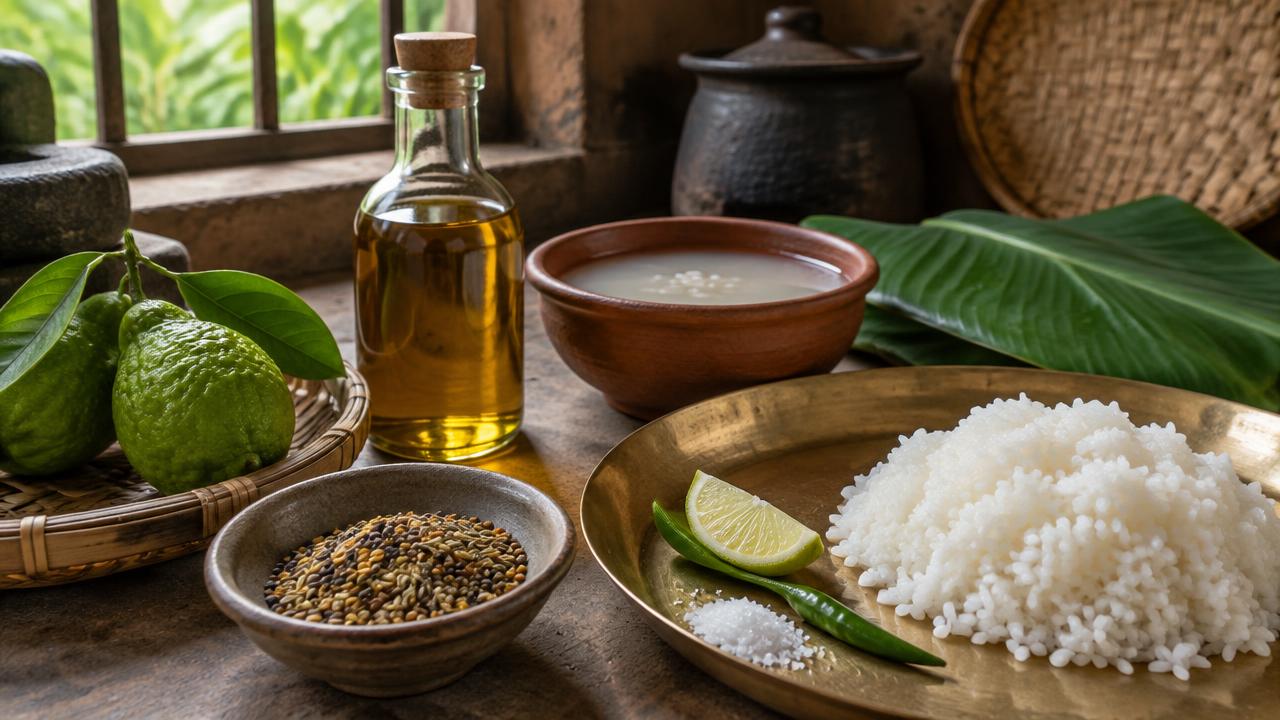
Bengal and the East — Rice, Fish and Fermentation
Panch phoron, mustard oil, gondhoraj lime and panta bhat — an eastern kitchen built around humidity, rivers and rice.
Continue exploring
Related on The Wisdom Jar
Ingredient
Turmeric
A warm, golden rhizome treasured for centuries as a kitchen healer for inflammation, immunity, and skin glow.
Read moreIngredient
Ginger
A pungent, warming root used worldwide for nausea, digestion, and respiratory comfort.
Read moreRemedy
Golden Milk for Winter Immunity
A warm, soothing nightly drink of turmeric, milk, and pepper to support immunity and rest.
Read moreRemedy
Ginger-Tulsi Decoction for Cough & Cold
A simple kitchen kadha that soothes scratchy throats and clears mild congestion.
Read moreDaily Wellness
Warm Water on Waking (Ushapan)
A simple, ancient cue that wakes digestion and gently flushes the system.
Read moreDaily Wellness
Tongue Scraping
Remove the overnight coating in 30 seconds — taste, breath and digestion improve.
Read more