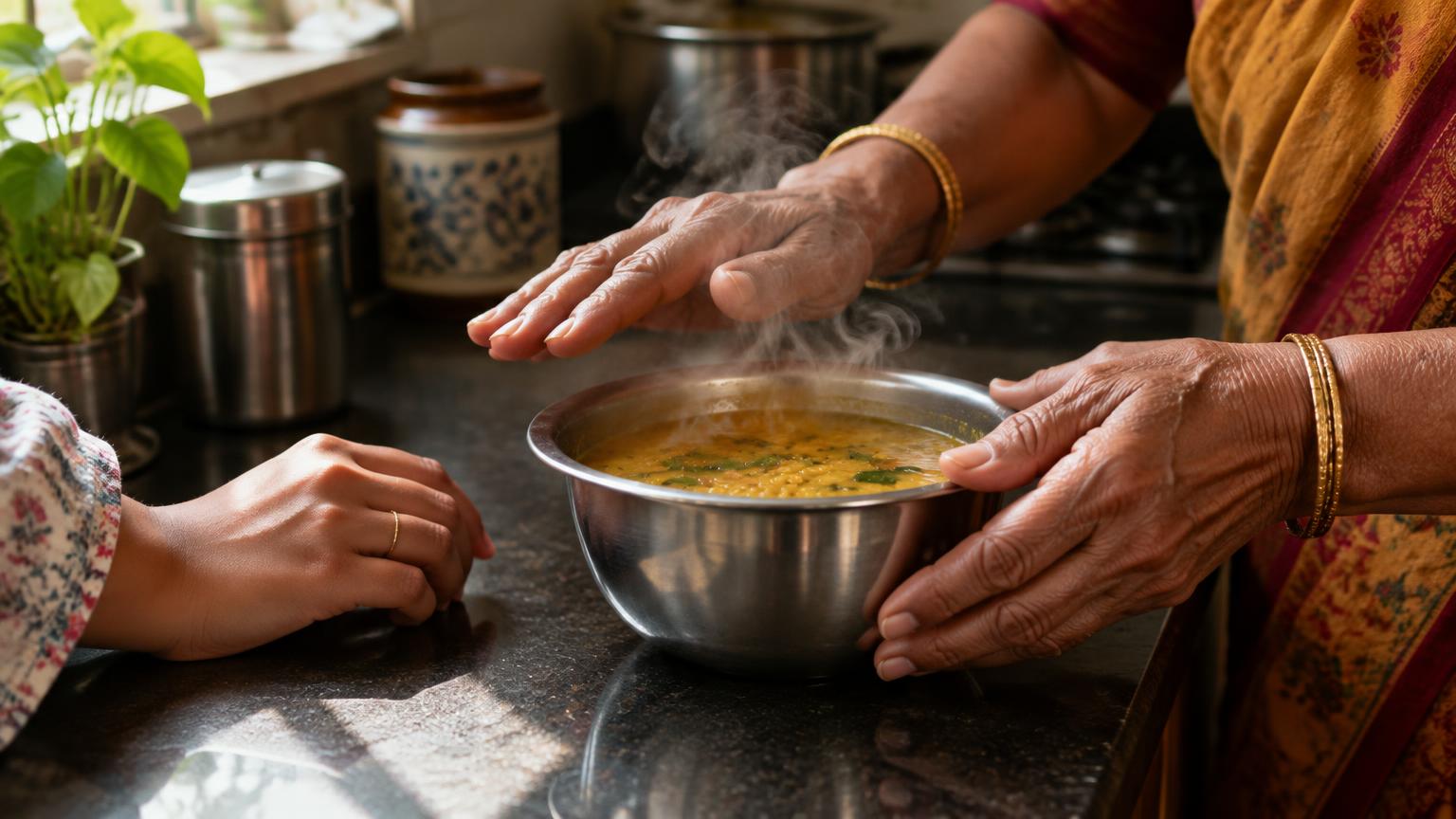
Grandmother's Wisdom
Garam, Thanda, Bhaari, Halka: The Household Vocabulary
Four everyday words did most of the work in an Indian kitchen — and none of them meant temperature or weight.
Ask why a food was avoided in summer or served during recovery and the answer in many Indian households came back in the same small vocabulary: it is garam, it is thanda, that is bhaari, this is halka. The words are ordinary Hindi-Urdu — hot, cold, heavy, light — but in household use they described an effect a food was believed to have on the body, not its temperature on the plate or its weight on the scale. Dry fruits or certain spices could be called garam while served cool; a large bowl of rice water could be halka.
Every language had its own set: soodu and thatchi in Tamil usage, veppam and thanuppu in Malayalam speech, garam and sard in Unani-influenced households, guru and laghu in classical Ayurvedic vocabulary. The household words were not translations of the classical terms, but they overlapped with them and borrowed authority from them.
What made the vocabulary powerful was that it was actionable without explanation. A grandmother did not need to justify a seasonal change; saying a food was garam was enough for everyone in the room to understand why it appeared in winter and disappeared in summer. It compressed a long chain of reasoning into one word that a child could learn.
It was also inconsistent, and honestly so. Families disagreed about whether a given food was garam or thanda, and the same food could be classified differently in two regions. These are cultural categories carrying centuries of usage, not measurements, and modern nutrition or physiology does not map onto them.
The vocabulary survives better than almost anything else in this section — people who cook nothing traditional still say a food is too heating. Treat it as living language and cultural classification. It is not a basis for deciding what to eat during illness, pregnancy or any medical condition, where professional advice applies.
More from Grandmother's Wisdom
Who Taught Whom: Dadi, Nani and the Household Line
Household knowledge rarely came from one person. It arrived through a specific chain of relatives, neighbours and elders — and who taught whom shaped what survived.
The Daily Household Rhythm
Morning, meals, evening, bedtime — the fixed shape of a household day carried most of its health knowledge without ever naming it as such.
Feeding Someone Who Was Unwell
Every household had a separate way of cooking for the sick and the recovering — simpler, softer, and watched closely by whoever was in charge.
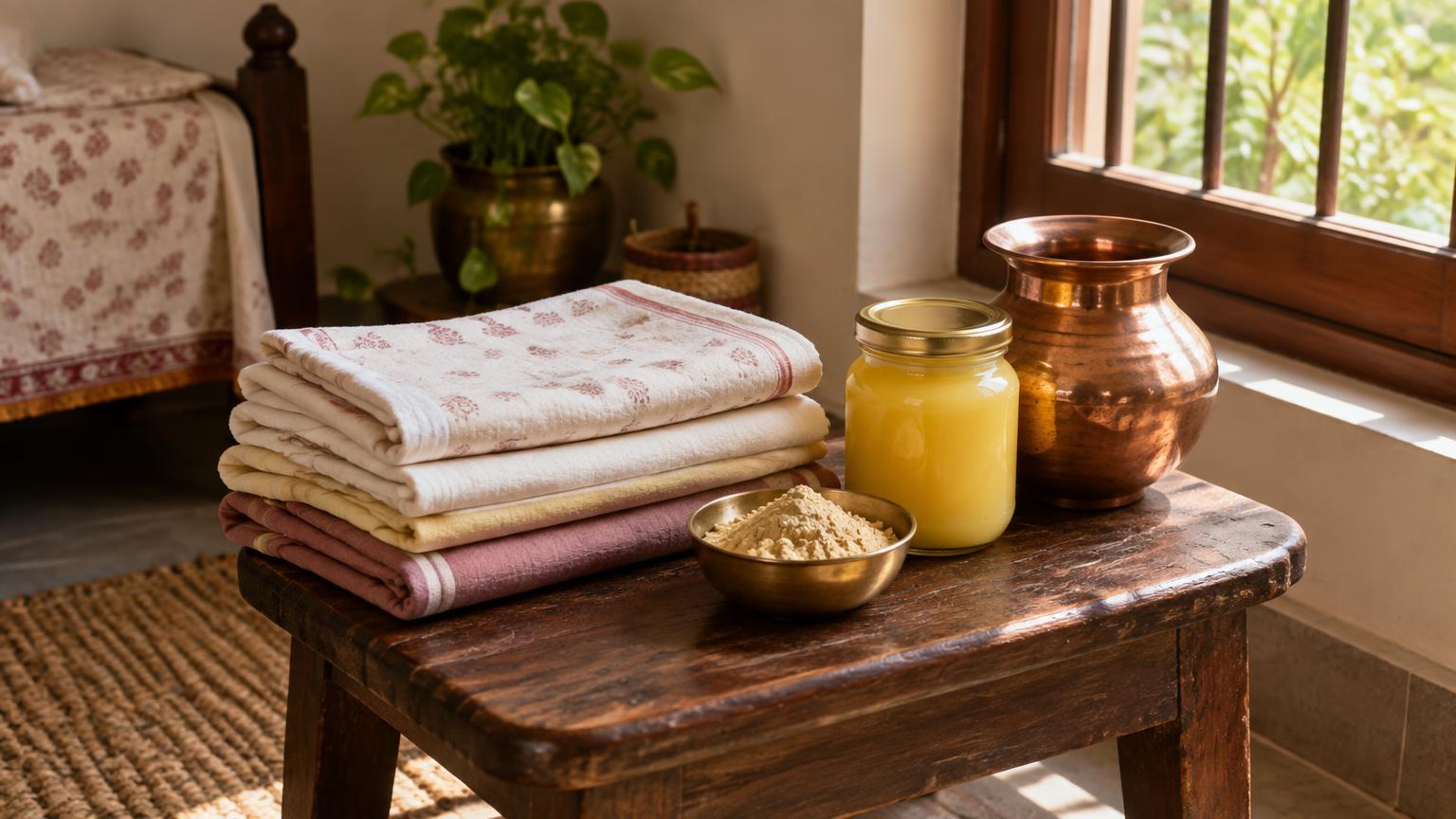
New Mothers and Infant Care: A Household Tradition
The weeks after birth were among the most organised periods in household life — and among the most important to read as culture rather than as guidance.
Continue exploring
Related on The Wisdom Jar
Ingredient
Turmeric
A warm, golden rhizome treasured for centuries as a kitchen healer for inflammation, immunity, and skin glow.
Read moreIngredient
Ginger
A pungent, warming root used worldwide for nausea, digestion, and respiratory comfort.
Read moreRemedy
Golden Milk for Winter Immunity
A warm, soothing nightly drink of turmeric, milk, and pepper to support immunity and rest.
Read moreRemedy
Ginger-Tulsi Decoction for Cough & Cold
A simple kitchen kadha that soothes scratchy throats and clears mild congestion.
Read moreDaily Wellness
Warm Water on Waking (Ushapan)
A simple, ancient cue that wakes digestion and gently flushes the system.
Read moreDaily Wellness
Tongue Scraping
Remove the overnight coating in 30 seconds — taste, breath and digestion improve.
Read more