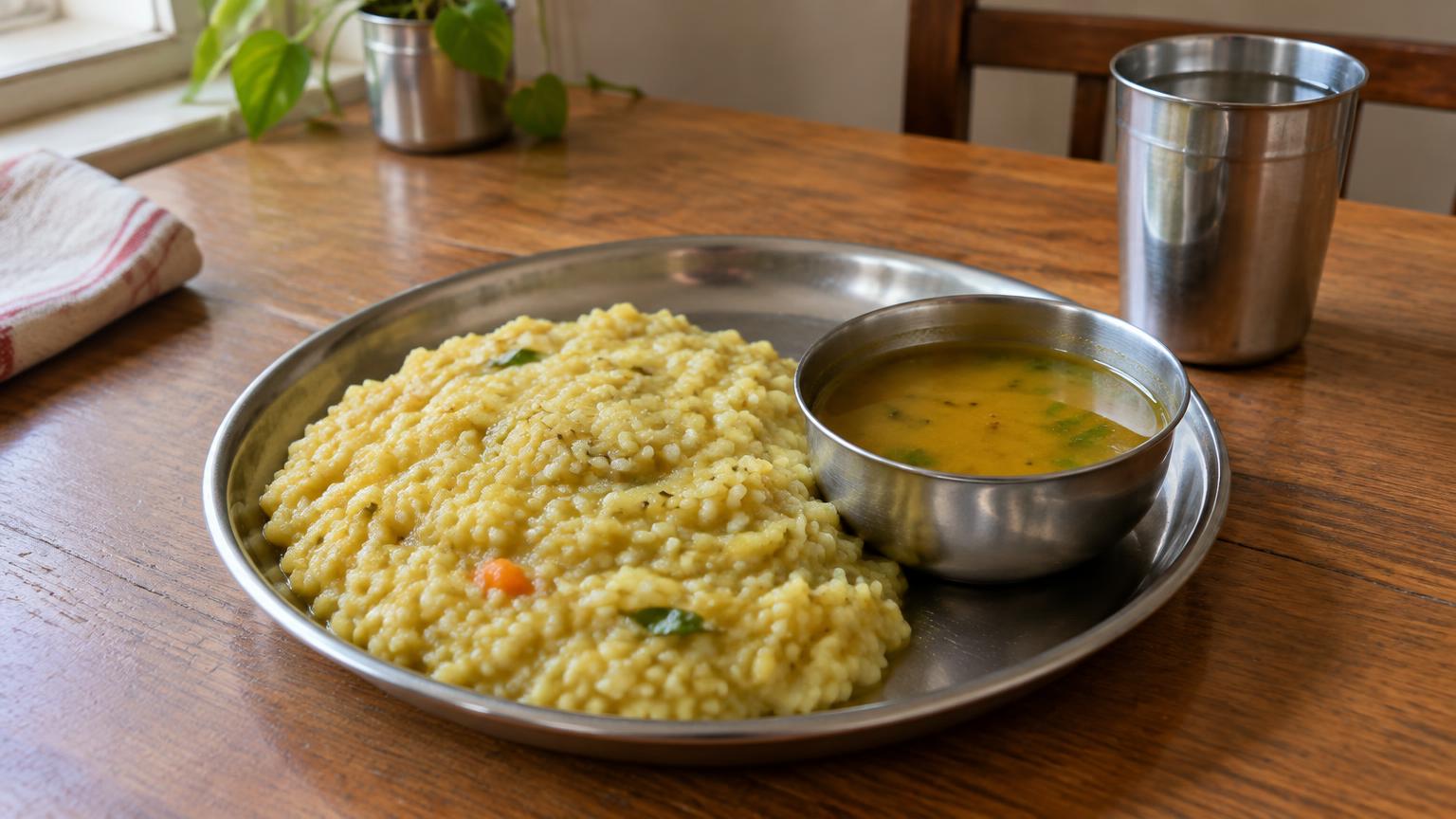
Grandmother's Wisdom
Feeding Someone Who Was Unwell
Every household had a separate way of cooking for the sick and the recovering — simpler, softer, and watched closely by whoever was in charge.
When someone in the house fell ill, the kitchen changed before anything else did. Cooking became plainer and softer, spicing was reduced, portions shrank, and food was served warm and at shorter intervals. In much of India that meant thin rice preparations, soft lentil dishes, light broths, curd or buttermilk depending on the household's view of the illness, and plain grains prepared without the day's usual richness. In other regions it meant congee-like rice water, thin gruels of local millets, or clear soups.
The reasoning was observational and conservative rather than theoretical: appetite falls during illness, and a household would rather offer something the person will actually finish than a full meal they refuse. Elders watched intake closely — how much was eaten, whether fluids stayed down, whether the person asked for food again — and these observations, not a diagnosis, decided what was cooked next.
There was a second stage that households treated as distinct: recovery. Once fever or acute illness passed, food was rebuilt gradually rather than restored all at once, often with slightly richer additions returning last. The convalescent period had its own social shape too — lighter duties, more rest, visits from relatives — and the food was part of marking that the person was not yet fully back.
Vocabulary mattered here. Households described foods as light or heavy, warming or cooling, easy or hard on the stomach, and used those words to decide what to serve. Those terms are cultural categories with long histories, not clinical measures, and they are explored in the household-language article in this section.
What survives is strong: khichdi-type meals, rice water, plain curd rice, thin dal and warm fluids are still the reflex in many Indian homes. Treat that as culinary and cultural continuity. Illness in infants, older or frail people, pregnancy, diabetes or any condition affecting eating and fluids needs professional guidance, and dehydration, high or persistent fever, breathing difficulty, an inability to keep fluids down or any symptom that is worsening needs medical care rather than a change of menu.
More from Grandmother's Wisdom
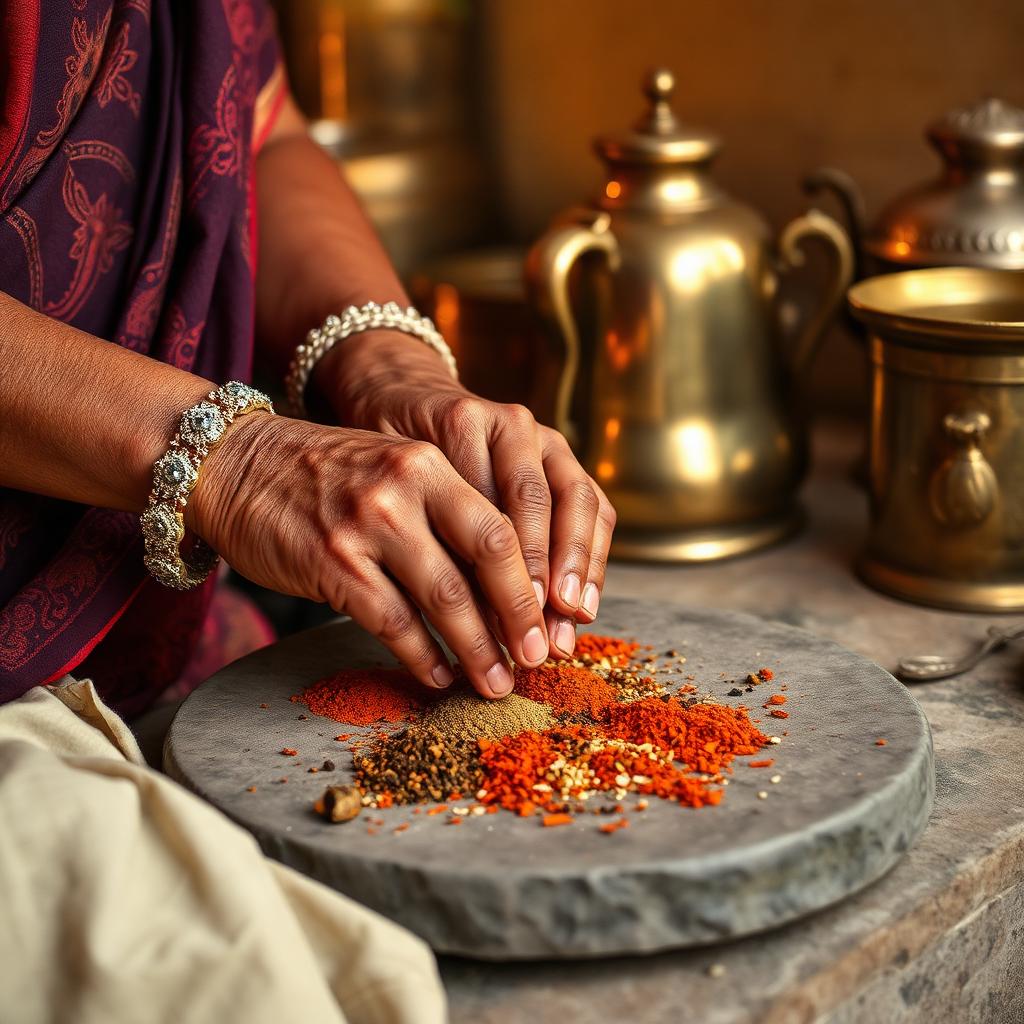
Who Taught Whom: Dadi, Nani and the Household Line
Household knowledge rarely came from one person. It arrived through a specific chain of relatives, neighbours and elders — and who taught whom shaped what survived.
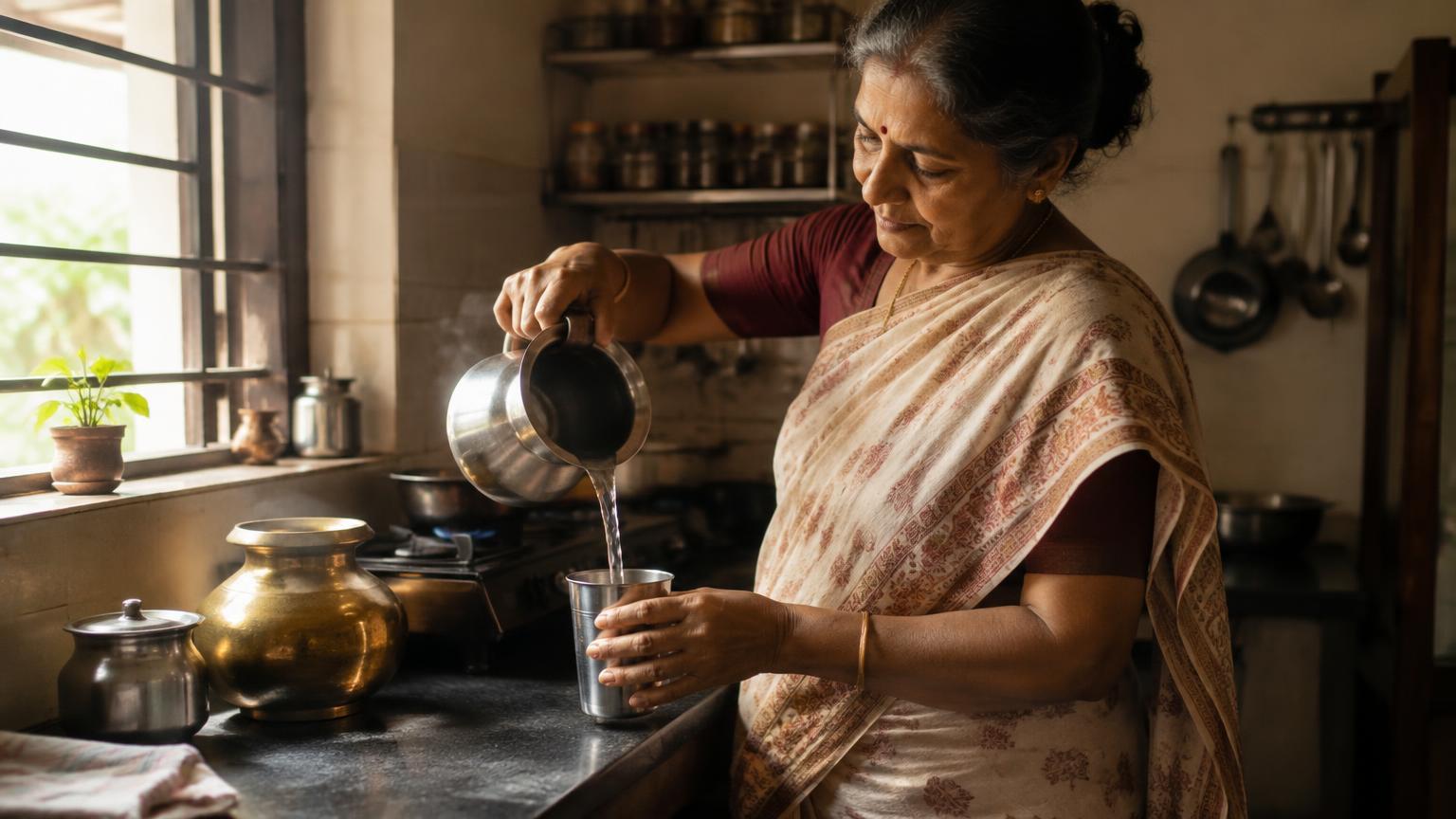
The Daily Household Rhythm
Morning, meals, evening, bedtime — the fixed shape of a household day carried most of its health knowledge without ever naming it as such.
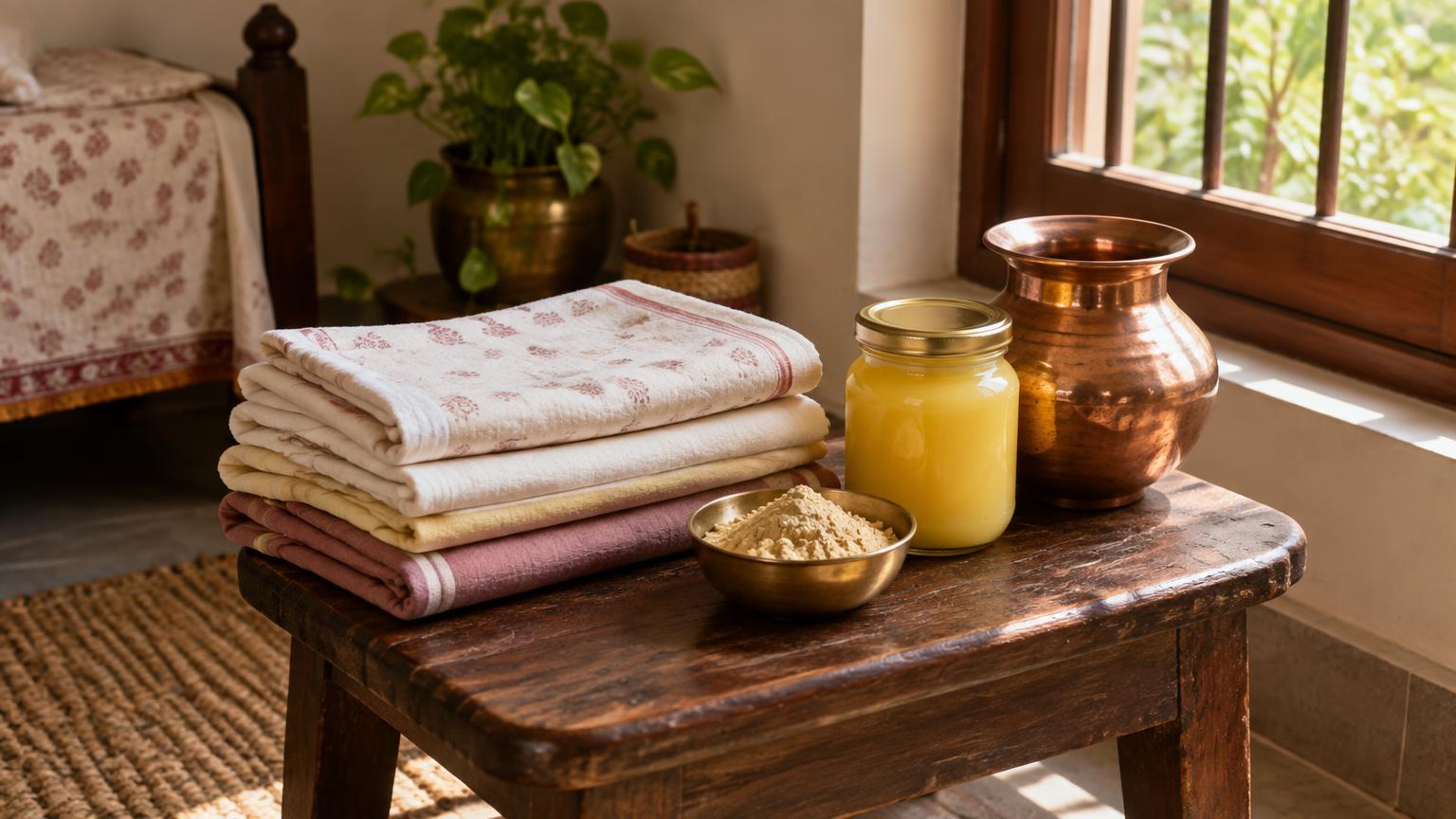
New Mothers and Infant Care: A Household Tradition
The weeks after birth were among the most organised periods in household life — and among the most important to read as culture rather than as guidance.
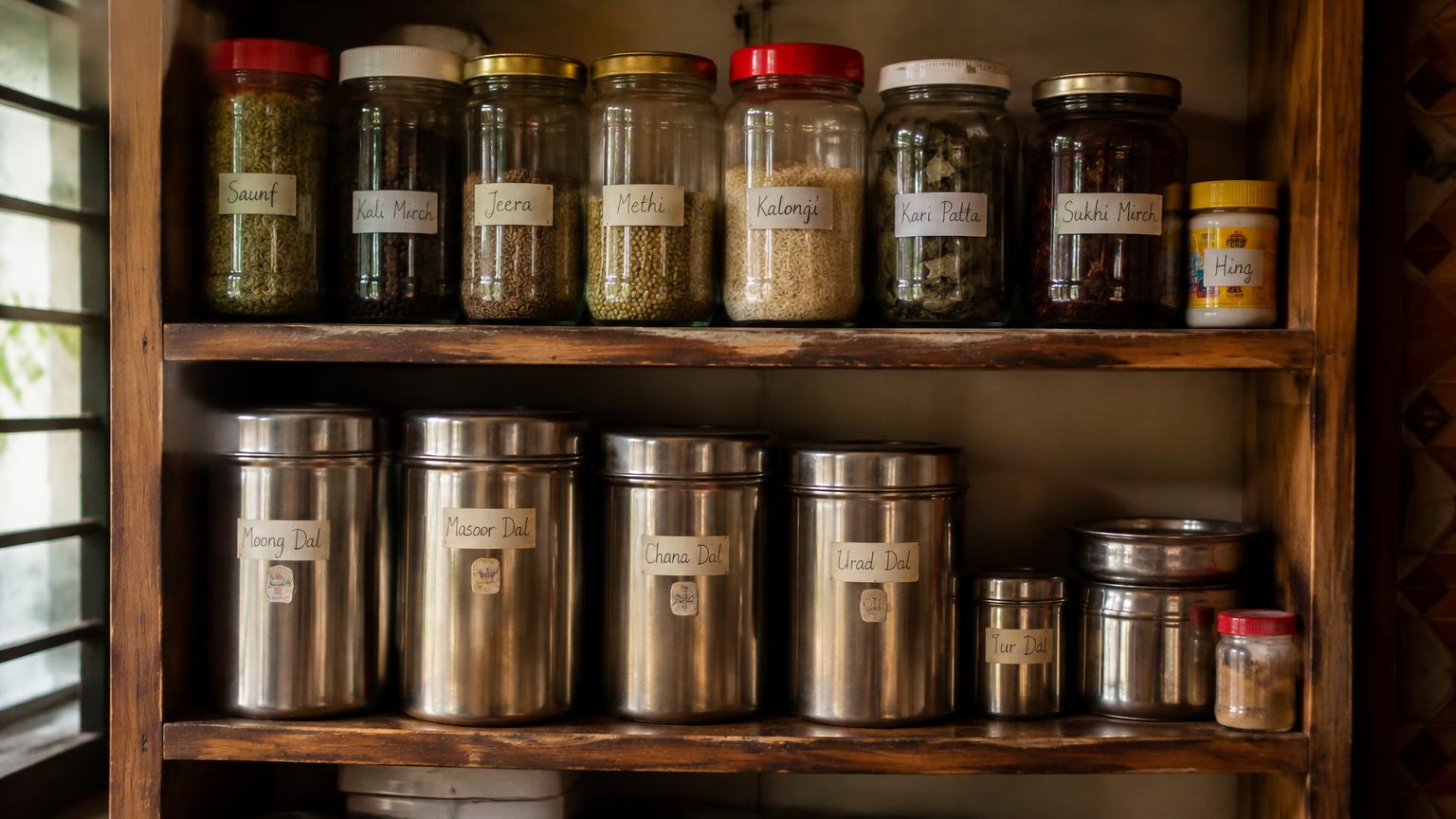
The Kitchen Shelf and What It Remembered
Jars, tins, labels and the back row — how a household stored its ingredients was itself a record of what it knew.
Continue exploring
Related on The Wisdom Jar
Ingredient
Turmeric
A warm, golden rhizome treasured for centuries as a kitchen healer for inflammation, immunity, and skin glow.
Read moreIngredient
Ginger
A pungent, warming root used worldwide for nausea, digestion, and respiratory comfort.
Read moreRemedy
Golden Milk for Winter Immunity
A warm, soothing nightly drink of turmeric, milk, and pepper to support immunity and rest.
Read moreRemedy
Ginger-Tulsi Decoction for Cough & Cold
A simple kitchen kadha that soothes scratchy throats and clears mild congestion.
Read moreDaily Wellness
Warm Water on Waking (Ushapan)
A simple, ancient cue that wakes digestion and gently flushes the system.
Read moreDaily Wellness
Tongue Scraping
Remove the overnight coating in 30 seconds — taste, breath and digestion improve.
Read more