Festival Traditions
Chhath & Bihu: River, Field and Eastern Festival Foods
Two distinct eastern traditions shaped by water, harvest and foods prepared for family and community.
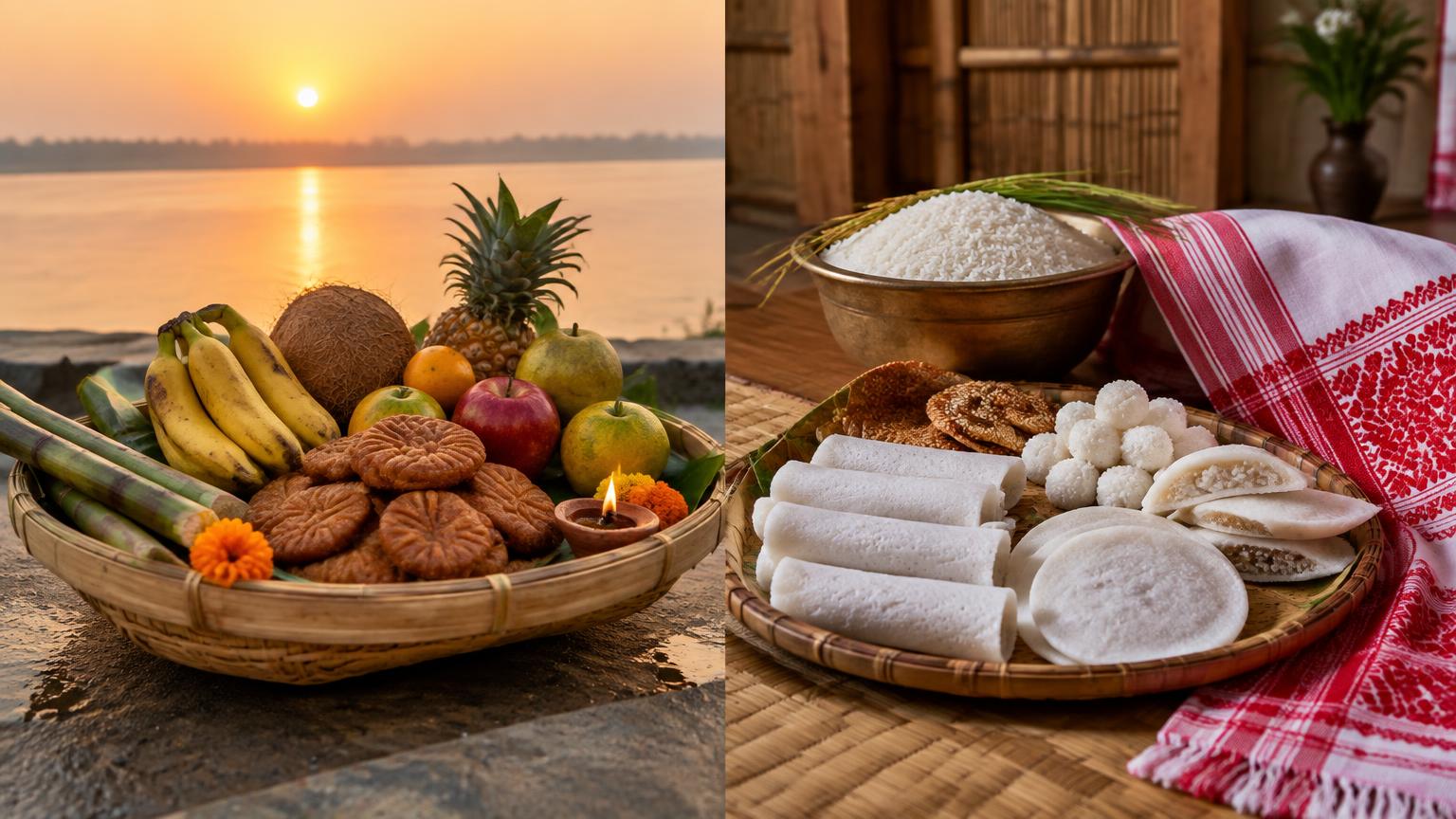
Chhath, closely associated with Bihar, eastern Uttar Pradesh and Jharkhand, is commonly understood as honouring the sun through offerings at water and is also sustained in many migrant communities. Assam's Bihu festivals follow a different agricultural calendar: Rongali or Bohag Bihu is commonly associated with spring and the new year, Bhogali or Magh Bihu with harvest abundance, and Kongali or Kati Bihu with a leaner growing season. They belong together here as eastern seasonal traditions, not as versions of one festival.
For Chhath, households prepare offerings such as thekua, fruits and sugarcane in bamboo baskets and soop trays. Work is distributed across cleaning, grinding, frying and arranging; the foods gain meaning through careful preparation and sharing rather than through health claims.
Bihu kitchens centre rice in many forms: pitha, laru, flattened rice, curd and jaggery, with community feasts around Bhogali Bihu. Techniques differ across Assamese communities, and the wider Northeast contains many more harvest traditions than one article can represent.
Seasonal setting is visible in both: Chhath's riverbank and sun observances follow monsoon and harvest cycles, while the three Bihus map planting, growing and harvest phases. Food and landscape are inseparable, but their histories and religious meanings remain distinct.
What survives today includes city ghats prepared by migrant associations, family thekua sent across distances, community meji gatherings and pitha made in urban kitchens. These practices carry regional identity beyond their original landscape.
Some Chhath observances include demanding fasting and restricted water. Fasting may not be suitable during pregnancy, for children, elderly or frail people, people with diabetes, people taking medication, or anyone with a relevant medical condition. Individual needs vary; seek medical guidance rather than following a festival fast by default. Participation can take non-fasting forms, and medical needs take priority. For regional food contexts, see Bengal and the East and Northeast India in Regional Wisdom.
More from Festival Traditions
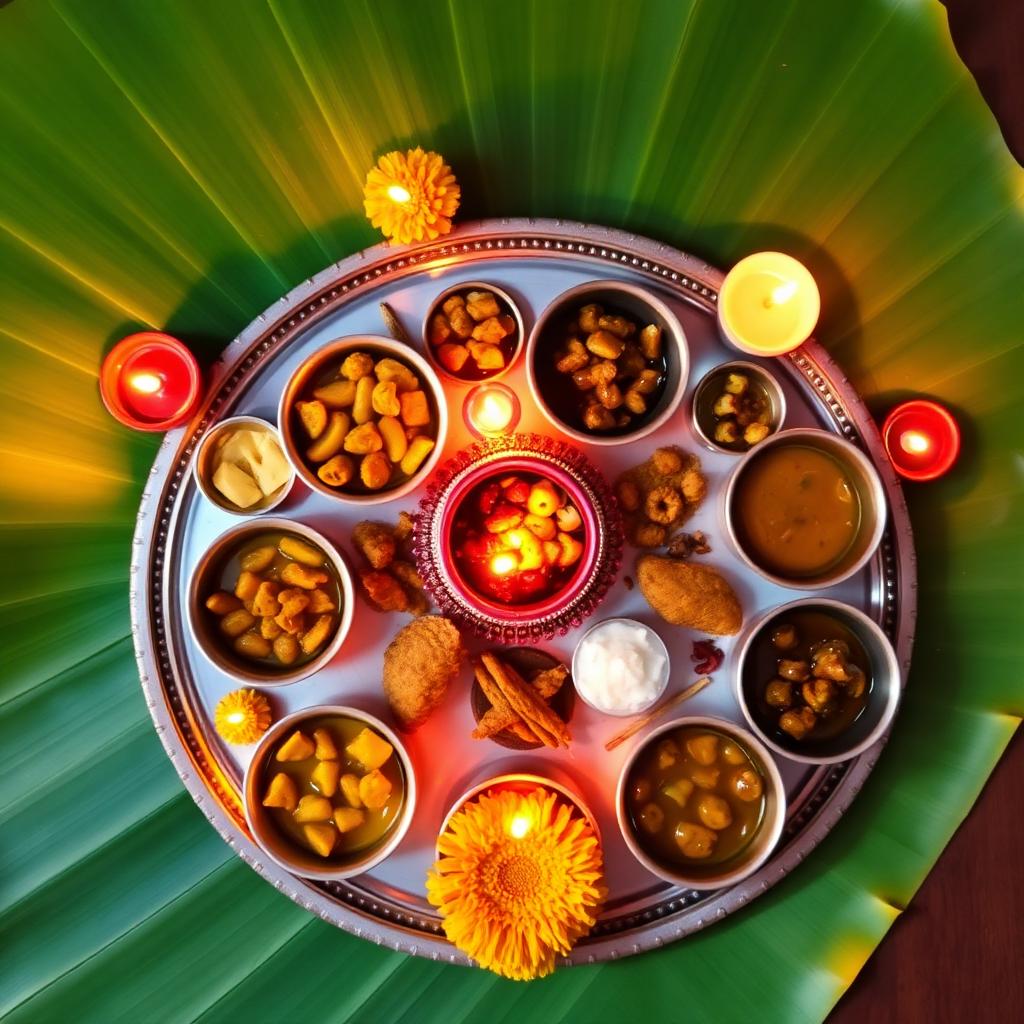
Diwali Foods: Light, Hospitality and the Autumn Kitchen
How sweets, savouries and shared trays mark Diwali across distinct Indian household traditions.
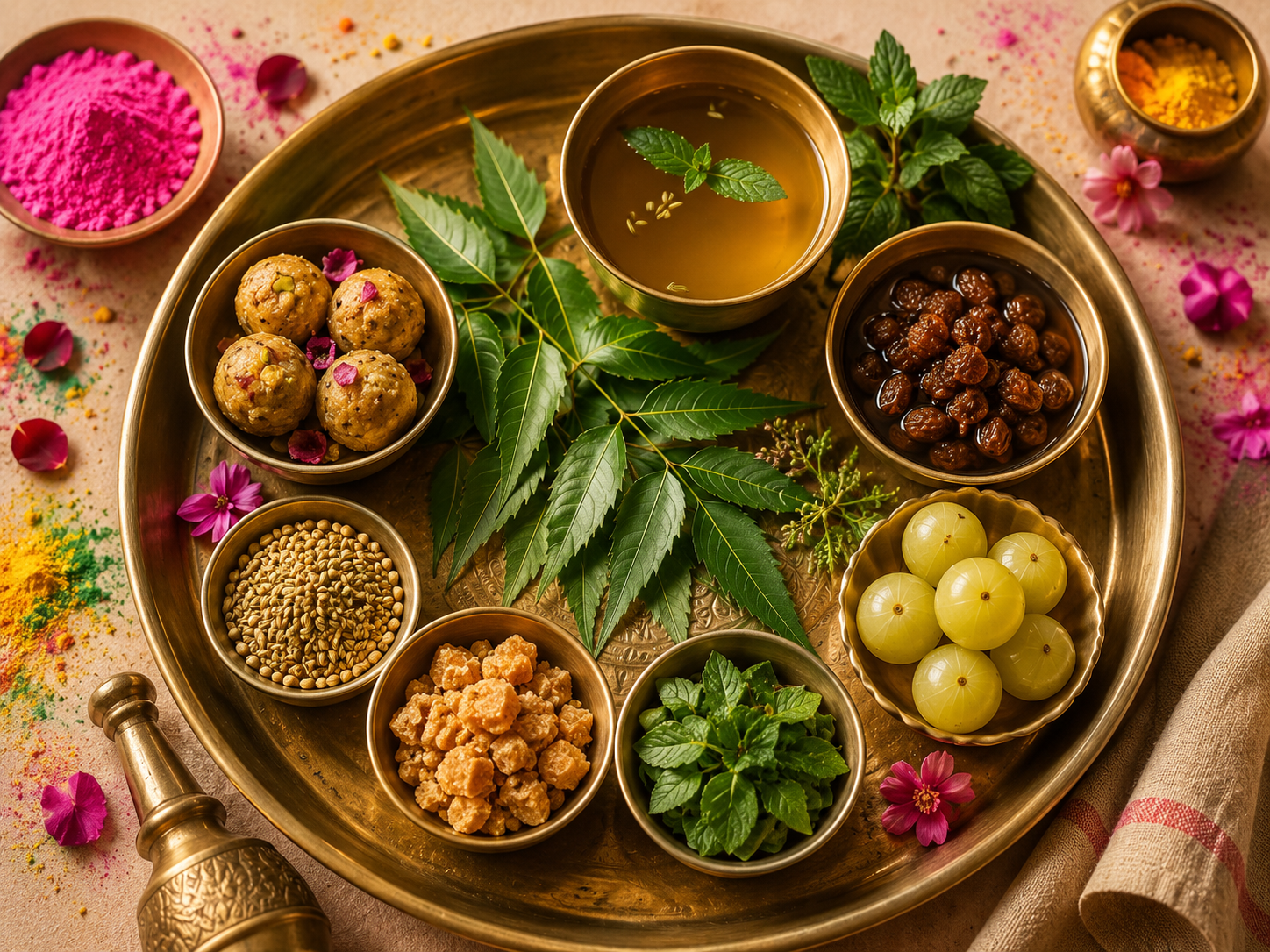
Holi, Spring Foods and the Changing Kitchen
Neem, kanji, gujiya and regional spring foods around a festival of colour and renewal.
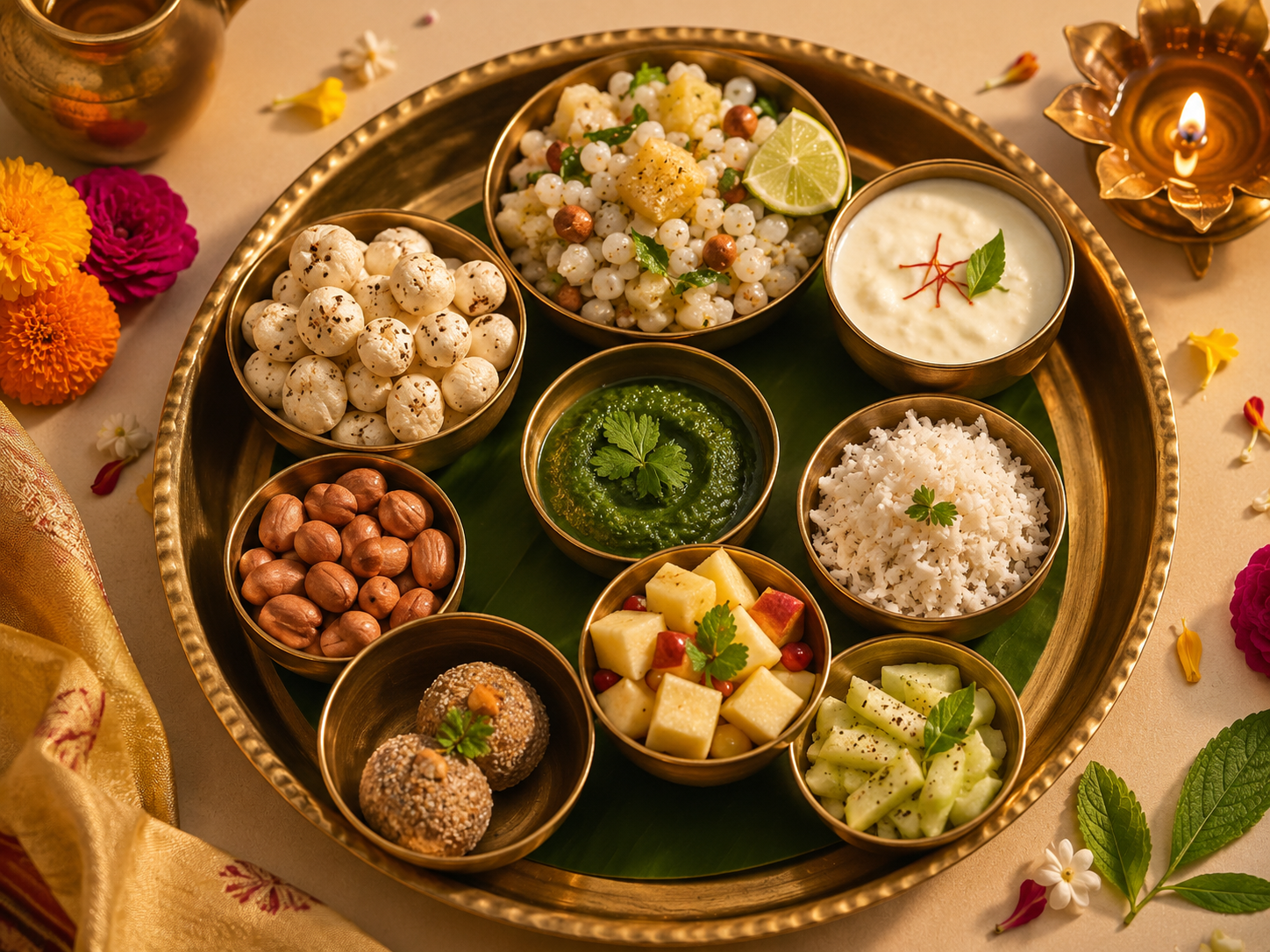
Navratri Food Traditions Across Indian Homes
How devotion, regional calendars and household fasting foods shape the nine nights without turning them into a health prescription.
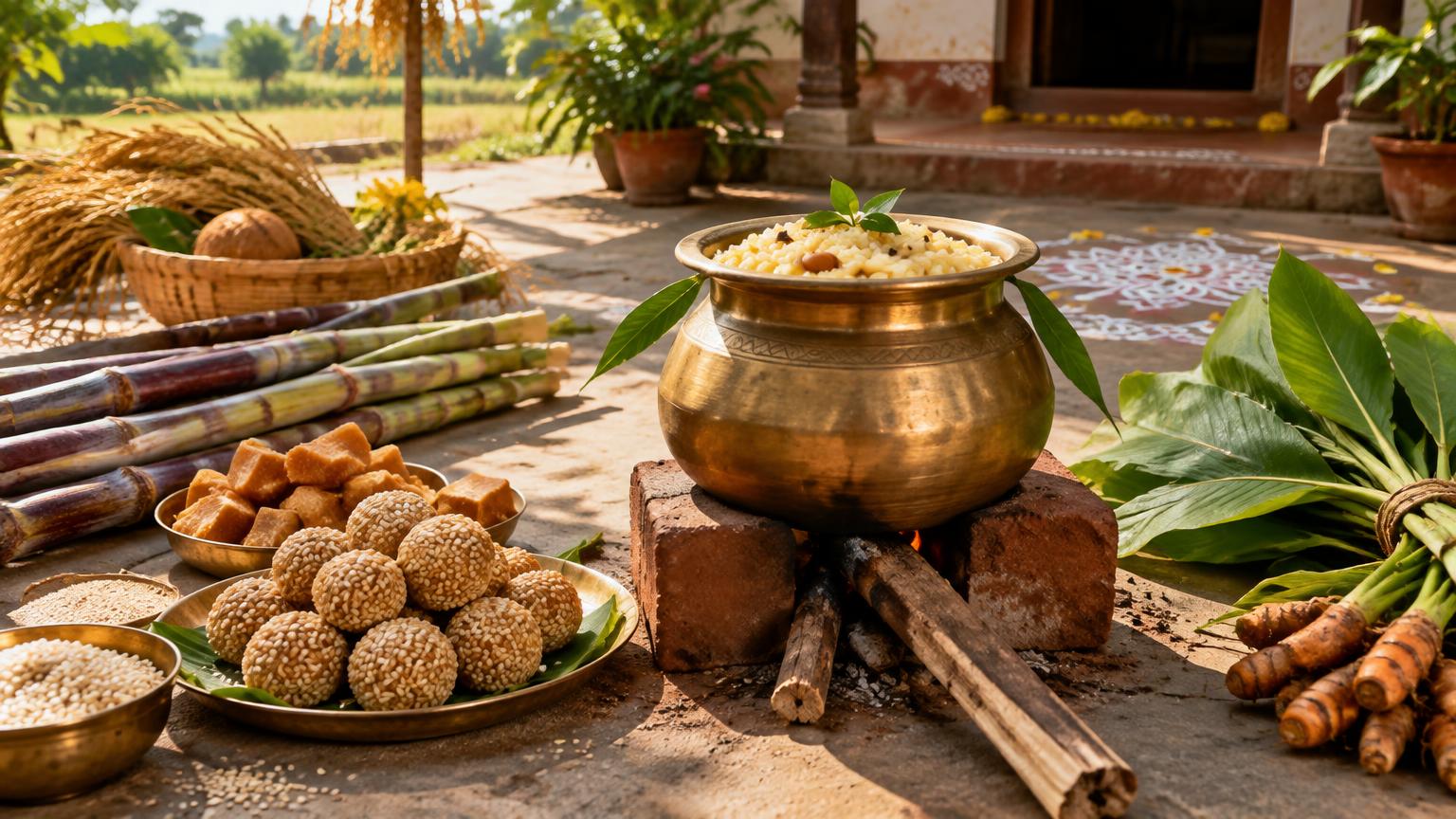
Makar Sankranti & Pongal: Many Harvests, Many Kitchens
Sesame and jaggery, newly harvested rice and sugarcane across distinct mid-January celebrations.
Continue exploring
Related on The Wisdom Jar
Ingredient
Rice
Cooling, easily digestible staple — basis of healing khichdi and kanji.
Read moreIngredient
Banana
Sweet fruit that nourishes, soothes and energises.
Read moreRemedy
Golden Milk for Winter Immunity
A warm, soothing nightly drink of turmeric, milk, and pepper to support immunity and rest.
Read moreRemedy
Ginger-Tulsi Decoction for Cough & Cold
A simple kitchen kadha that soothes scratchy throats and clears mild congestion.
Read moreDaily Wellness
Warm Water on Waking (Ushapan)
A simple, ancient cue that wakes digestion and gently flushes the system.
Read moreDaily Wellness
Tongue Scraping
Remove the overnight coating in 30 seconds — taste, breath and digestion improve.
Read more