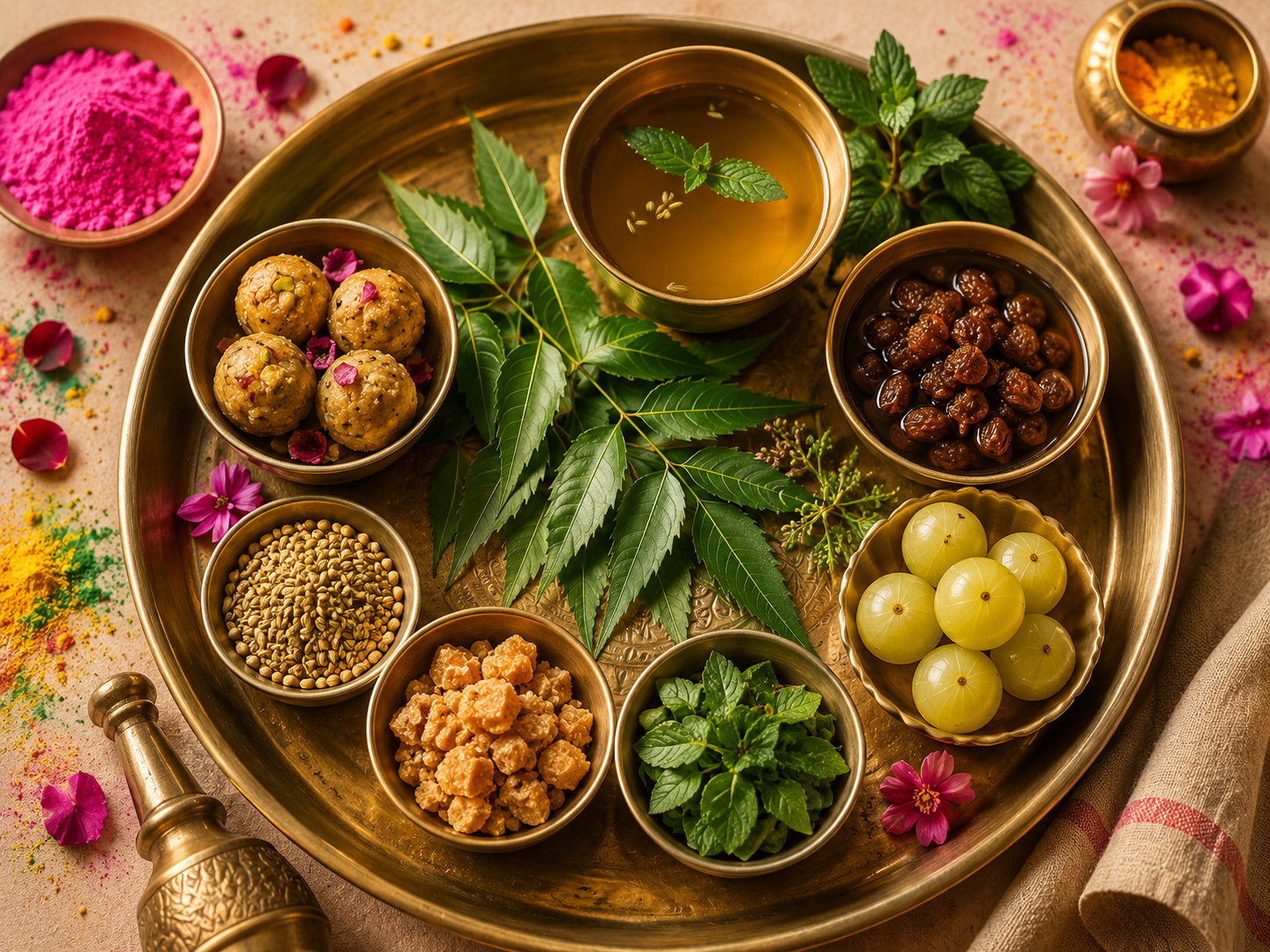
Festival Traditions
Holi, Spring Foods and the Changing Kitchen
Neem, kanji, gujiya and regional spring foods around a festival of colour and renewal.
In many communities, Holi marks spring through colour, visiting, music and food, with local histories and forms across North, West and East India. The preceding Holika Dahan and the following day of colour carry religious and social meanings that vary by community; this article describes household foodways rather than ritual instruction.
Festival kitchens pair abundance with the first signs of warmer weather. Gujiya, malpua, dahi vada and savouries are widely associated with Holi, while kanji — a fermented drink commonly made with black carrots or mustard — belongs especially to northern spring tables. Tender neem leaves or flowers appear in some western, eastern and southern new-year foods, but they are not universal Holi ingredients.
Preparation is collective and practical: fillings and doughs are made in batches, fried foods are stored for visitors, and fermented kanji is timed to the changing temperature. These practices tell us about season, preservation and hospitality; they should not be described as cleansing the body or preventing disease.
Today, families continue inherited recipes, community gatherings and the exchange of sweets even when colour play or large-scale cooking is reduced. Spring cleaning and lighter everyday meals may surround the festival, but they belong to household preference rather than a required regimen.
Neem can cause adverse effects and is not appropriate for everyone, especially in concentrated or medicinal forms. Festival foods and bitter ingredients are cultural traditions, not treatments; anyone with allergies or a medical condition should use ordinary dietary caution.
For Vasanta's wider seasonal framework, see Seasonal Customs rather than treating Holi as a health programme.
More from Festival Traditions
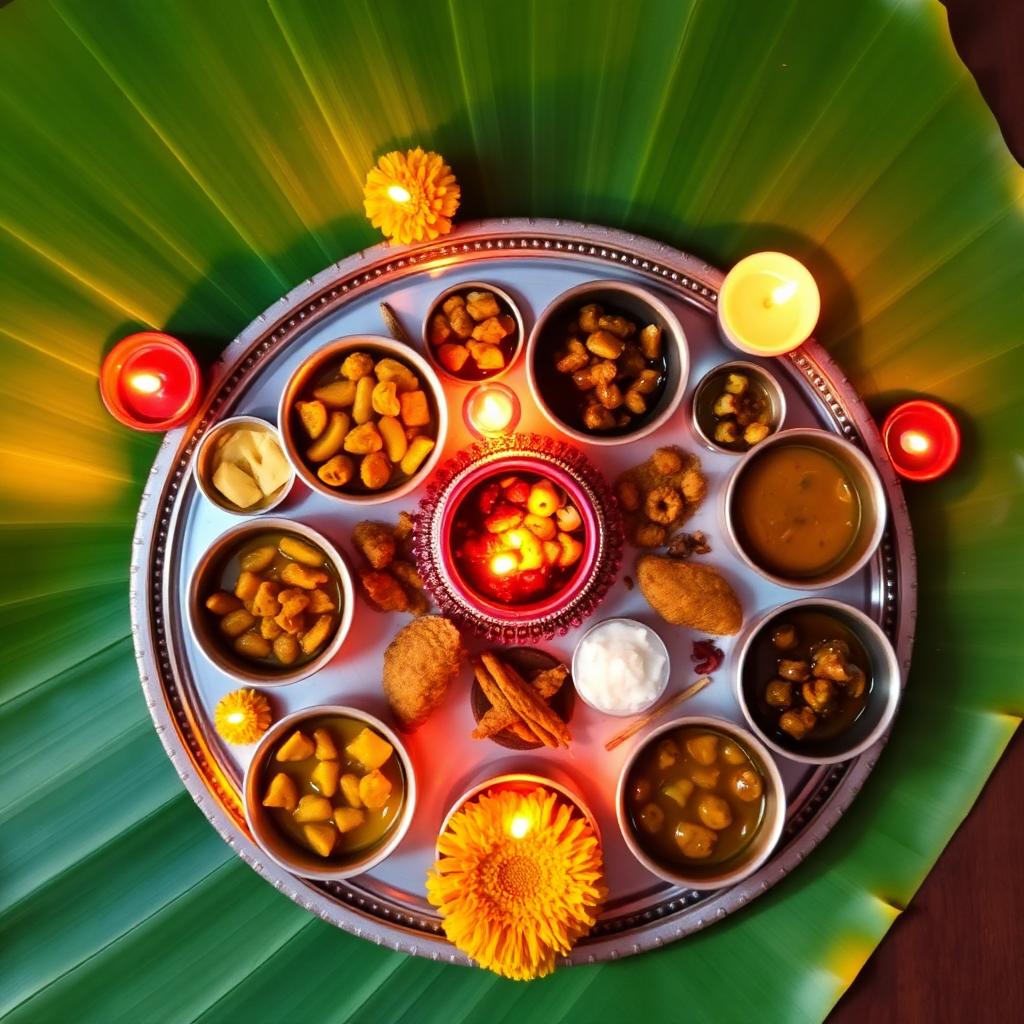
Diwali Foods: Light, Hospitality and the Autumn Kitchen
How sweets, savouries and shared trays mark Diwali across distinct Indian household traditions.
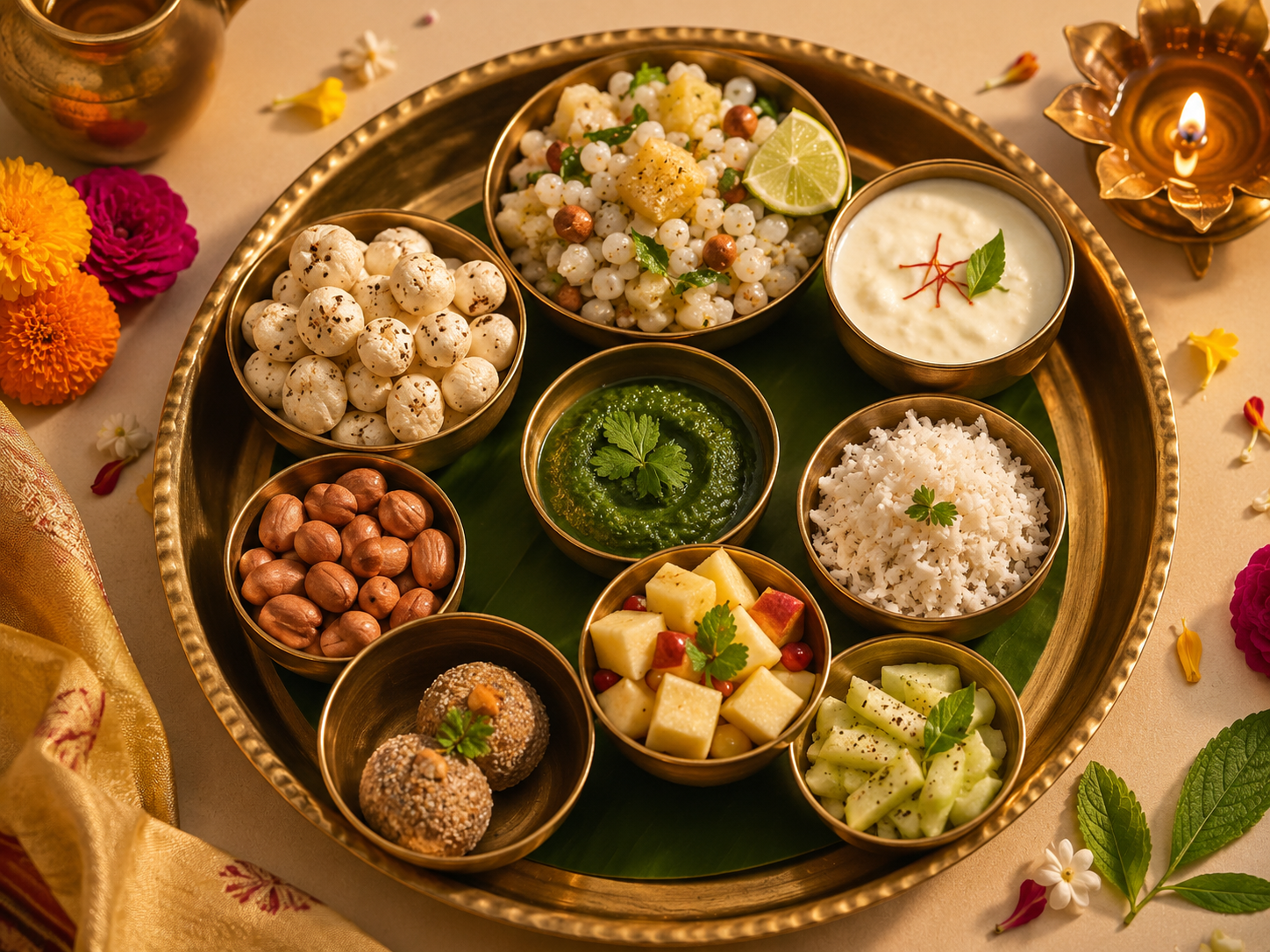
Navratri Food Traditions Across Indian Homes
How devotion, regional calendars and household fasting foods shape the nine nights without turning them into a health prescription.
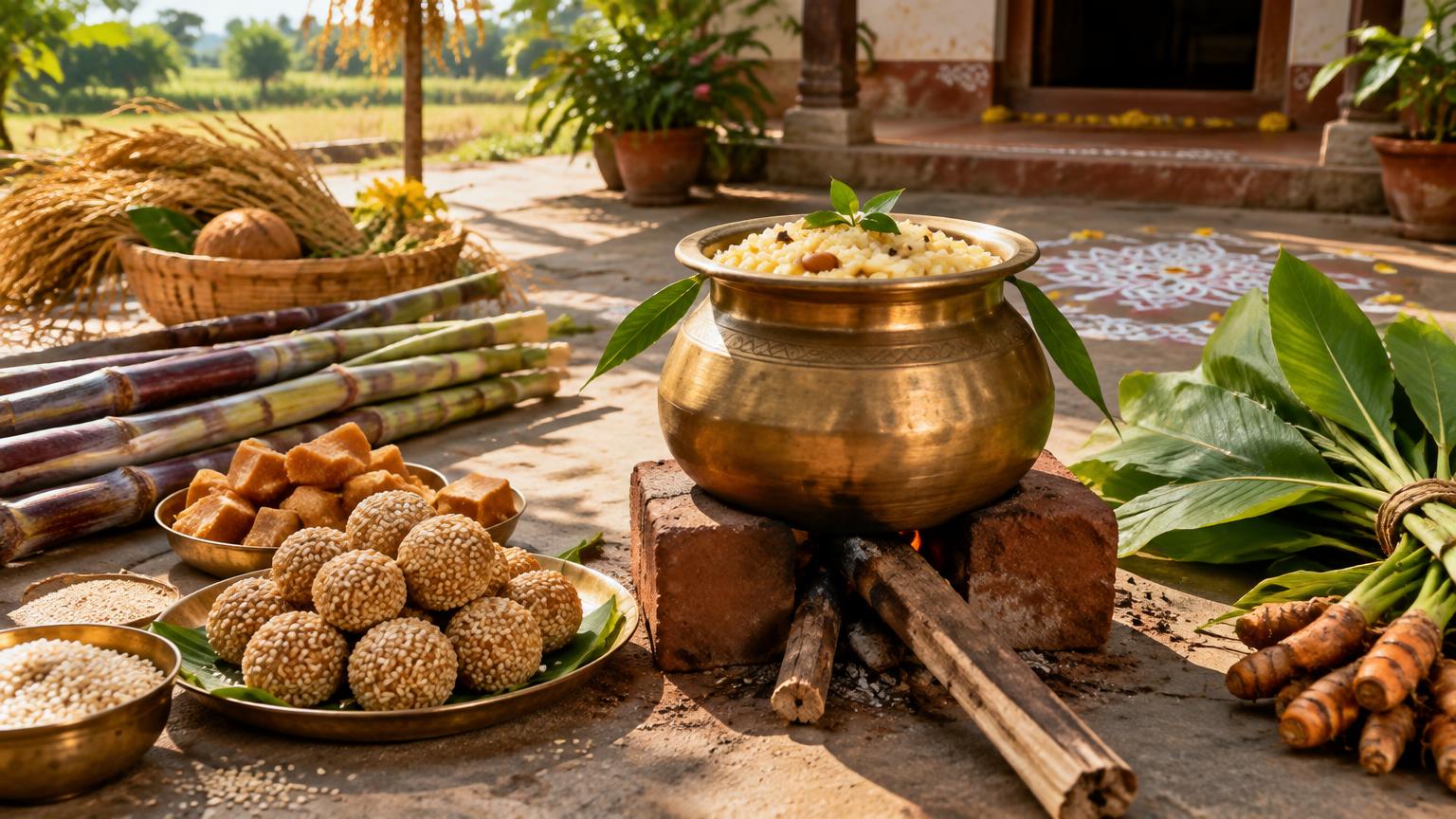
Makar Sankranti & Pongal: Many Harvests, Many Kitchens
Sesame and jaggery, newly harvested rice and sugarcane across distinct mid-January celebrations.
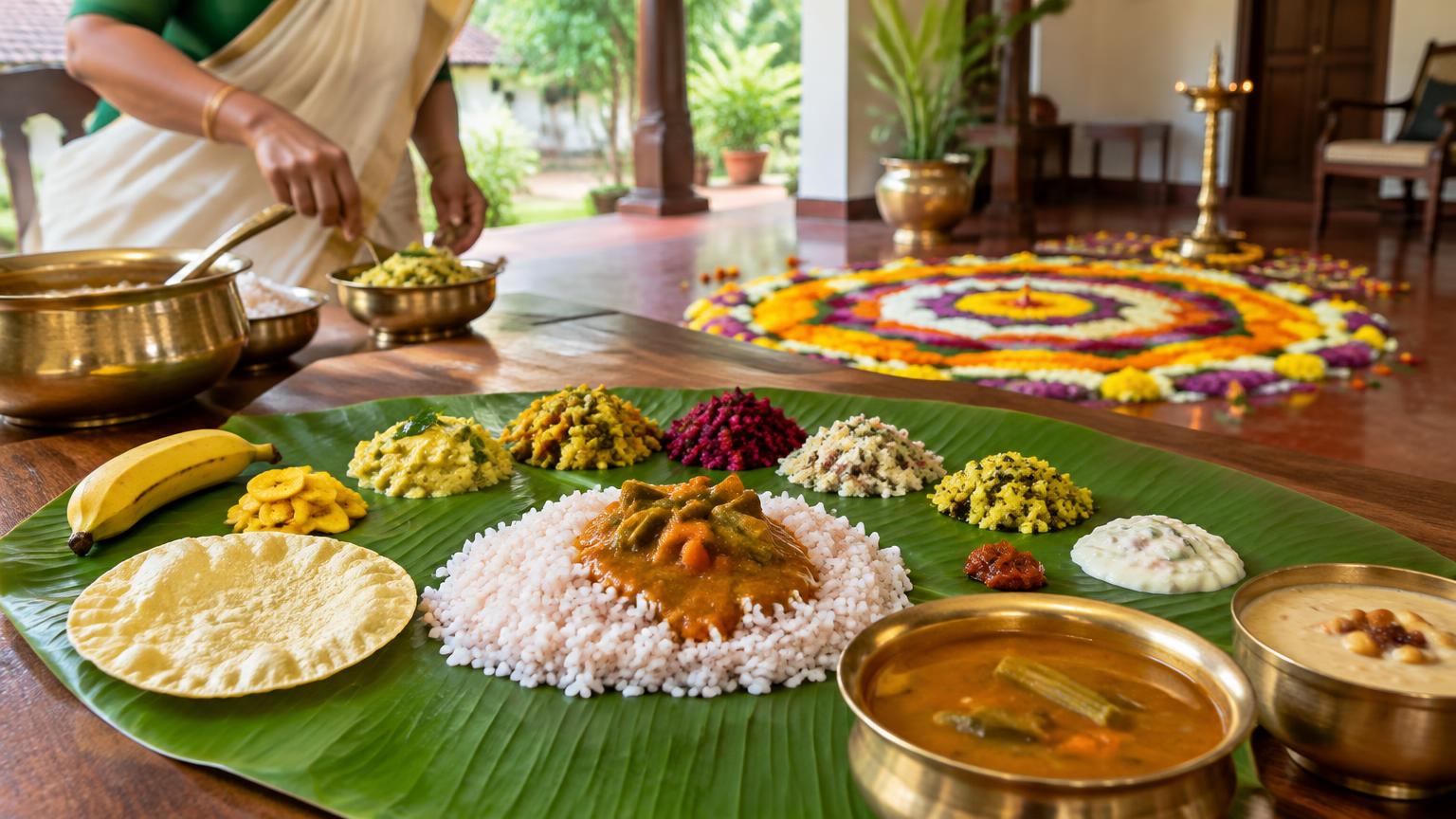
Onam: Sadya, Homecoming and Kerala's Harvest Memory
The many-dish banana-leaf meal, floral courtyards and household labour behind Kerala's shared festival.
Continue exploring
Related on The Wisdom Jar
Ingredient
Neem
A bitter, deeply purifying leaf used in skin care, oral hygiene, and topical remedies.
Read moreIngredient
Fennel
Sweet, cooling seed traditionally chewed after meals for fresh breath and easy digestion.
Read moreRemedy
Neem & Honey Face Pack for Blemish-Prone Skin
A weekly clarifying mask for oily, breakout-prone skin.
Read moreRemedy
CCF Tea — Daily Digestive Reset
Equal parts cumin, coriander, and fennel for a gentle, all-day digestive aid.
Read moreDaily Wellness
Spring Reset Rituals
Light food, bitter greens, more movement — clear winter's heaviness.
Read moreHealing Recipe
Kanji (Fermented Carrot & Mustard Drink)
A tangy, ruby-red probiotic drunk in North Indian winters.
Read more