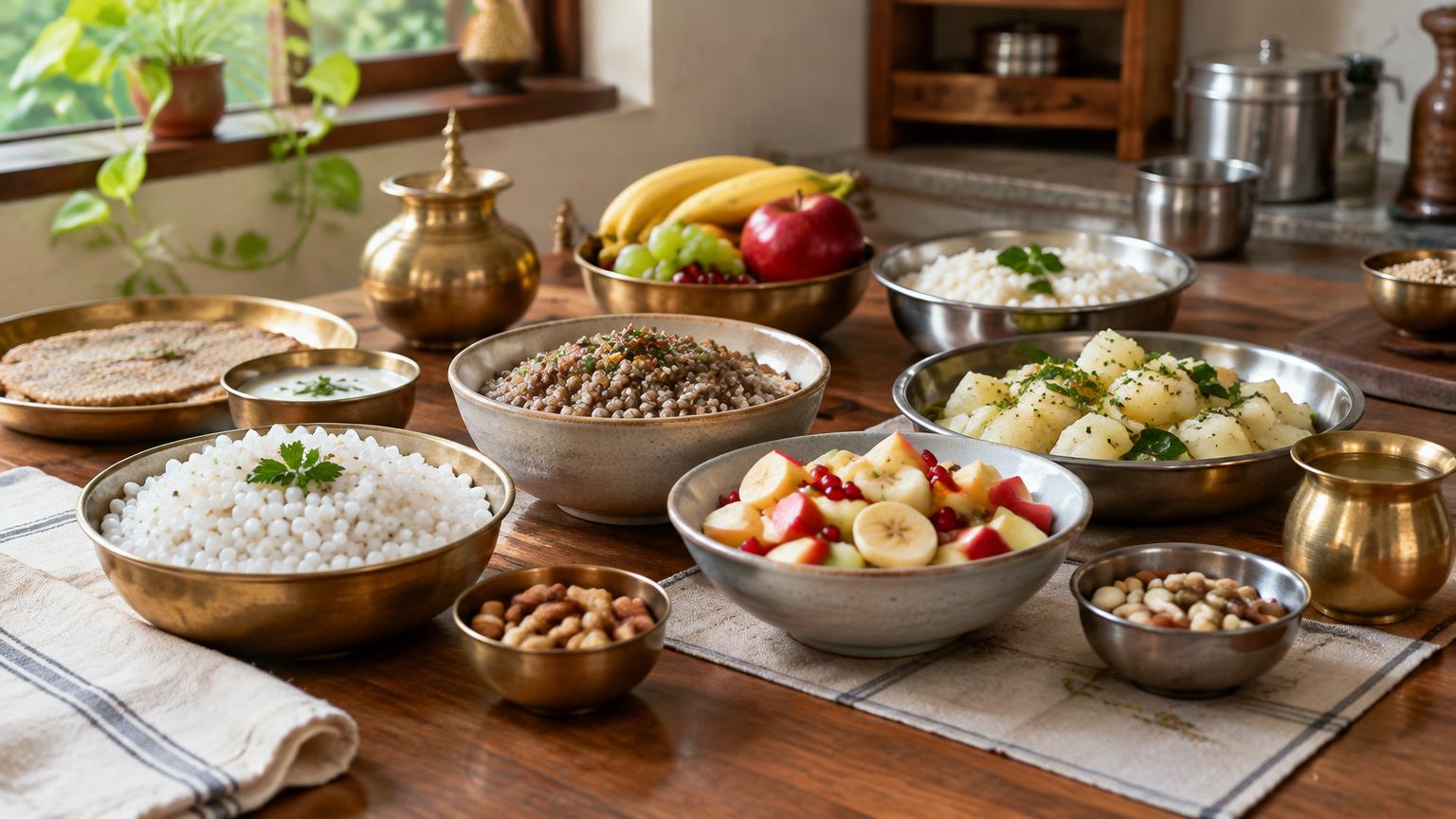
Festival Traditions
Shravan, Ekadashi & Jain Fasting: Distinct Customs of Restraint
A careful cultural guide to different devotional food restrictions without turning any fast into health advice.
Fasting in India belongs to many distinct religious traditions and cannot be reduced to one diet. Shravan observances and Ekadashi vrata sit within varied Hindu practices; Jain fasting, especially around Paryushan or Das Lakshan, arises from Jain principles and is not a branch of Hindu custom.
Shravan falls during the monsoon and may involve household choices about particular foods, devotional days or simpler meals. Ekadashi recurs through the lunar month, but practice differs greatly by region, family, sect and individual capacity. There is no single festival menu.
In many Jain traditions, fasting is placed within wider commitments to ahimsa, self-restraint, reflection and forgiveness. Paryushan and Samvatsari carry ethical and communal meanings beyond food; the phrase Micchami Dukkadam is commonly associated with asking forgiveness, with usage varying across Jain communities. Describing these practices only through what is not eaten misses their central purpose.
Household knowledge often concerns accommodation: preparing separate food, planning shared meals around differing observance, and ensuring that elders or anyone who does not fast remains included. This is social and religious practice, not a cleanse or treatment.
Modern families adapt through work schedules, migration, health needs and individual conviction. Some observe through prayer, charity, food restraint or forgiveness rather than abstention; no outsider should rank one form as more authentic.
Fasting may not be suitable during pregnancy, for children, elderly or frail people, people with diabetes, people taking medication, or anyone with a relevant medical condition. Individual needs vary; seek medical guidance rather than following a festival fast by default. No fasting duration, water restriction or food rule is recommended here. Anyone considering a fast should follow personal medical needs and seek qualified guidance where needed.
More from Festival Traditions
Diwali Foods: Light, Hospitality and the Autumn Kitchen
How sweets, savouries and shared trays mark Diwali across distinct Indian household traditions.
Holi, Spring Foods and the Changing Kitchen
Neem, kanji, gujiya and regional spring foods around a festival of colour and renewal.
Navratri Food Traditions Across Indian Homes
How devotion, regional calendars and household fasting foods shape the nine nights without turning them into a health prescription.
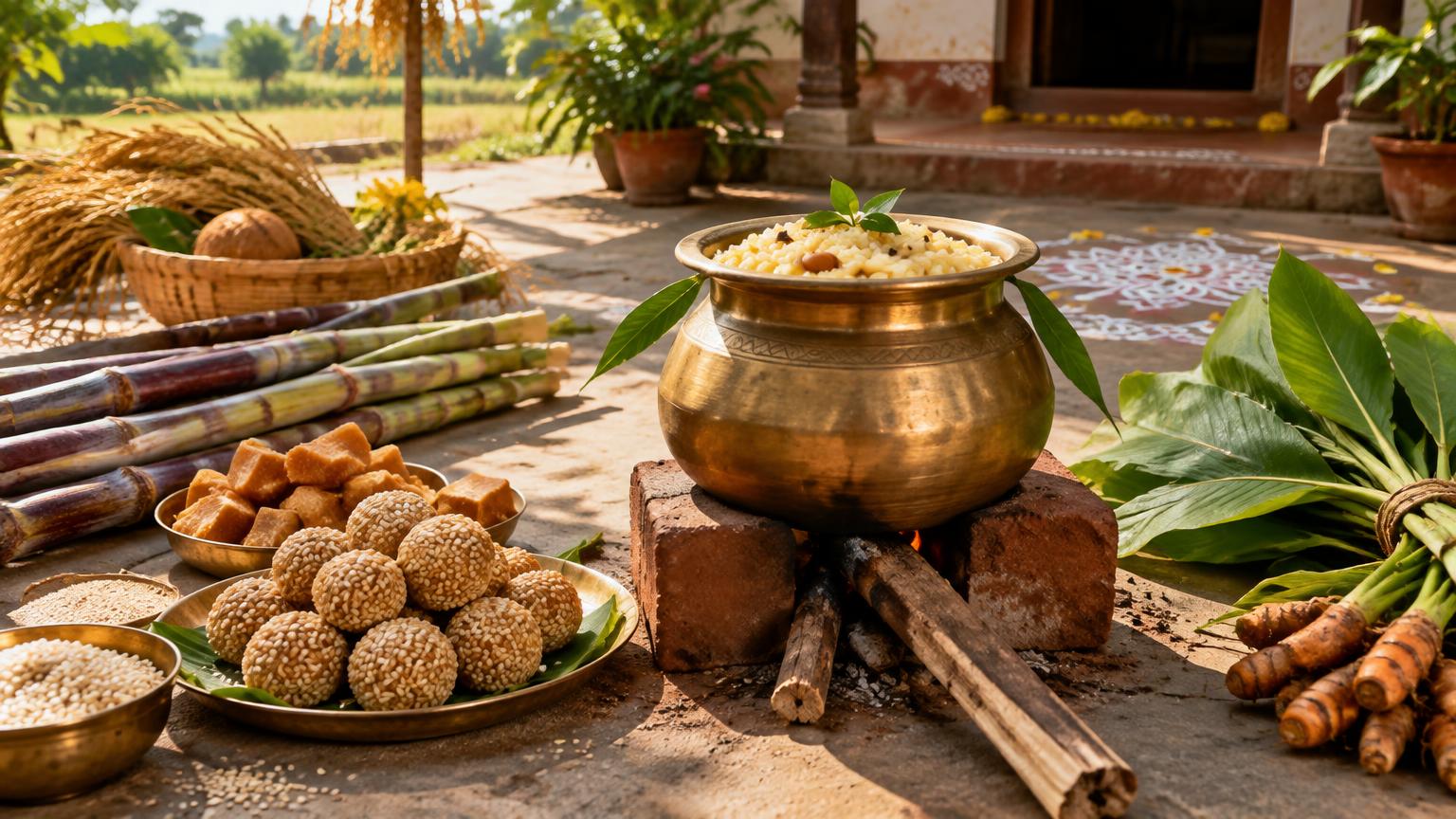
Makar Sankranti & Pongal: Many Harvests, Many Kitchens
Sesame and jaggery, newly harvested rice and sugarcane across distinct mid-January celebrations.
Continue exploring
Related on The Wisdom Jar
Ingredient
Milk
Nourishing whole food — best taken warm with spices, never with salty foods.
Read moreIngredient
Almonds
Soaked almonds are a classic brain and skin tonic.
Read moreRemedy
Golden Milk for Winter Immunity
A warm, soothing nightly drink of turmeric, milk, and pepper to support immunity and rest.
Read moreRemedy
Ginger-Tulsi Decoction for Cough & Cold
A simple kitchen kadha that soothes scratchy throats and clears mild congestion.
Read moreDaily Wellness
Warm Water on Waking (Ushapan)
A simple, ancient cue that wakes digestion and gently flushes the system.
Read moreDaily Wellness
Tongue Scraping
Remove the overnight coating in 30 seconds — taste, breath and digestion improve.
Read more