Seasonal Customs
Sharad: The Post-Monsoon Season of Cooling Down
Clear skies, returning appetite and a household turn toward amla, ghee and gentler food — the most overlooked ritu.
Sharad, roughly mid-September to mid-November, is the season India notices least and classical writing watches most carefully. The rains stop, the sun returns onto ground and bodies that have been damp for months, and the weather swings between warm afternoons and cool nights. Appetite returns sharply after the monsoon's dullness.
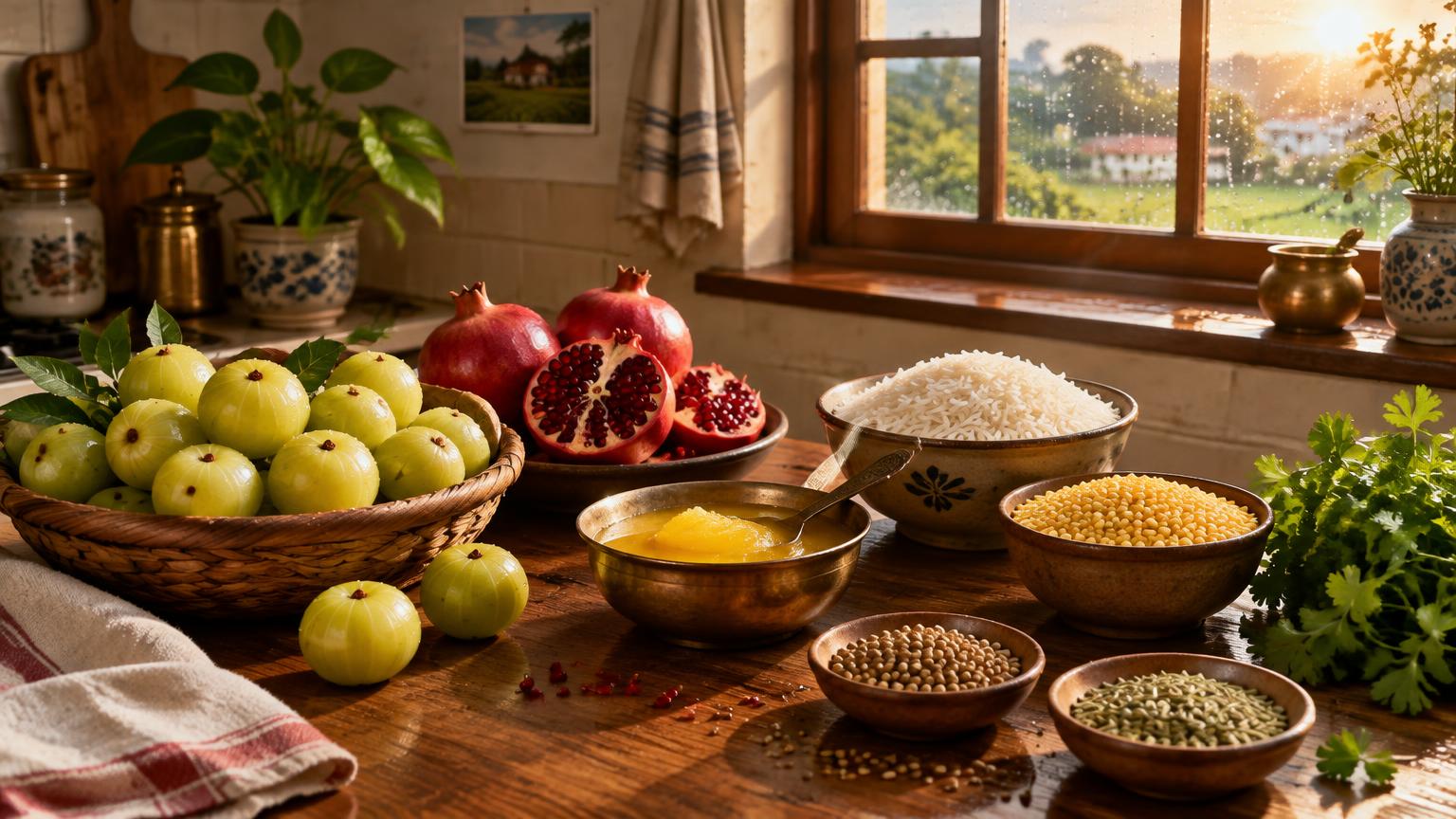
The traditional reading is heat: this is described as the season when accumulated heat surfaces, showing up as acidity, skin irritation, eye trouble and a generally 'hot' feeling. So the kitchen cools without going cold. Ghee, rice, moong, amla, pomegranate, coriander, fennel, gourds and mildly sweet and bitter foods are the season's characteristic foods, while very sour, very salty, heavily fried and aggressively pungent cooking is eased off.
Household customs follow the same idea: moonlit evenings and cooler night air, lighter oiling, sandalwood and cooling pastes in some regions, and an emphasis on not overcompensating for the monsoon's small appetite by overeating the moment hunger returns.
Sharad is the year's most important transition. It sits between the wettest and the richest seasons, and the classical caution is against jumping straight from monsoon lightness to winter's heavy, ghee-laden food. The autumn weeks are the bridge.
A plain modern note: post-monsoon is peak season for dengue and other mosquito-borne fevers, and for seasonal eye and skin infections. Sudden high fever, severe body pain, a spreading rash or eye pain with vision change need medical attention. Kitchen habits are ordinary self-care and nothing more.
The festival cluster that falls in this season is covered in Festival Traditions, and regional variants in Regional Wisdom.
More from Seasonal Customs
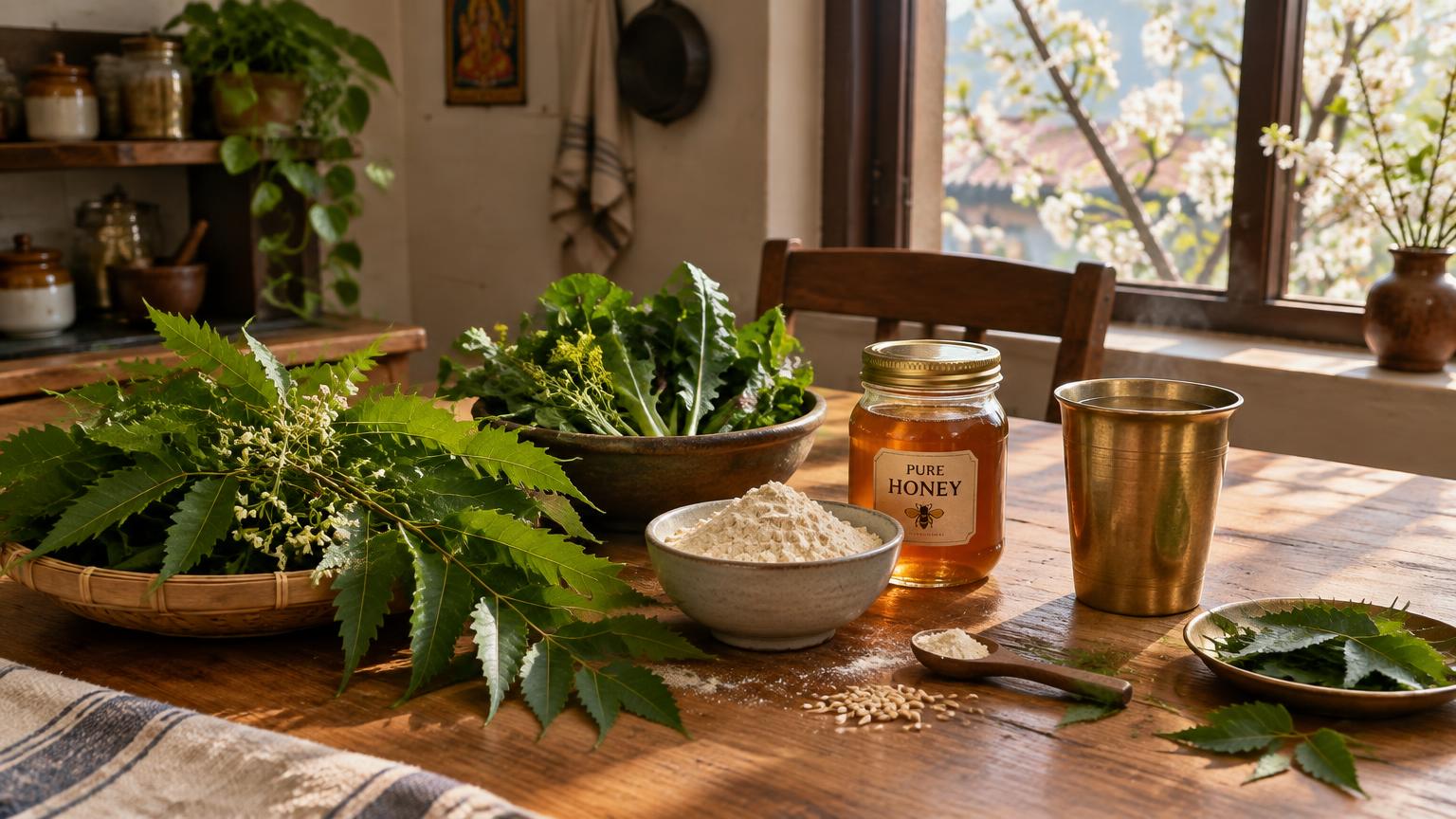
Vasanta: Spring and the Season of Lightening
Why Indian households turn bitter, light and active as winter thaws — the first of the six classical ritus.
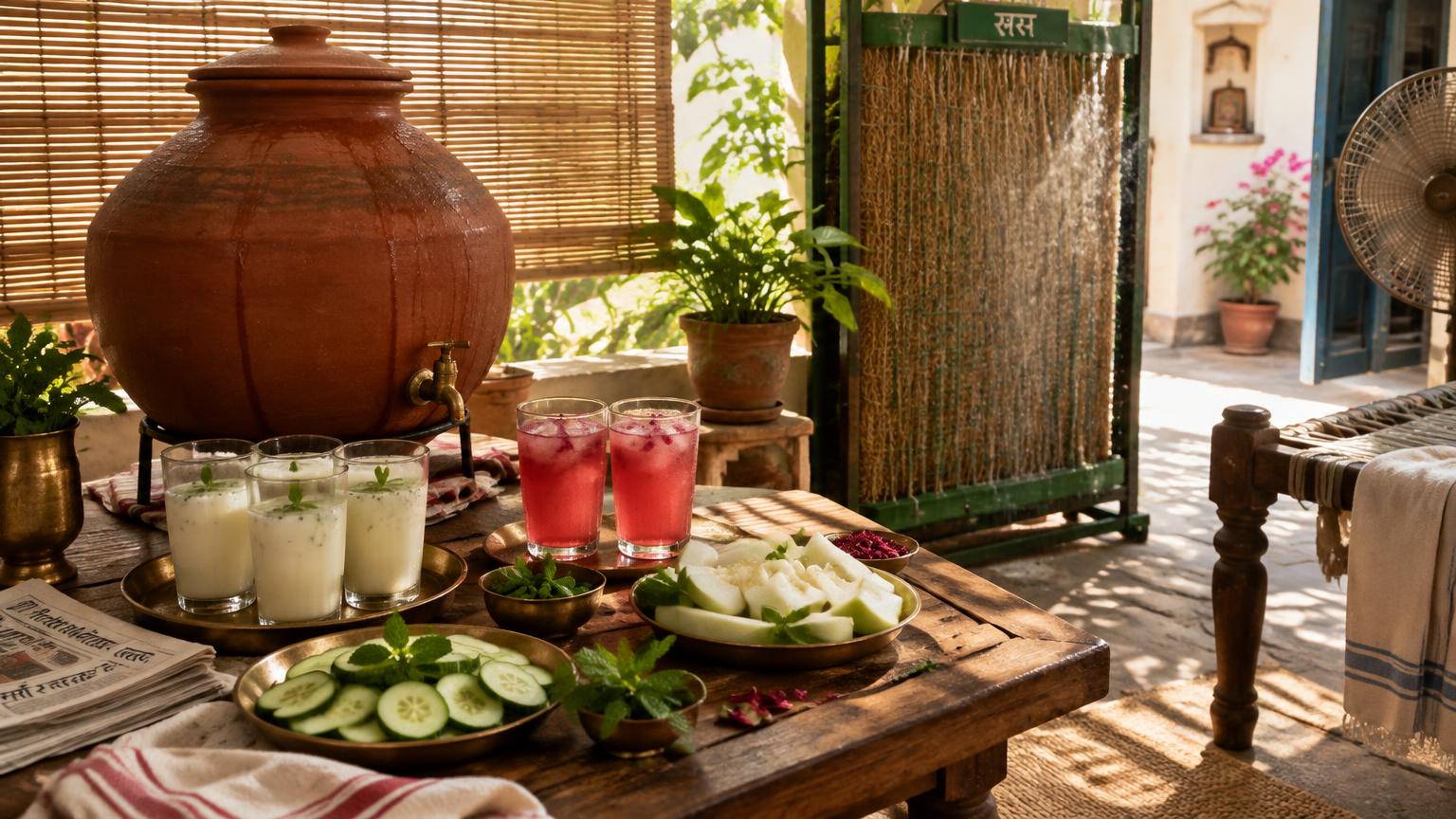
Grishma: Summer and the Household Art of Cooling
Matka water, buttermilk at noon, khus screens and smaller meals — how homes handled real heat before refrigeration.
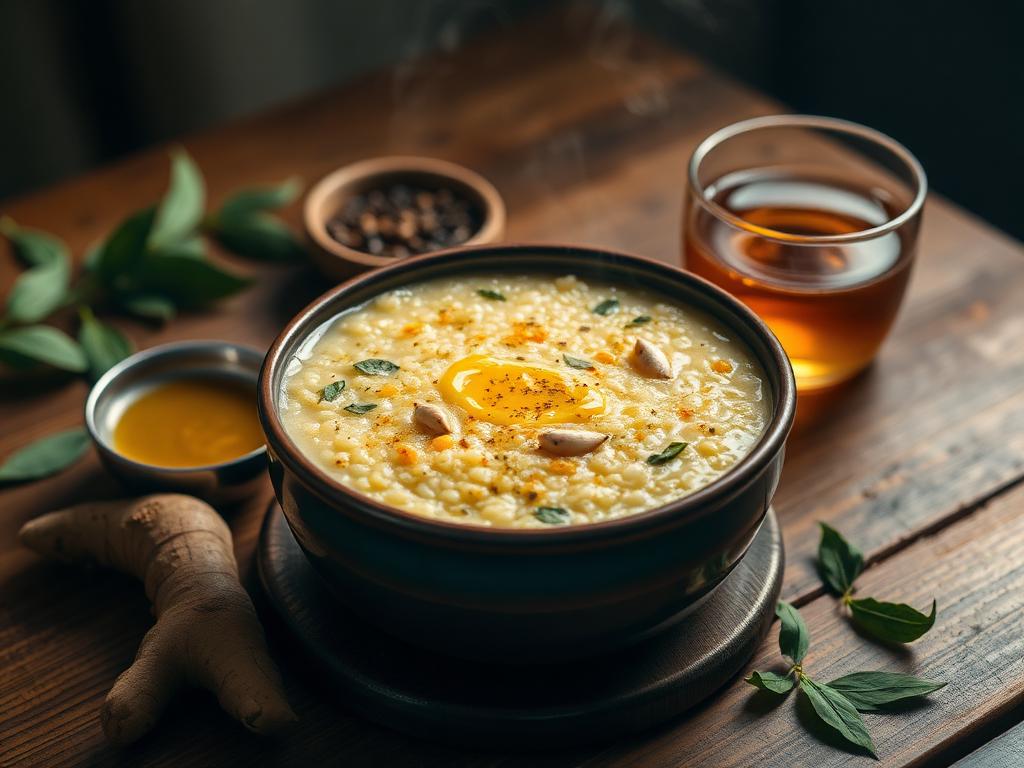
Varsha: Monsoon Care — Eat Light, Sip Warm, Move Gently
How traditional households shift cooking and routine when the rains arrive — damp air, slow digestion, quieter appetite.
Hemanta: Early Winter, Winter Warmers and the Ghee Month
Why the richest, ghee-heaviest stretch of the food calendar falls in early winter — and how households paced it.
Continue exploring
Related on The Wisdom Jar
Ingredient
Coriander
Cooling seed and leaf that calms heat, acidity and the urinary tract.
Read moreIngredient
Fennel
Sweet, cooling seed traditionally chewed after meals for fresh breath and easy digestion.
Read moreRemedy
Rose & Cucumber Cooling Splash
A summer face-and-body splash to calm heat-stressed skin.
Read moreDaily Wellness
Summer Cooling Practices
Fennel water, rose, coconut, sheetali breath — pitta-pacifying daily care.
Read moreDaily Wellness
Monsoon Immunity Care
Warming kadhas, ginger tea, ghee — protect the gut during the rains.
Read moreWellness Topic
Seasonal Allergies
Sneezing, itchy eyes, runny nose at certain times.
Read more