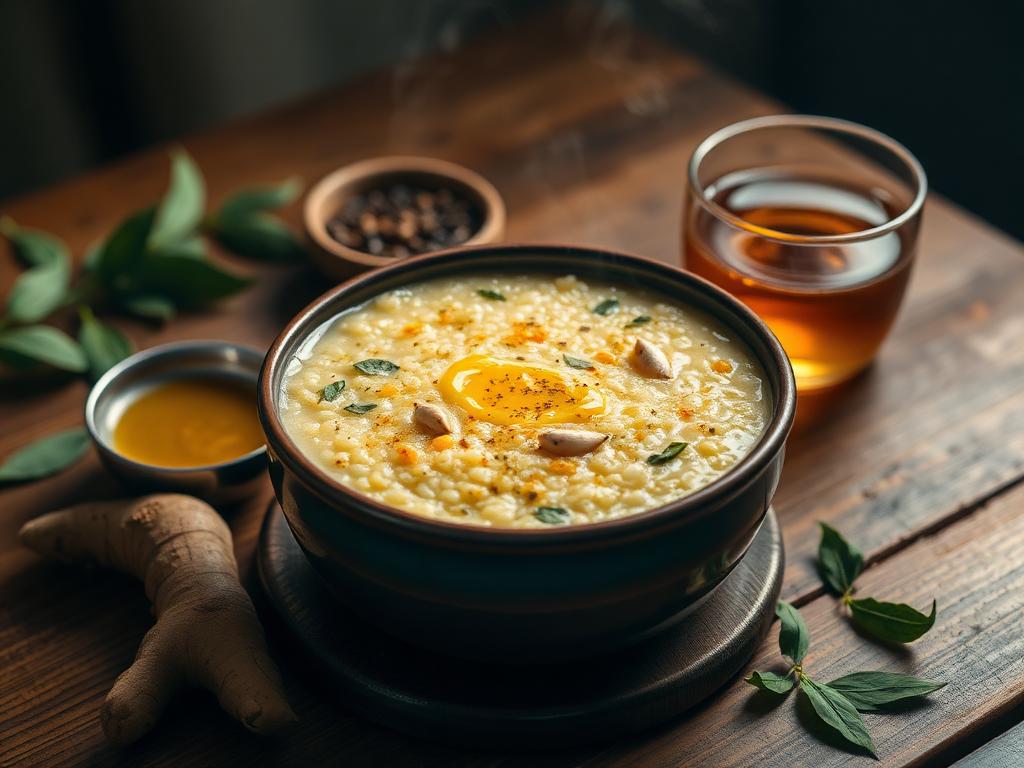
Seasonal Customs
Varsha: Monsoon Care — Eat Light, Sip Warm, Move Gently
How traditional households shift cooking and routine when the rains arrive — damp air, slow digestion, quieter appetite.
Varsha, the rains, is the third of the six ritus and the one classical writing treats most cautiously. The reasoning is that the body arrives at the monsoon already depleted by summer, and then meets damp, cool, unstable weather. Appetite is expected to be at its weakest point in the year, and the household answer is to cook simply rather than richly.
The monsoon kitchen is warm, light and well-cooked. Older grains, moong dal, khichdi, soups and steamed preparations dominate; raw salads, cut fruit left standing and leafy greens are reduced — partly on classical reasoning about damp digestion, and partly because leaves and water carry more contamination in the rains. Water is boiled. Warm jeera or ajwain water appears at meals. Ginger, black pepper, ajwain, hing and rock salt become the everyday spice shelf.
Routine turns inward. Feet and hair are dried before sleeping, damp clothes are changed quickly, oiling shifts to lighter and warmer applications, and heavy exertion is eased off. Traditional monsoon regimens across regions — Kerala's karkidakam being the best-known — are practitioner-led programmes, and they belong with a qualified practitioner rather than with a home recipe.
The transition into and out of the rains is where most households come unstuck: continuing summer's cold drinks and raw food into the first heavy rain, or holding monsoon lightness too long into the clear post-monsoon weeks when appetite returns.
A plain modern note: the monsoon is also India's peak season for dengue, malaria, typhoid, leptospirosis and waterborne infection. High fever, severe or bloody diarrhoea, dehydration, breathlessness or a fever lasting more than two days is a medical matter and needs prompt care. Seasonal kitchen habits are everyday self-care, nothing more.
The regional versions of monsoon practice are covered in Regional Wisdom rather than repeated here.
More from Seasonal Customs
Vasanta: Spring and the Season of Lightening
Why Indian households turn bitter, light and active as winter thaws — the first of the six classical ritus.
Grishma: Summer and the Household Art of Cooling
Matka water, buttermilk at noon, khus screens and smaller meals — how homes handled real heat before refrigeration.
Sharad: The Post-Monsoon Season of Cooling Down
Clear skies, returning appetite and a household turn toward amla, ghee and gentler food — the most overlooked ritu.
Hemanta: Early Winter, Winter Warmers and the Ghee Month
Why the richest, ghee-heaviest stretch of the food calendar falls in early winter — and how households paced it.
Continue exploring
Related on The Wisdom Jar
Ingredient
Ginger
A pungent, warming root used worldwide for nausea, digestion, and respiratory comfort.
Read moreIngredient
Cumin
Earthy seed that kindles digestion and supports metabolism.
Read moreRemedy
Ginger-Tulsi Decoction for Cough & Cold
A simple kitchen kadha that soothes scratchy throats and clears mild congestion.
Read moreDaily Wellness
Monsoon Immunity Care
Warming kadhas, ginger tea, ghee — protect the gut during the rains.
Read moreRemedy
Rose & Cucumber Cooling Splash
A summer face-and-body splash to calm heat-stressed skin.
Read moreDaily Wellness
Summer Cooling Practices
Fennel water, rose, coconut, sheetali breath — pitta-pacifying daily care.
Read more