Festival Traditions
Onam: Sadya, Homecoming and Kerala's Harvest Memory
The many-dish banana-leaf meal, floral courtyards and household labour behind Kerala's shared festival.
Onam is widely associated with Kerala's harvest season and cultural homecoming, and is observed across religious communities as well as through Hindu traditions. One widely shared traditional interpretation centres on the returning king Mahabali, while many contemporary observances also express Kerala identity, family reunion and the Malayalam month of Chingam.
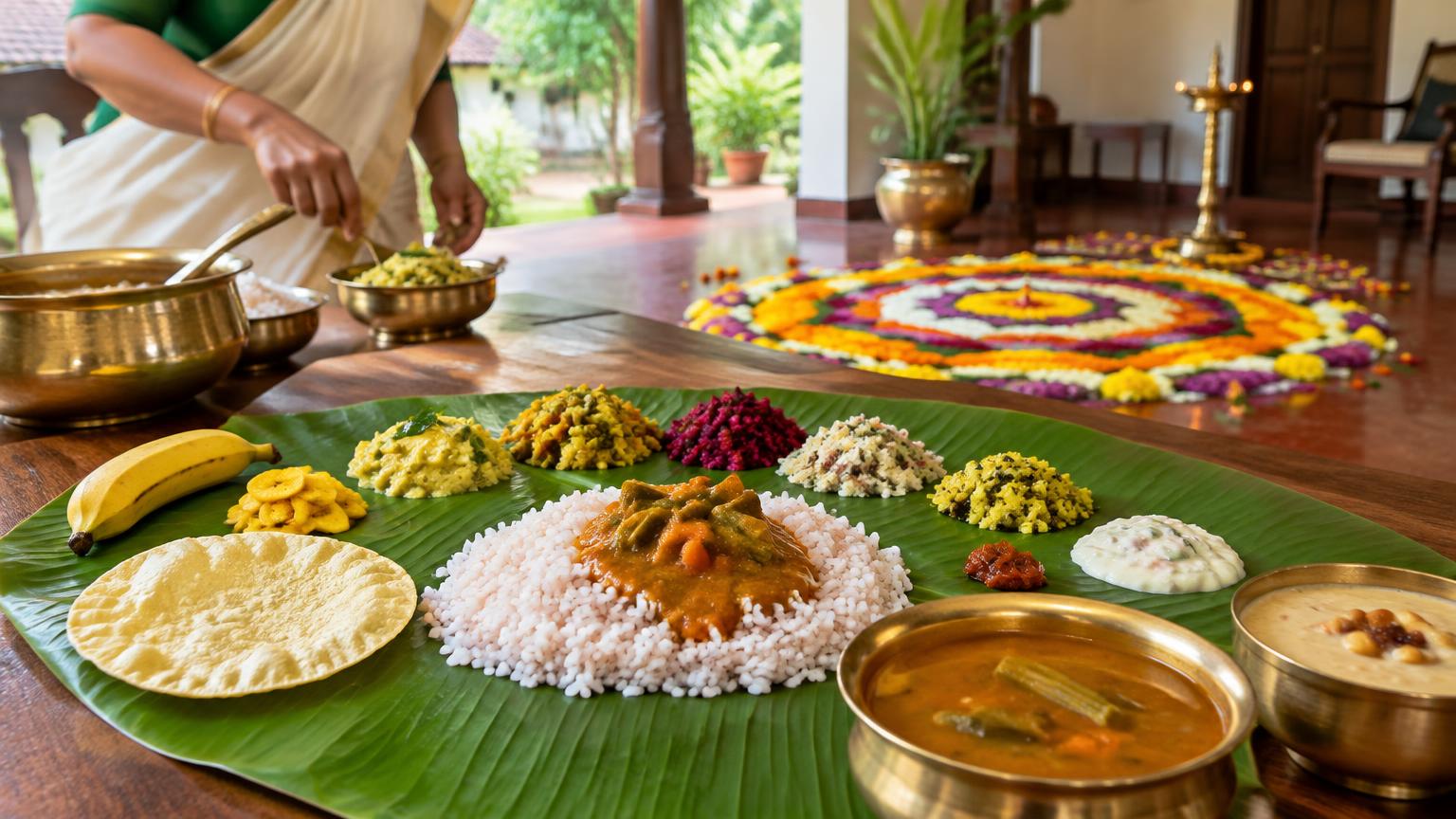
Household preparation extends beyond one meal. Pookalam flower designs grow across the festival days, homes are cleaned, clothes and gifts are readied, and relatives coordinate who will make each dish. The work is communal even when the final banana leaf looks effortless.
The Onasadya is a vegetarian feast served on a banana leaf, with rice and a changing repertoire that may include parippu, sambar, avial, olan, thoran, kichadi, pachadi, pickles, pappadam and payasam. Exact dishes and serving customs vary by district, family and scale; there is no single compulsory menu.
Onam falls after Kerala's demanding monsoon period, when markets fill again and the agricultural year turns toward abundance. That seasonal setting explains the harvest imagery, but the feast should not be presented as a therapeutic sequence or a universal digestive formula.
What survives today is remarkably broad: home sadyas, community meals, school celebrations, pookalam competitions and restaurant versions for families who cannot cook the full spread. Adaptation has expanded participation without erasing the household version.
People with allergies, diabetes or other dietary requirements can select foods safely; abundance is symbolic, not an obligation to overeat. For Kerala's monsoon calendar and household ingredients, see Regional Wisdom.
More from Festival Traditions
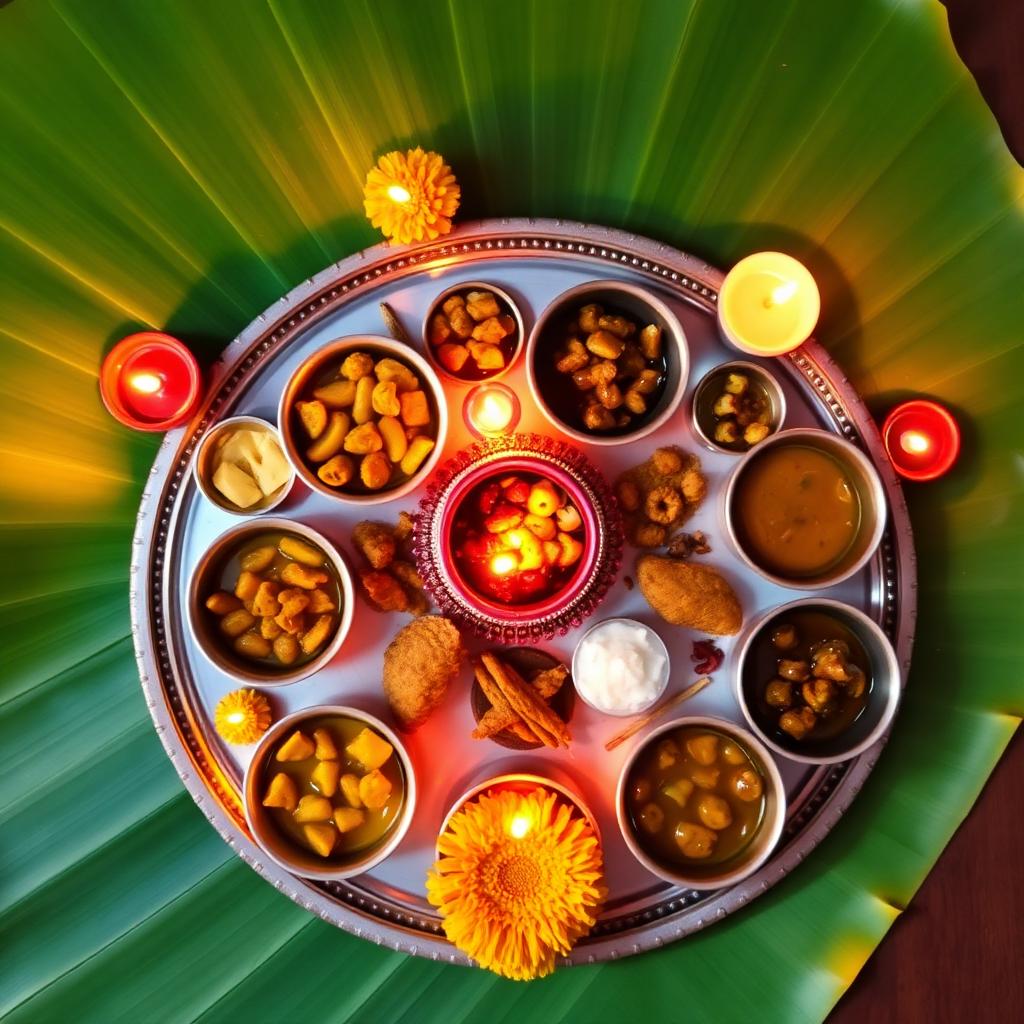
Diwali Foods: Light, Hospitality and the Autumn Kitchen
How sweets, savouries and shared trays mark Diwali across distinct Indian household traditions.
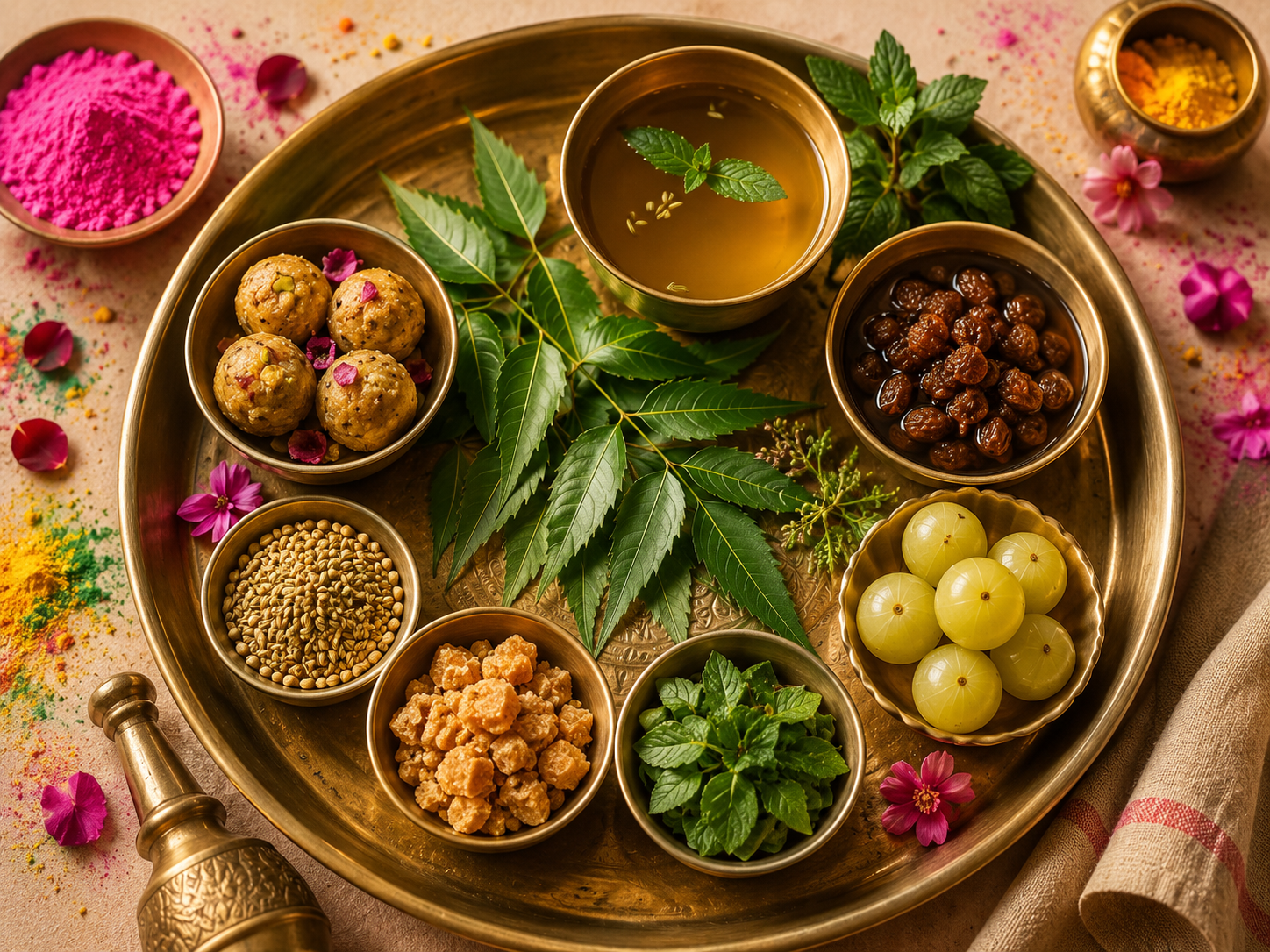
Holi, Spring Foods and the Changing Kitchen
Neem, kanji, gujiya and regional spring foods around a festival of colour and renewal.
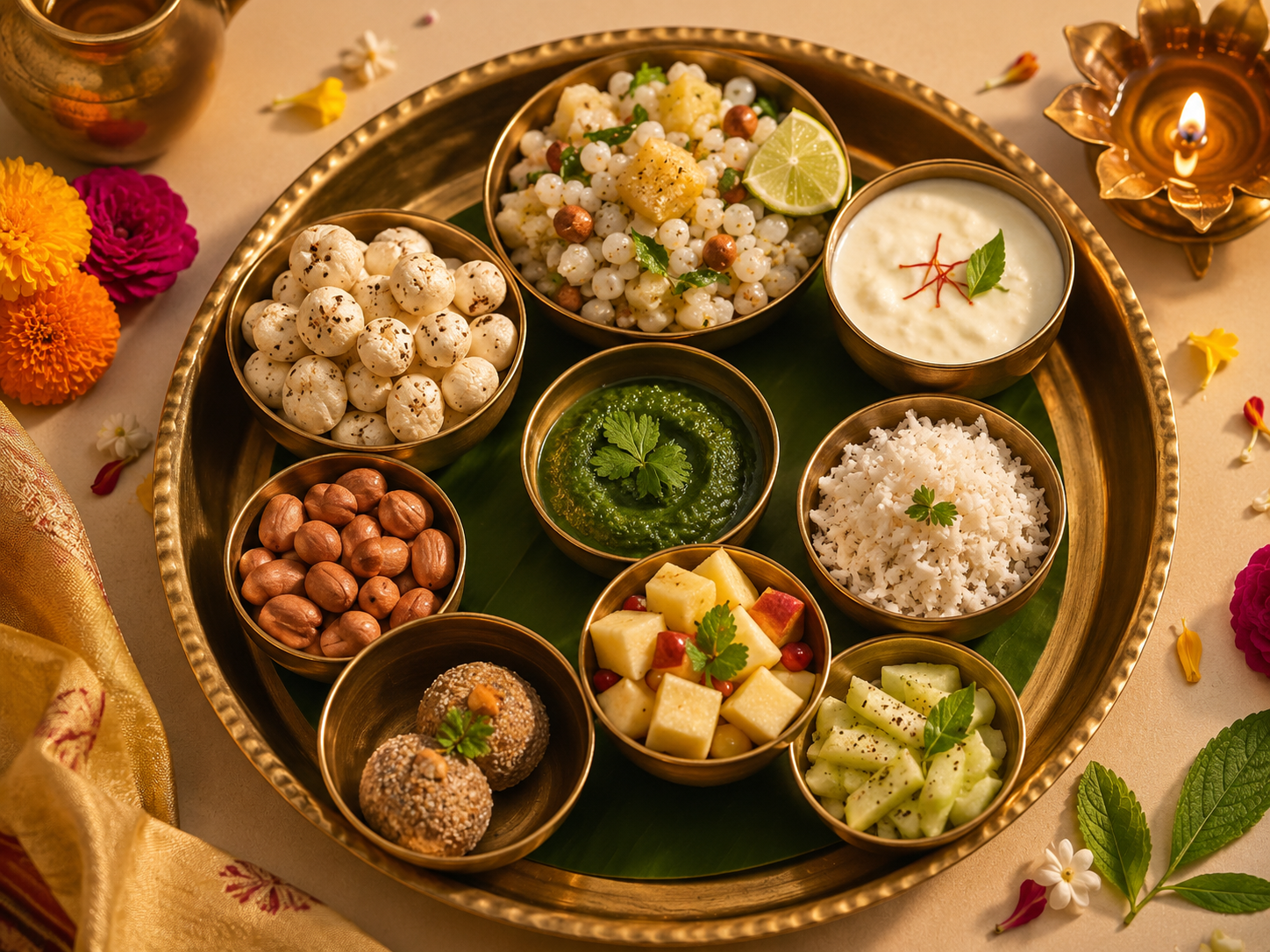
Navratri Food Traditions Across Indian Homes
How devotion, regional calendars and household fasting foods shape the nine nights without turning them into a health prescription.
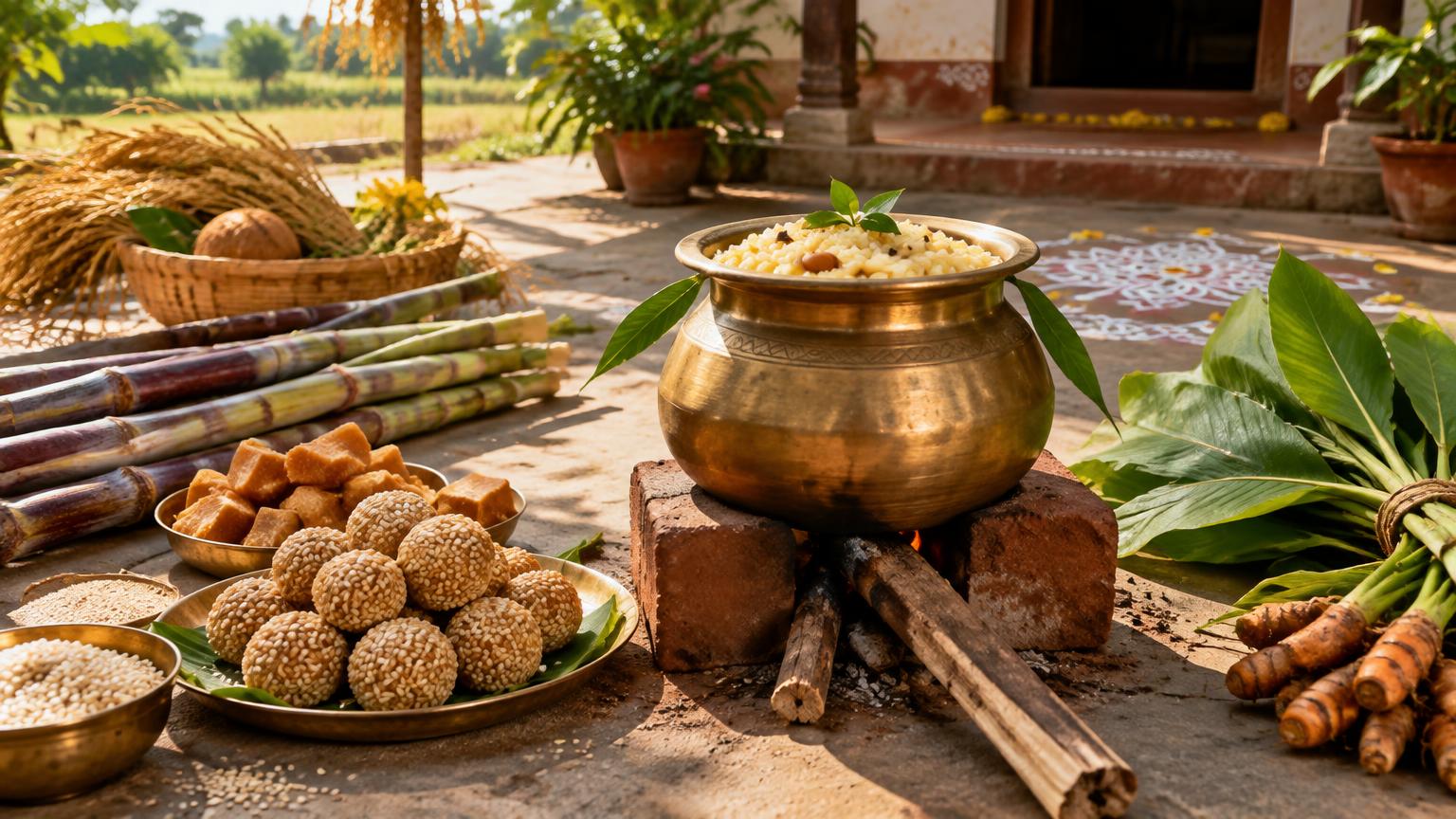
Makar Sankranti & Pongal: Many Harvests, Many Kitchens
Sesame and jaggery, newly harvested rice and sugarcane across distinct mid-January celebrations.
Continue exploring
Related on The Wisdom Jar
Ingredient
Rice
Cooling, easily digestible staple — basis of healing khichdi and kanji.
Read moreIngredient
Coconut Oil
Cooling oil ideal for hair, skin and oil-pulling.
Read moreRemedy
Golden Milk for Winter Immunity
A warm, soothing nightly drink of turmeric, milk, and pepper to support immunity and rest.
Read moreRemedy
Ginger-Tulsi Decoction for Cough & Cold
A simple kitchen kadha that soothes scratchy throats and clears mild congestion.
Read moreDaily Wellness
Warm Water on Waking (Ushapan)
A simple, ancient cue that wakes digestion and gently flushes the system.
Read moreDaily Wellness
Tongue Scraping
Remove the overnight coating in 30 seconds — taste, breath and digestion improve.
Read more