Ancient Roots
How Ancient Manuscripts Survived
Palm leaf, birch bark, paper and patient recopying — the material work that carried medical texts across centuries.
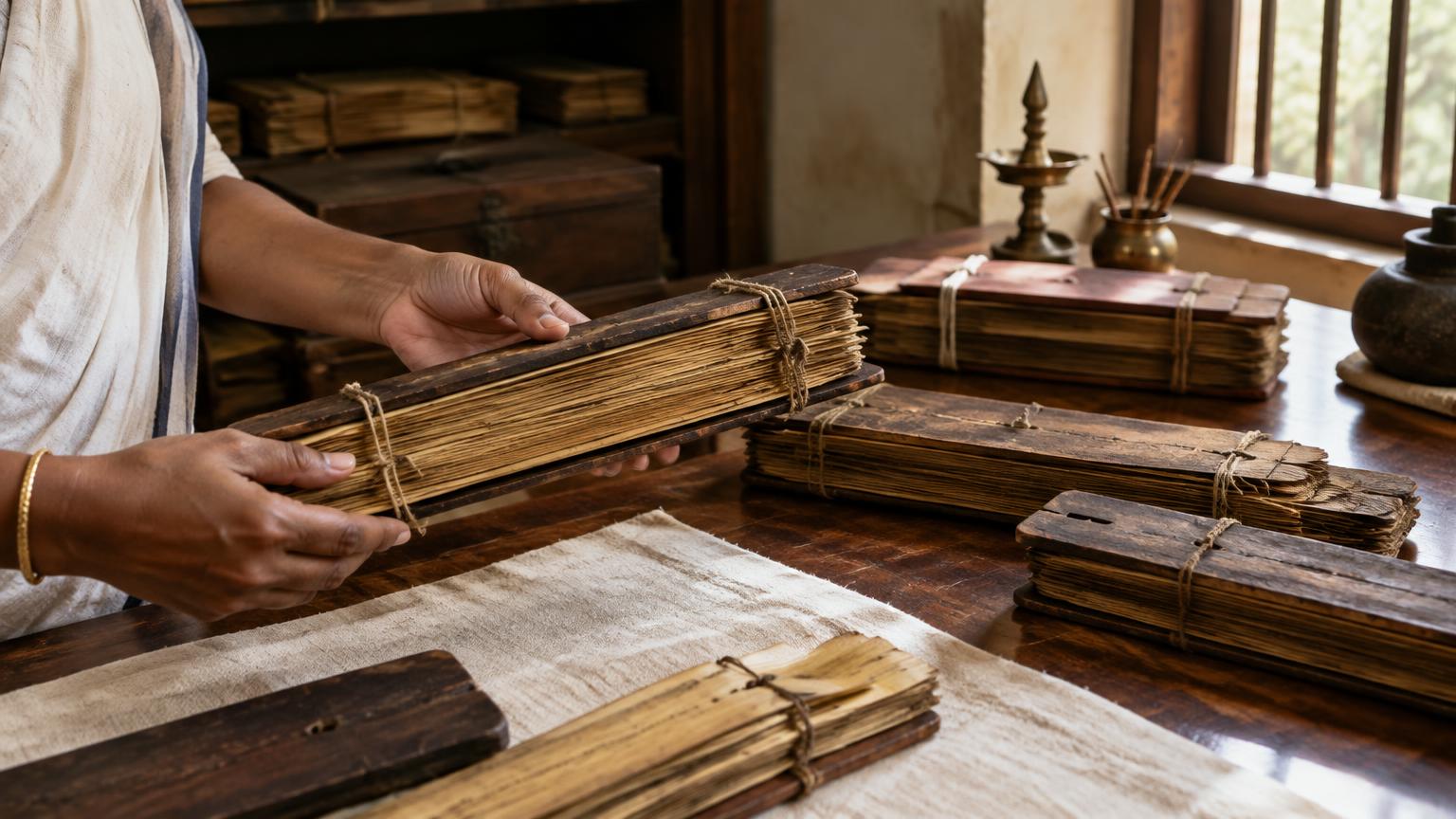
Ancient medical knowledge did not survive because one untouched original waited in a library. It survived through many copies made on fragile materials: palm leaf in much of southern and eastern India, birch bark in parts of the north, and paper as it became widely available. Heat, humidity, insects, fire and handling could damage every one of them.
A manuscript therefore had a working life. Leaves were prepared, incised or written on, ordered through string holes, wrapped between boards and stored in chests, temples, monasteries, courts, teaching households and private collections. When a copy became difficult to use, a scribe could make another. Copying was preservation.
Each copy could also carry traces of its journey: a changed spelling, a marginal note, a missing leaf, a regional plant name or a later explanation. Scholars compare surviving witnesses rather than treating any one manuscript as a perfect original. Cataloguing and critical editing help reconstruct how a text travelled.
Today conservation joins traditional care with controlled storage, specialist repair, photography and digitisation. A digital image broadens access, but the physical object still preserves evidence about material, script, ownership and use. Saving a manuscript means preserving both its words and its history.
More from Ancient Roots
The Five-Thousand-Year Lineage
From the Atharva Veda to the Charaka Samhita — how India's healing knowledge was compiled, taught and carried for five millennia.
Why the Classics Still Read Modern
Curcumin, fenugreek, the microbiome — why centuries of patient observation still read like a method rather than a relic.
Siddha: Tamil Textual Roots
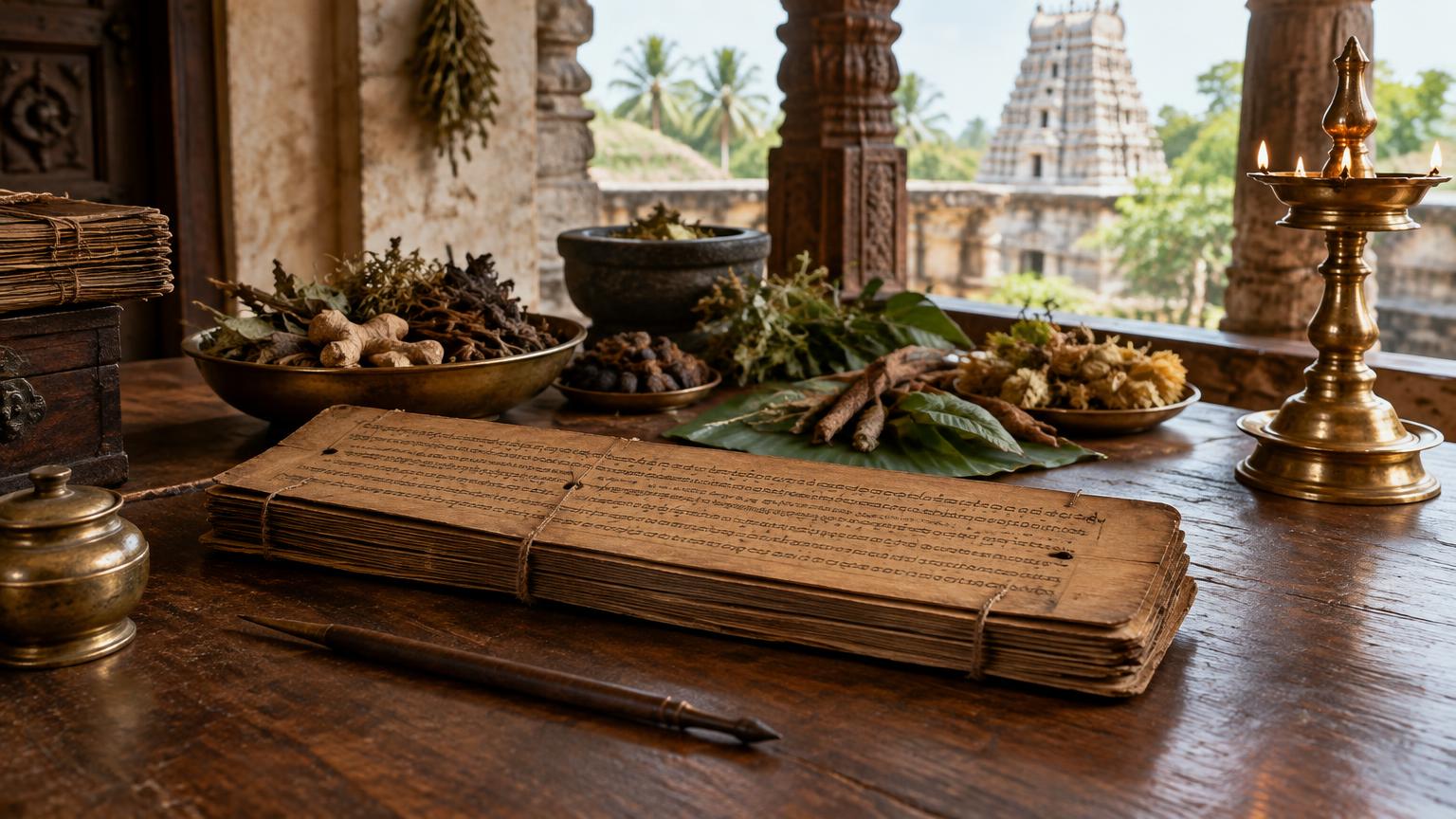
A distinct Tamil medical and philosophical tradition carried through palm-leaf texts, verse, commentary and practitioner lineages.
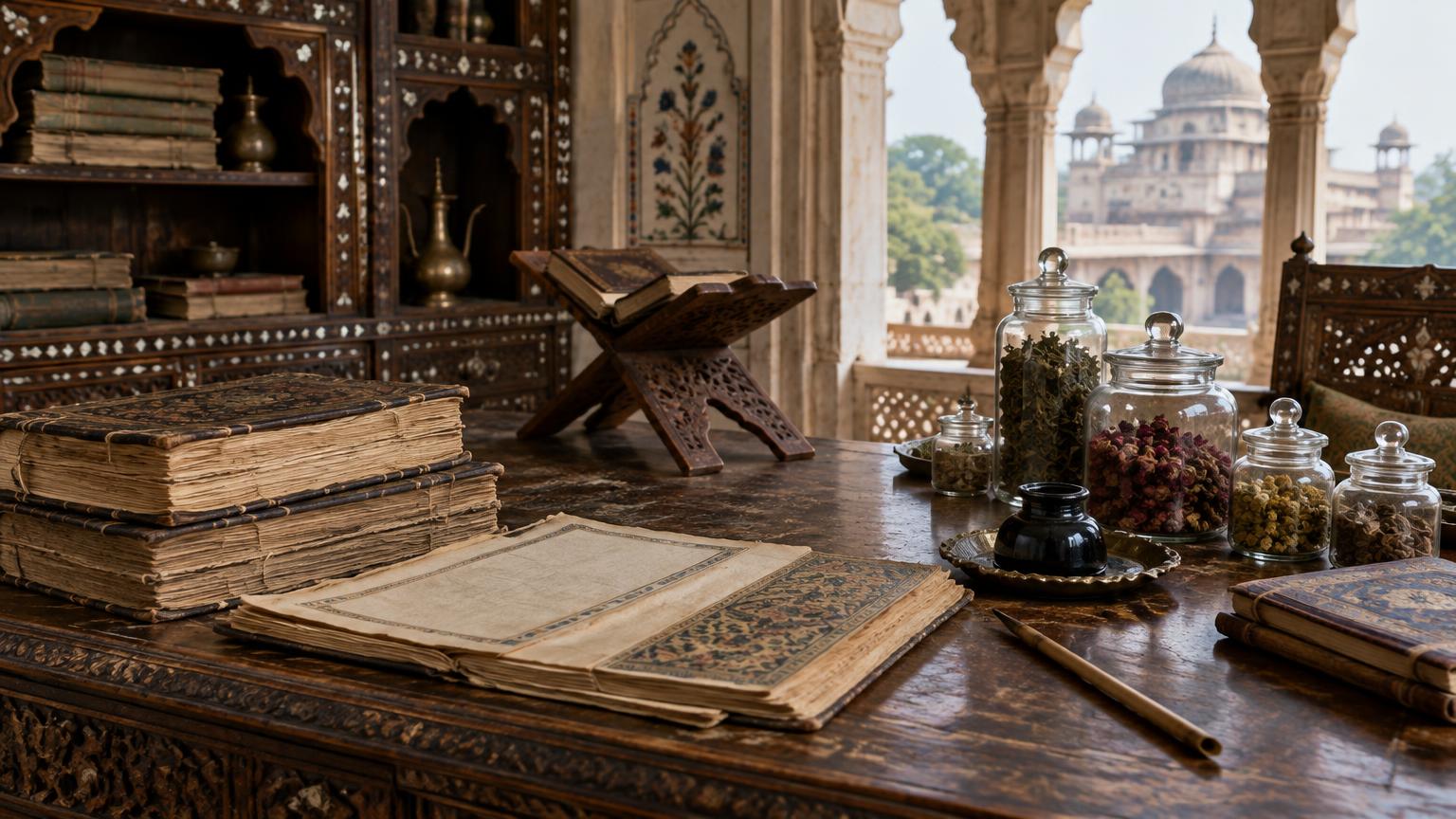
Unani: Greco-Arabic Knowledge in India
How Greek ideas were developed in Arabic and Persian scholarship, then took root in South Asian courts, cities and colleges.
Continue exploring
Related on The Wisdom Jar
Ingredient
Turmeric
A warm, golden rhizome treasured for centuries as a kitchen healer for inflammation, immunity, and skin glow.
Read moreIngredient
Ginger
A pungent, warming root used worldwide for nausea, digestion, and respiratory comfort.
Read moreRemedy
Golden Milk for Winter Immunity
A warm, soothing nightly drink of turmeric, milk, and pepper to support immunity and rest.
Read moreRemedy
Ginger-Tulsi Decoction for Cough & Cold
A simple kitchen kadha that soothes scratchy throats and clears mild congestion.
Read moreDaily Wellness
Warm Water on Waking (Ushapan)
A simple, ancient cue that wakes digestion and gently flushes the system.
Read moreDaily Wellness
Tongue Scraping
Remove the overnight coating in 30 seconds — taste, breath and digestion improve.
Read more