Ancient Roots
Why the Classics Still Read Modern
Curcumin, fenugreek, the microbiome — why centuries of patient observation still read like a method rather than a relic.
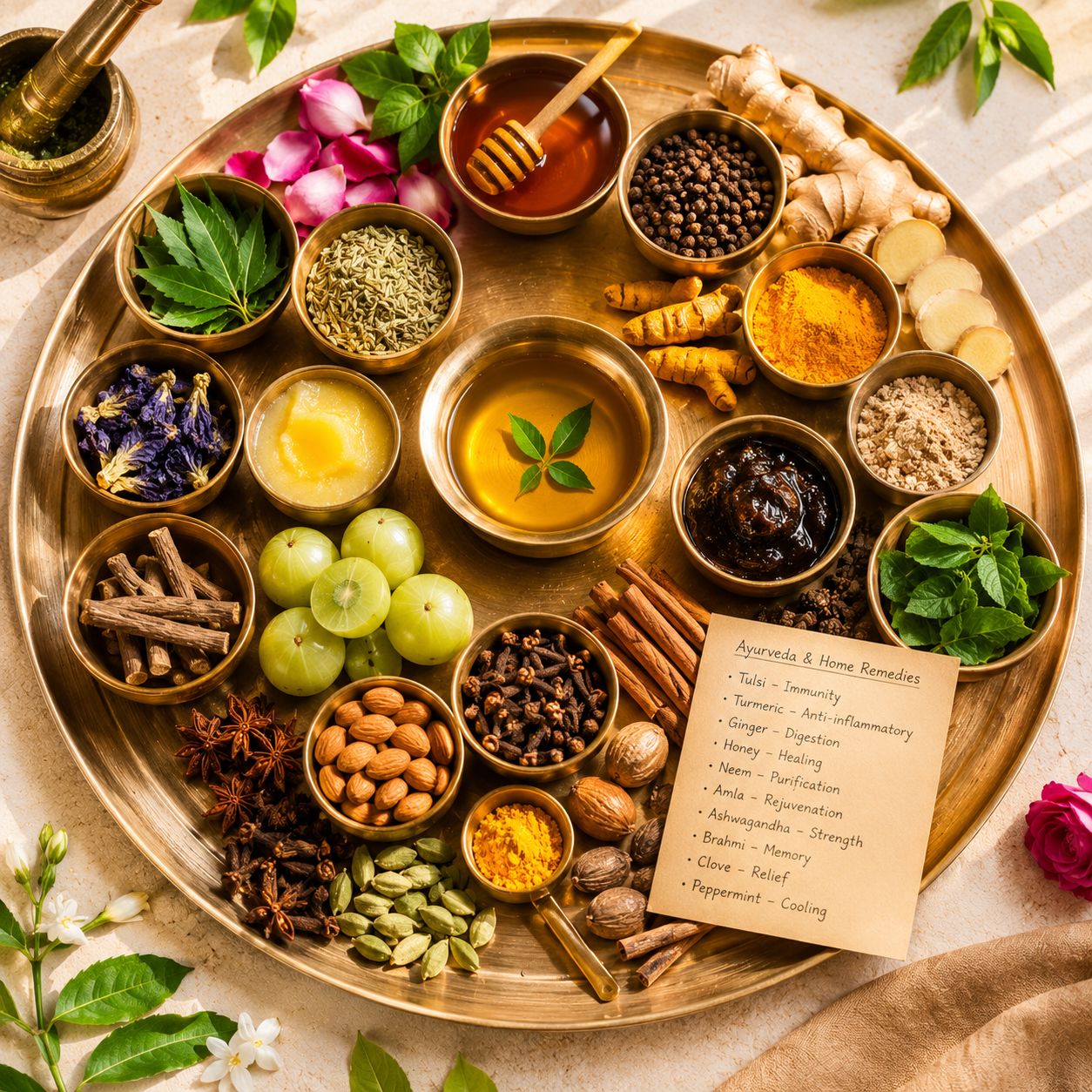
Classical Indian medical writing grew out of long observation rather than laboratory testing. Compendia such as the Charaka Samhita set out how to question a patient, read a season, judge appetite and digestion, and watch how a person responded over time. Some of what they noticed overlaps with subjects modern research studies today: turmeric and inflammation, fenugreek and blood sugar, fermented foods and gut bacteria, ashwagandha and stress response.
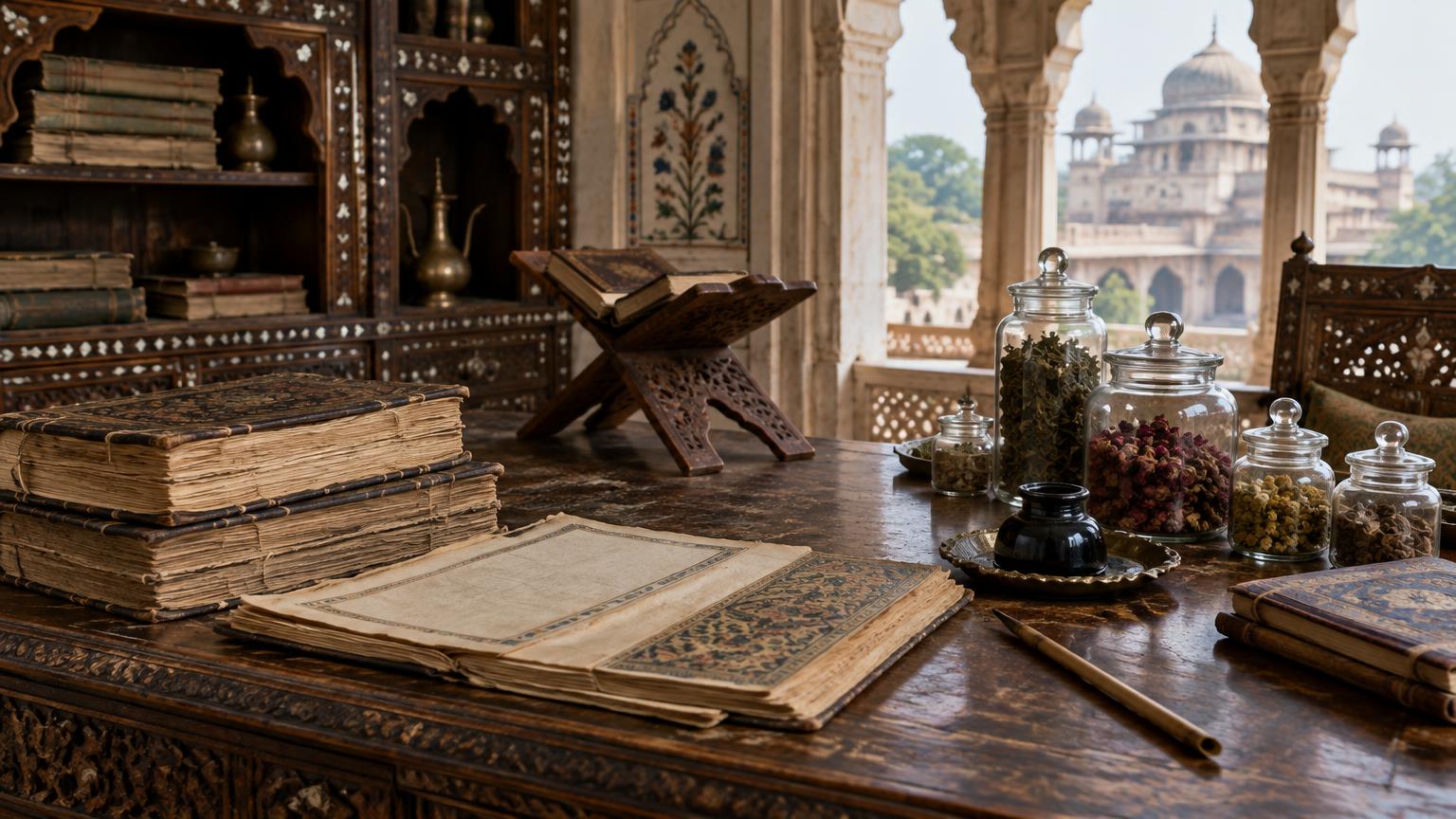
These texts were never encyclopedias of settled facts. They were teaching aids — frameworks for a student to learn how to look. Their knowledge was carried by memorised verse, commentary, recopied manuscripts and years of supervised practice, and each generation of commentators reconnected terse verses to the ingredients, climate and cases in front of them.
That is also why they still read modern: they describe a method of attention. Observing sleep, food, season and daily rhythm before reaching for a single remedy is a habit contemporary health writing keeps rediscovering, and it survives today in households, in formal colleges and in current research on individual plants.
The overlap has real limits. A modern study testing an isolated compound in a measured dose is not evidence for a traditional explanation, and an ancient framework being long-lived does not make each of its claims correct. This is cultural and historical reading, not medical guidance; diagnosis, medication and any severe, persistent or worsening symptom belong with a qualified professional.
More from Ancient Roots
The Five-Thousand-Year Lineage
From the Atharva Veda to the Charaka Samhita — how India's healing knowledge was compiled, taught and carried for five millennia.
How Ancient Manuscripts Survived
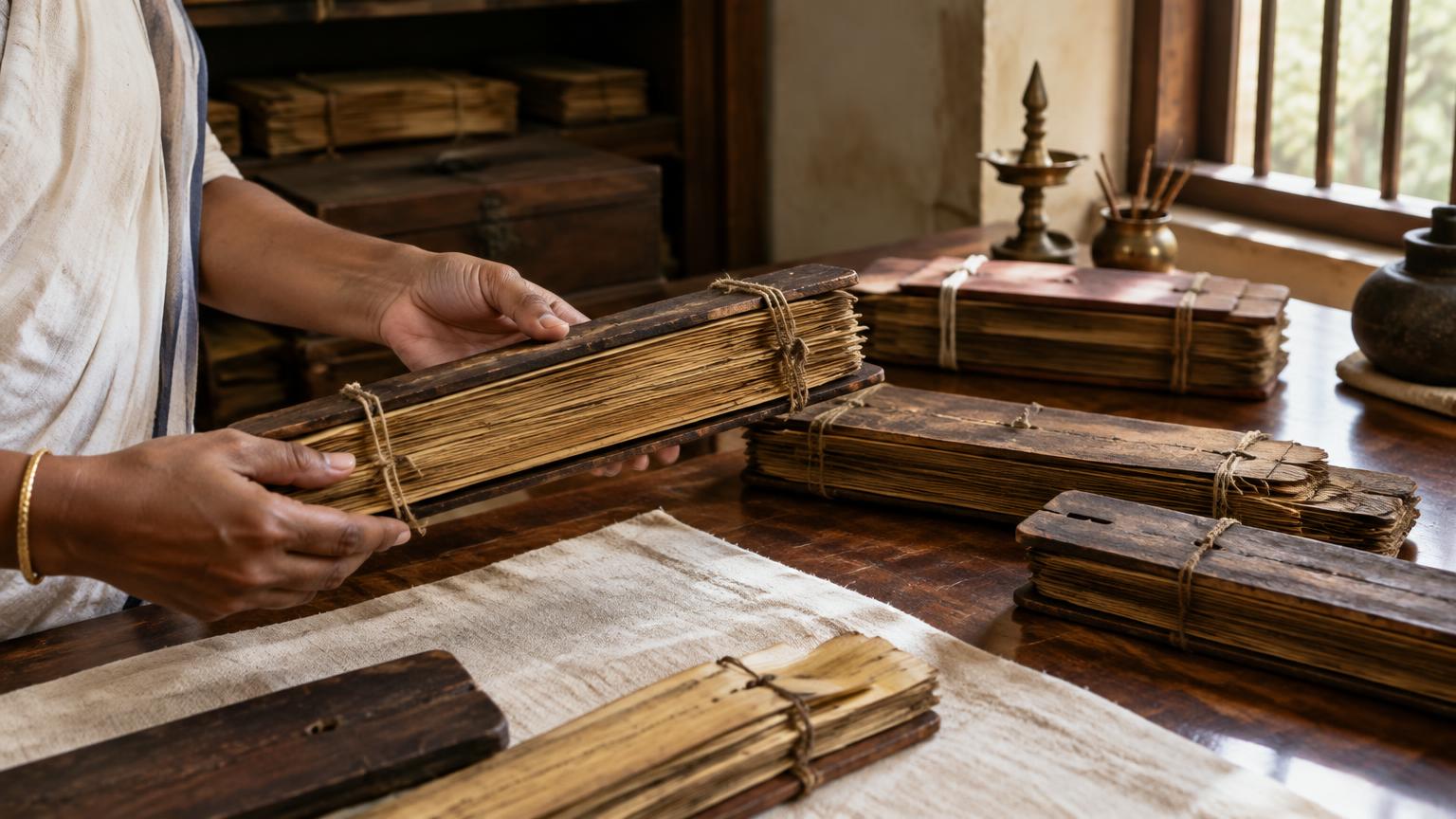
Palm leaf, birch bark, paper and patient recopying — the material work that carried medical texts across centuries.
Siddha: Tamil Textual Roots
A distinct Tamil medical and philosophical tradition carried through palm-leaf texts, verse, commentary and practitioner lineages.
Unani: Greco-Arabic Knowledge in India
How Greek ideas were developed in Arabic and Persian scholarship, then took root in South Asian courts, cities and colleges.
Continue exploring
Related on The Wisdom Jar
Ingredient
Turmeric
A warm, golden rhizome treasured for centuries as a kitchen healer for inflammation, immunity, and skin glow.
Read moreIngredient
Ginger
A pungent, warming root used worldwide for nausea, digestion, and respiratory comfort.
Read moreRemedy
Golden Milk for Winter Immunity
A warm, soothing nightly drink of turmeric, milk, and pepper to support immunity and rest.
Read moreRemedy
Ginger-Tulsi Decoction for Cough & Cold
A simple kitchen kadha that soothes scratchy throats and clears mild congestion.
Read moreDaily Wellness
Warm Water on Waking (Ushapan)
A simple, ancient cue that wakes digestion and gently flushes the system.
Read moreDaily Wellness
Tongue Scraping
Remove the overnight coating in 30 seconds — taste, breath and digestion improve.
Read more