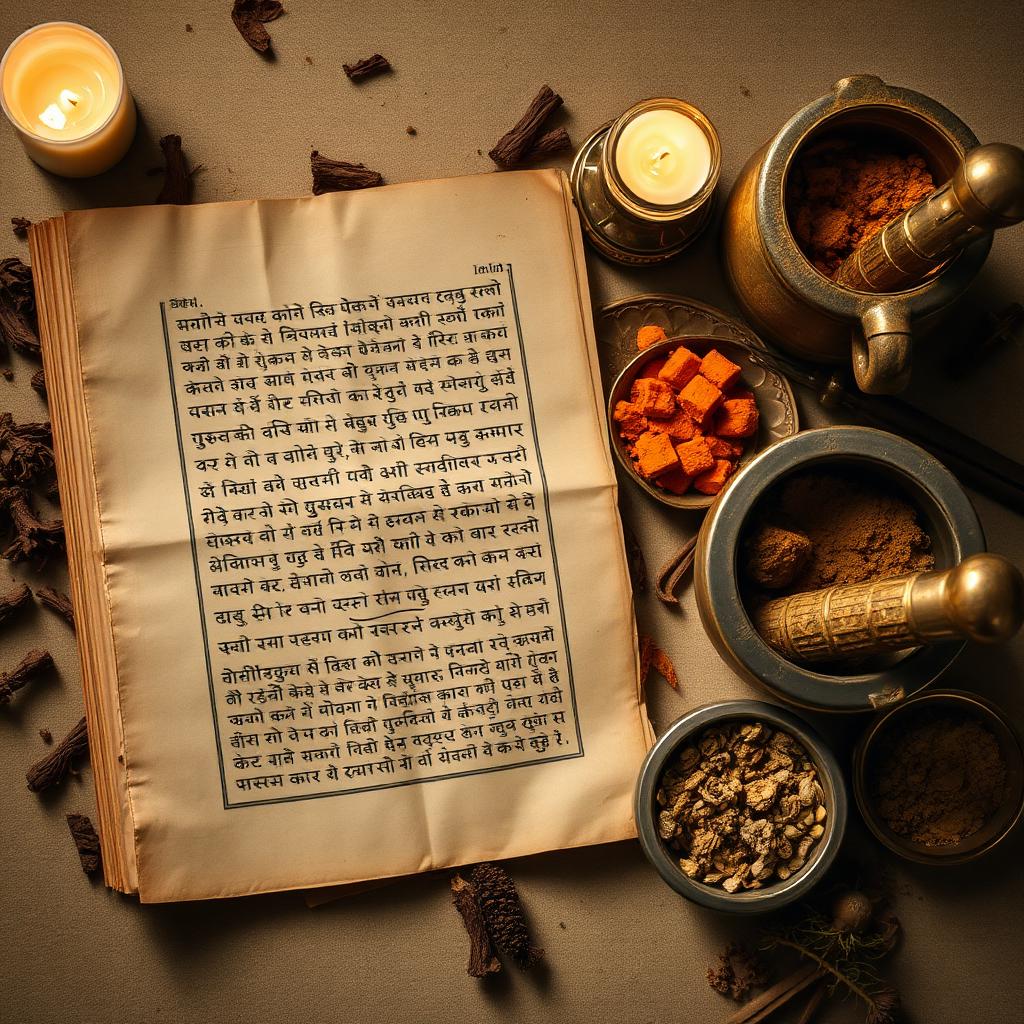
Ancient Roots
The Five-Thousand-Year Lineage
From the Atharva Veda to the Charaka Samhita — how India's healing knowledge was compiled, taught and carried for five millennia.
Long before clinics and pharmacies, healing lived in three places: the manuscript, the kitchen, and the festival. The earliest surviving compendia of Ayurveda — the Charaka Samhita and Sushruta Samhita — reached something close to their present shape over two thousand years ago, and they recorded teaching that was already older than the text itself.
Older still is the Atharva Veda, whose hymns name plants such as tulsi, haldi and pippali. It is not a medical handbook, but it shows that plants, seasons and healing already had a place in ritual and daily life long before the classical medical compendia were compiled.
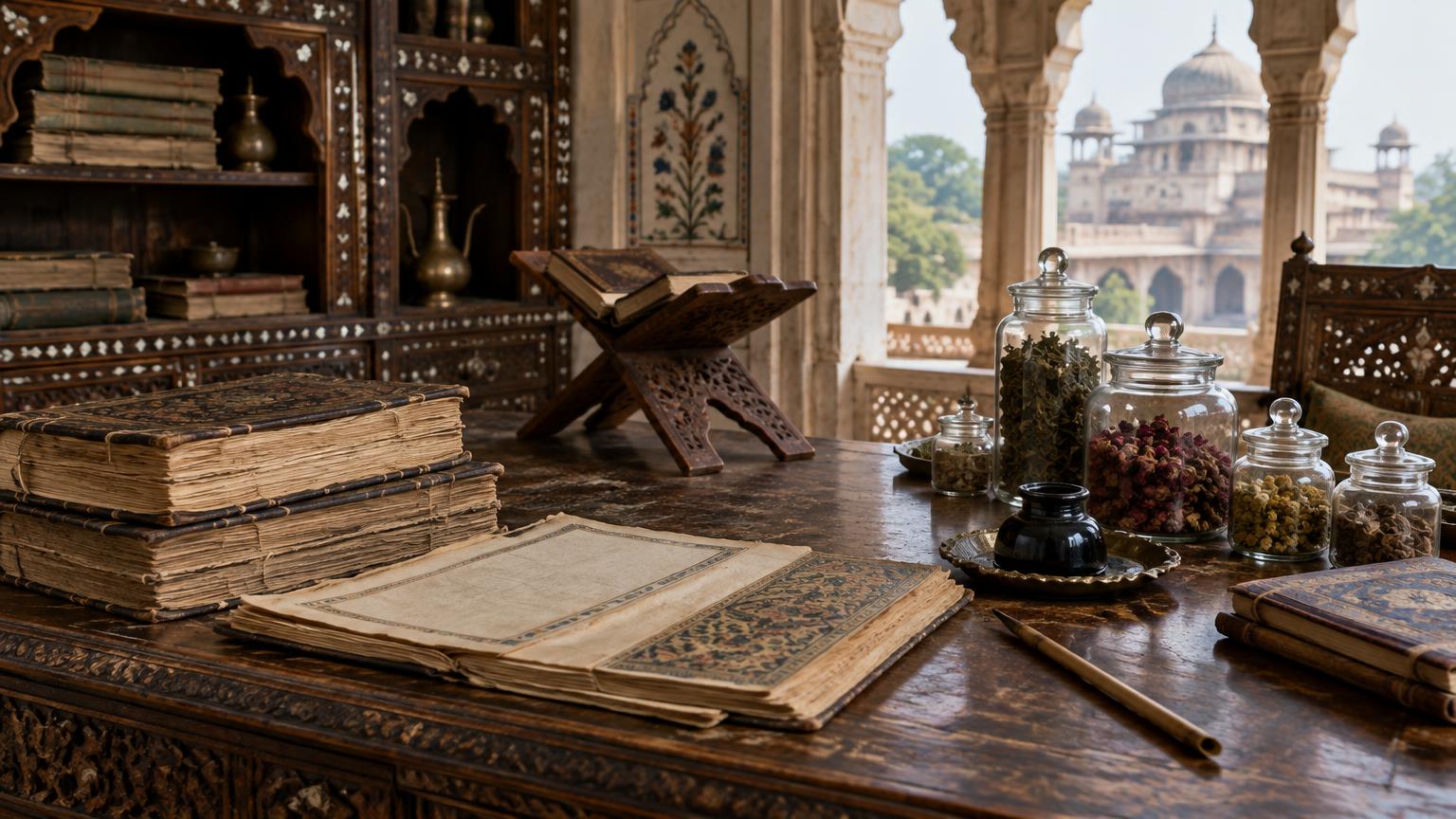
Nothing about this lineage was carried by a single unbroken book. Teaching passed from teacher to student over years of supervised study, while scribes recopied texts onto palm leaf, birch bark and later paper. Practitioners called vaidyas travelled between villages, often paid in grain and shelter, and what they learned in one region was adapted for the food and climate of another.
Its cultural weight came from being useful at every level of society at once — a scholarly framework for physicians, and a shared household vocabulary of warming foods, cooling foods, seasonal routines and rest. Much of that vocabulary is still spoken in Indian kitchens today, alongside formal colleges, manuscript libraries and research institutions.
What survived was not a fixed pharmacopoeia but a living philosophy: warm what is cold, cool what is hot, move what is stuck, slow what is rushing. It is a historical and cultural inheritance rather than a modern medical system, and it does not replace diagnosis, medication or professional care when symptoms are severe, persistent or worsening.
More from Ancient Roots
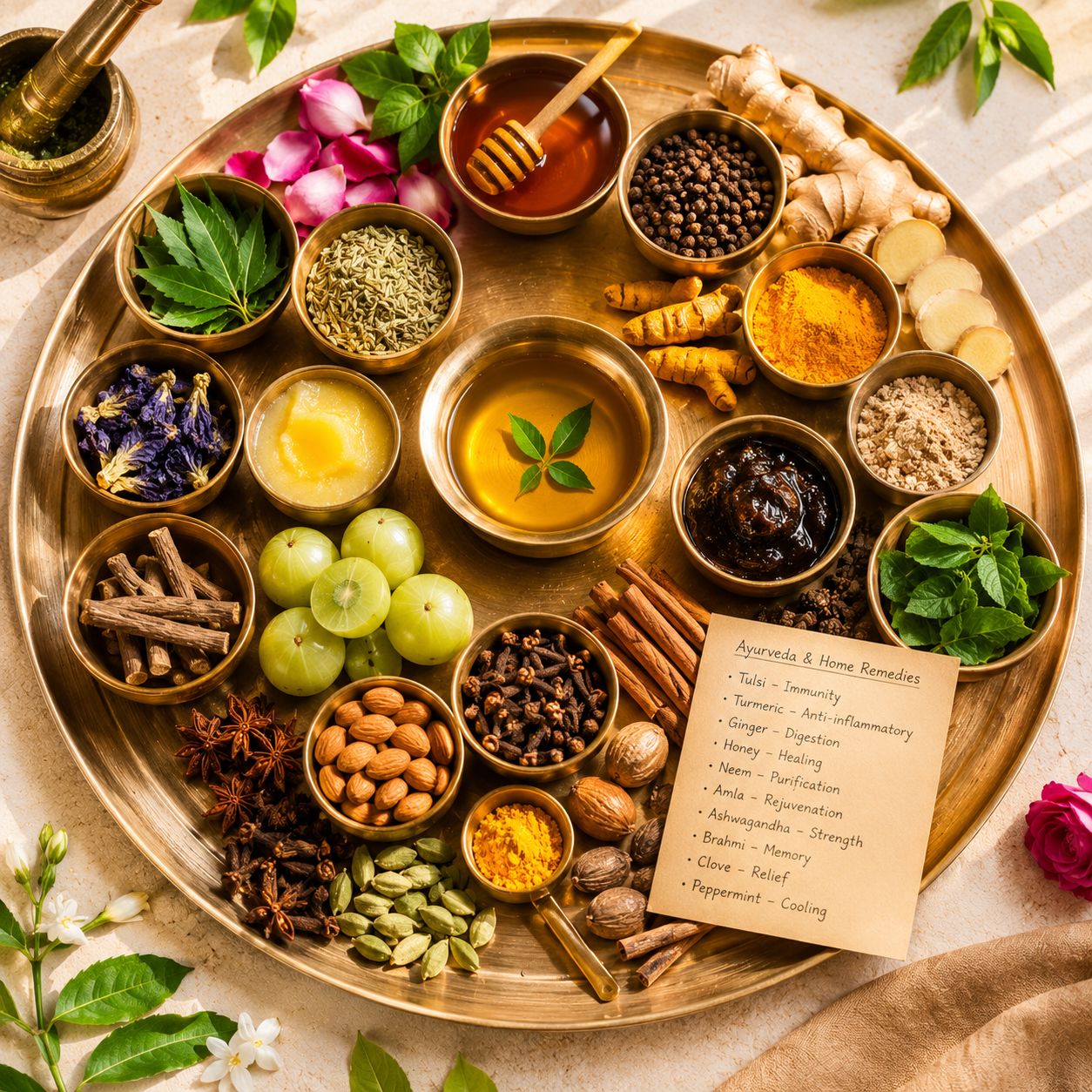
Why the Classics Still Read Modern
Curcumin, fenugreek, the microbiome — why centuries of patient observation still read like a method rather than a relic.
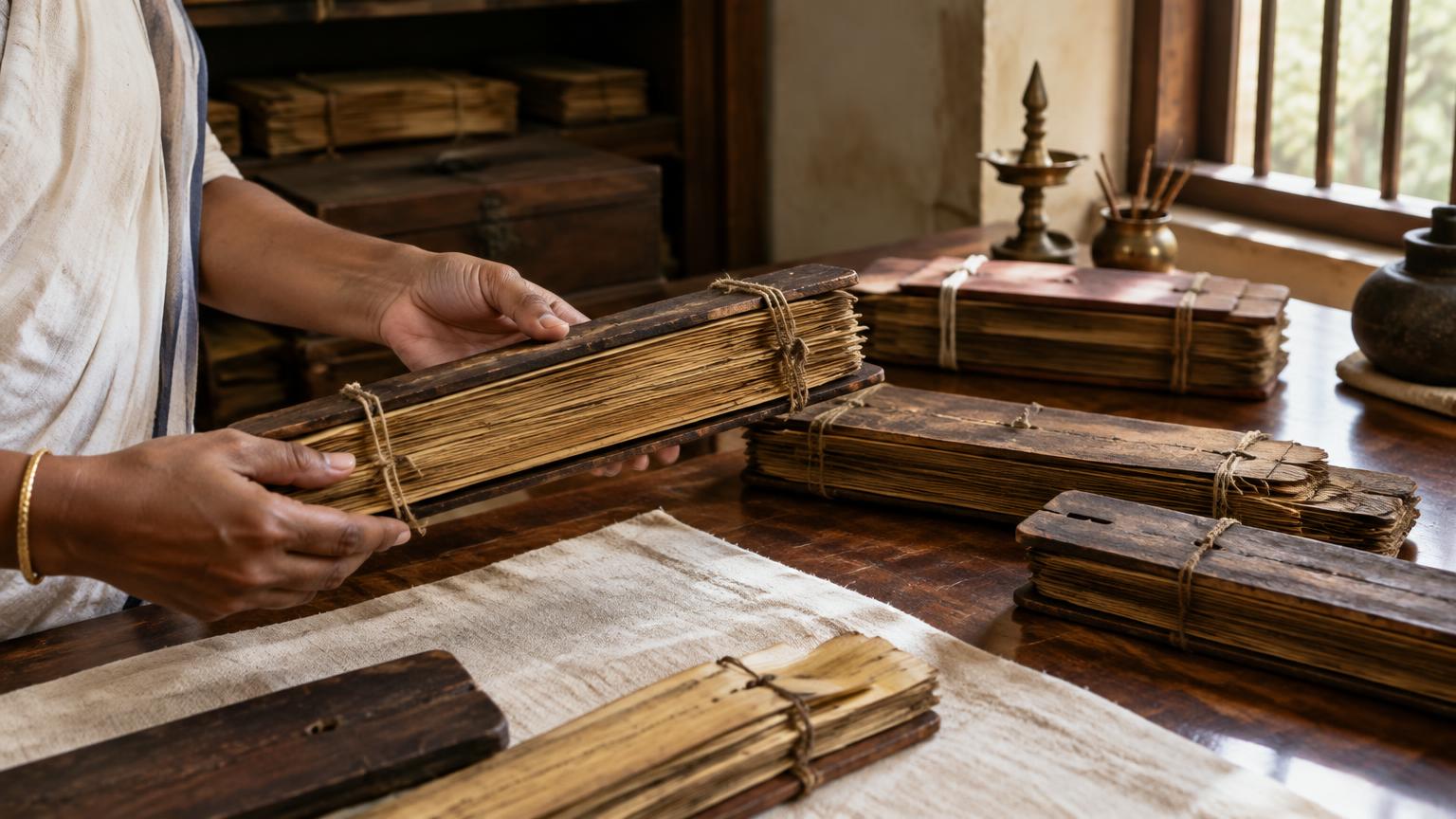
How Ancient Manuscripts Survived
Palm leaf, birch bark, paper and patient recopying — the material work that carried medical texts across centuries.
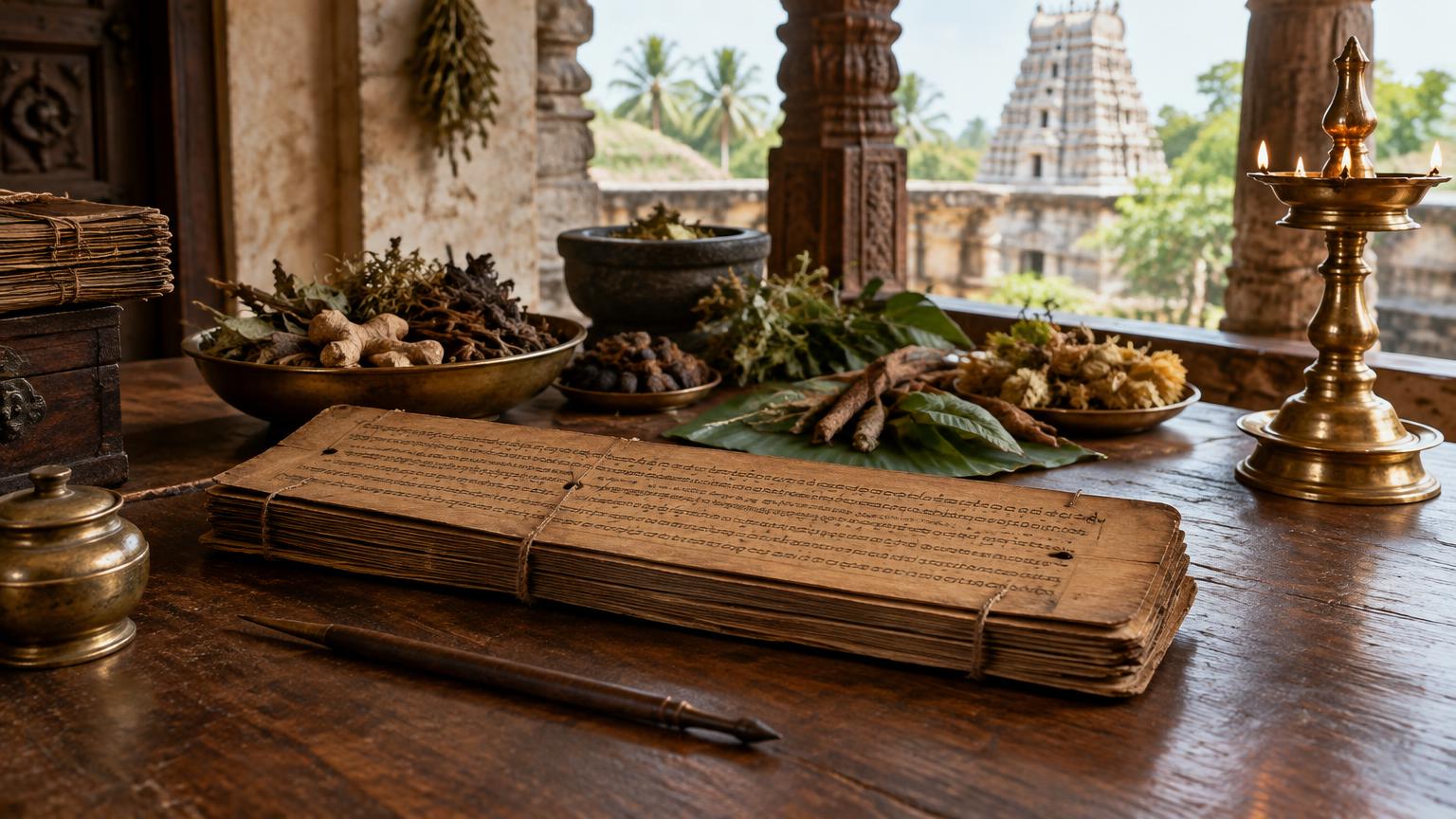
Siddha: Tamil Textual Roots
A distinct Tamil medical and philosophical tradition carried through palm-leaf texts, verse, commentary and practitioner lineages.
Unani: Greco-Arabic Knowledge in India
How Greek ideas were developed in Arabic and Persian scholarship, then took root in South Asian courts, cities and colleges.
Continue exploring
Related on The Wisdom Jar
Ingredient
Turmeric
A warm, golden rhizome treasured for centuries as a kitchen healer for inflammation, immunity, and skin glow.
Read moreIngredient
Ginger
A pungent, warming root used worldwide for nausea, digestion, and respiratory comfort.
Read moreRemedy
Golden Milk for Winter Immunity
A warm, soothing nightly drink of turmeric, milk, and pepper to support immunity and rest.
Read moreRemedy
Ginger-Tulsi Decoction for Cough & Cold
A simple kitchen kadha that soothes scratchy throats and clears mild congestion.
Read moreDaily Wellness
Warm Water on Waking (Ushapan)
A simple, ancient cue that wakes digestion and gently flushes the system.
Read moreDaily Wellness
Tongue Scraping
Remove the overnight coating in 30 seconds — taste, breath and digestion improve.
Read more