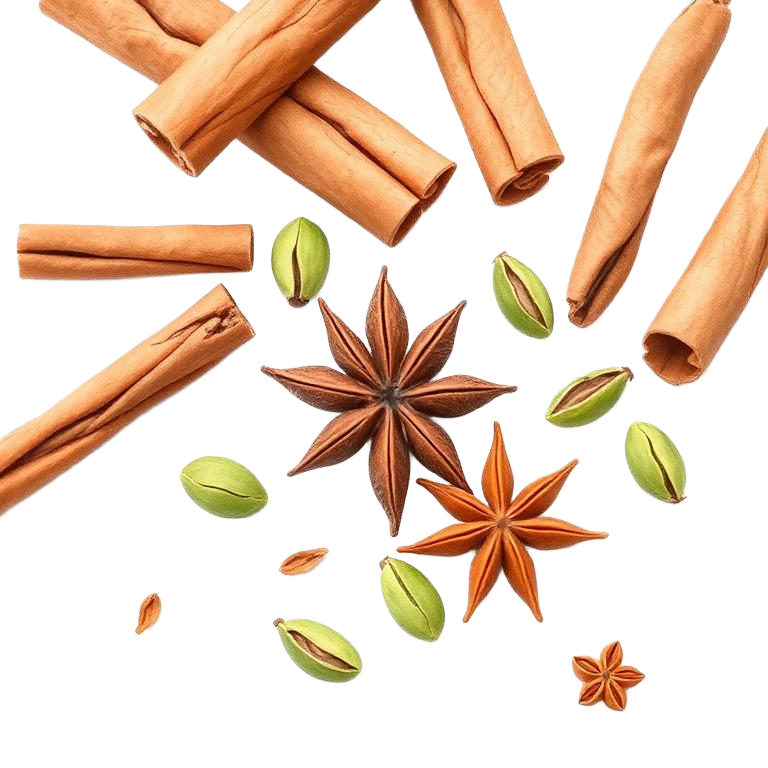
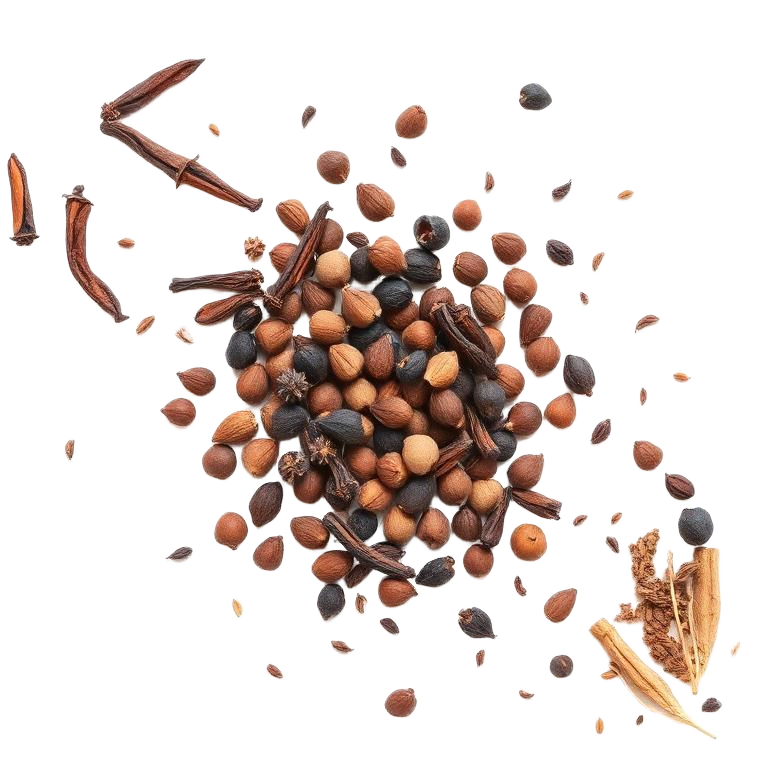
Cardamom
Sanskrit: Ela
Elettaria cardamomum
A fragrant pod used in Indian kitchens for sweets, teas and warm milk, and traditionally chewed after meals to freshen the mouth.
Also known as
Cardamom · Elaichi · Ela · Green cardamom
- hindi:
- Elaichi
- tamil:
- Elakkai
- telugu:
- Yelakulu
- bengali:
- Elach
- marathi:
- Velchi
- gujarati:
- Elchi
Parts used
- Green pod (husk)
- Small black seeds inside the pod
- Aromatic volatile oil
Traditional overview
- A pod or two simmered in warm milk at night
- Crushed into tea for aroma and after-meal comfort
- Chewed after food to freshen the breath
- Added to rice and sweet dishes in everyday cooking
Common traditional forms
- whole pod
- crushed seed powder
- milk decoction
- tea
Wellness tags
- after-meal routine
- fresh breath
- warm drink
Body focus
- stomach
- mouth
- lungs
Concerns
- bloating
- nausea
- bad breath
- loss of appetite
What to know before use
One to two pods per cup of milk or tea is plenty. Crush lightly just before use. Cardamom is a comfort measure only — ongoing nausea, vomiting or appetite loss should be checked by a doctor.
Important cautions
Widely used as a food spice and well tolerated in the small amounts used at home. Concentrated cardamom oil is much stronger and is not for internal home use.
Who should avoid it
- Anyone with a known cardamom allergy
- People with gallstones should keep to food amounts only
Medicine interactions
- No significant interactions at food amounts; concentrated extracts have not been well studied alongside medicines
PregnancyCulinary amounts are customary in Indian cooking. Avoid concentrated extracts and cardamom oil in pregnancy unless advised otherwise.
ChildrenSmall culinary amounts are fine. Keep whole pods away from children under four because of choking risk.
Quality and buying guidance
Look for plump green pods that are not faded or split, with a strong sweet aroma. Grey or bleached pods have usually lost their oil. Grind the seeds fresh rather than buying powder.
What does the evidence say?
This is primarily an established food with a long record of ordinary dietary use; nutritional information is better documented than medicinal claims.
Traditional wellness information only — not medical advice. Start small, and check with a qualified practitioner if you are pregnant, nursing, treating a child, or managing a medical condition.